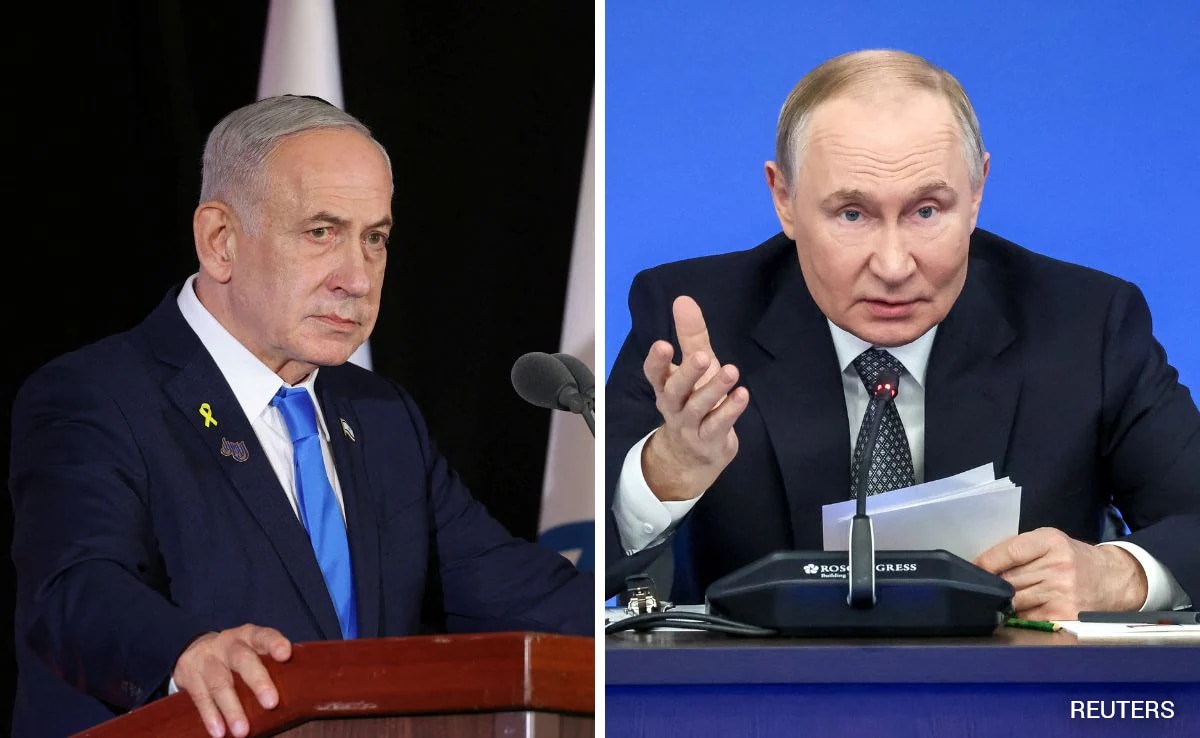
Israeli Prime Minister Benjamin Netanyahu and Russian President Vladimir Putin discussed the Middle East situation, including the Gaza ceasefire, Iran's nuclear program, and Syria's stabilization. The conversation underscored ongoing geopolitical complexities, particularly regarding Gaza, where Russia and the US are advancing competing UN Security Council resolutions. The US proposal supports an international stabilization force with Israeli security oversight, while Russia advocates for a UN-led force, opposing demographic changes and promoting a two-state solution, highlighting divergent international approaches to regional stability.
The recent phone conversation between Israeli Prime Minister Netanyahu and Russian President Putin, initiated by Putin, underscores the persistent geopolitical complexities in the Middle East, focusing on the Gaza ceasefire, Iran's nuclear program, and Syria's stabilization. This high-level diplomatic engagement highlights the continued international focus on regional security dynamics.
Crucially, the discussion occurs amidst competing UN Security Council resolutions concerning Gaza, with Russia and the US advancing divergent proposals. The US plan advocates for an international stabilization force with broad independence from the UN and continued Israeli security control, while Russia's draft emphasizes a UN-led force, opposes demographic changes, and promotes a two-state solution. These contrasting approaches signal deep disagreements on the path to regional stability.
While the immediate market impact is assessed as low (0.3 score) and sentiment neutral, the ongoing diplomatic maneuvering and differing international visions for Gaza could influence future regional stability. Investors should recognize these developments as part of a broader, evolving geopolitical risk landscape rather than an isolated event.
AI-powered research, real-time alerts, and portfolio analytics for institutional investors.
Overall Sentiment
neutral
Sentiment Score
0.00
