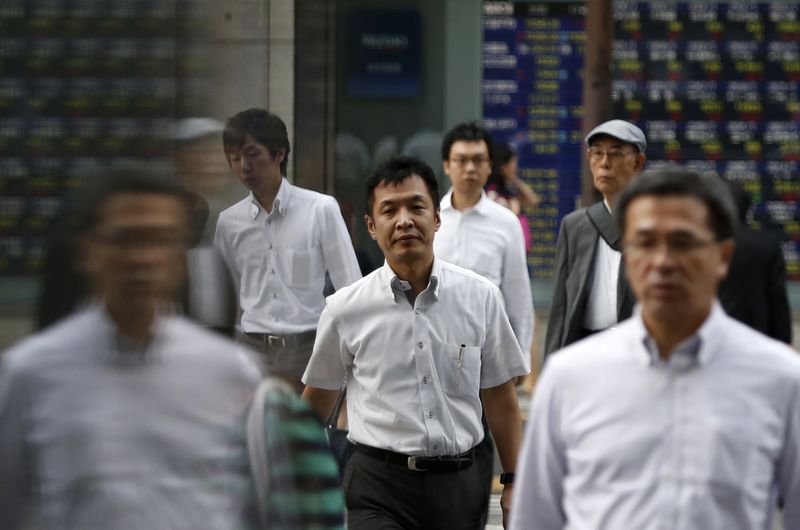
South Korea’s KOSPI slumped 8% and triggered a circuit breaker as the AI-led rally reversed sharply, signaling broad risk-off sentiment across Asian markets. Japan’s Nikkei 225 fell 3.46%, with heavy losses in Furukawa Electric (-15.52%), Kioxia (-15.10%), and Mitsui Mining and Smelting (-12.62%), while falling stocks outnumbered advancers 2,572 to 978. Volatility eased slightly, but the move comes alongside weaker crude, Brent, gold futures, and a modestly softer USD/JPY, underscoring cross-asset de-risking.
This looks less like a single-country equity selloff and more like a positioning air pocket in the crowded AI/semis complex across Asia. When the most levered beneficiaries of capex enthusiasm unwind simultaneously, the second-order effect is not just mark-to-market pain; it is a tightening of financing conditions for the entire supplier stack, especially where customer concentration and inventory duration are high. Expect revisions risk to spread from headline hardware winners into connectors, substrates, packaging, and power-management names over the next 2-6 weeks.
The key signal is that volatility is behaving asymmetrically: spot equities are repricing faster than the broader macro backdrop, which suggests forced de-risking rather than a clean fundamental reset. That matters because forced sellers usually overshoot into the weakest liquidity window, then create a tradable rebound once hedge ratios normalize. The near-term catalyst for stabilization is any evidence that AI capex is being deferred rather than canceled; if hyperscaler spend is merely pushed out a quarter, the market can quickly rotate back into the high-quality infrastructure names.
The broader risk regime is still hostile for crowded momentum. Lower oil and lower gold alongside a firmer yen imply a classic unwind of inflation hedges and leverage, which can mechanically pressure global growth proxies and any Asia beta funded by carry. The market is likely underpricing how much a sustained drawdown in Korea/Japan tech can hit cross-border sentiment, because dealers and systematic trend followers tend to transmit that shock into US semis with a lag of several sessions.
Contrarian view: the move may be too broad if investors are treating all AI exposure as one trade. The highest-quality beneficiaries with pricing power and backlog visibility can outperform sharply once the air pocket clears, while the weakest balance-sheet or most speculative names may never recover fully. The best alpha should come from separating infrastructure leaders from late-cycle beneficiaries, not from shorting the entire theme outright.
AI-powered research, real-time alerts, and portfolio analytics for institutional investors.
Request DemoOverall Sentiment
strongly negative
Sentiment Score
-0.75
