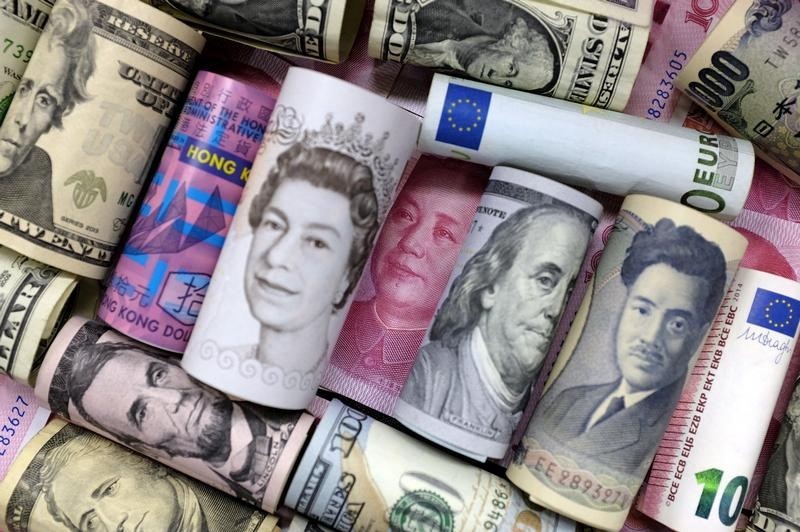
BofA says currency carry strategies are now the dominant G10 FX theme as persistent inflation risks and higher-for-longer rates continue to drive relative rate differentials. The report notes U.S. policy remains relatively accommodative under Taylor Rule frameworks, with economists pushing Fed cuts into 2027, while the Norwegian krone is a standout carry performer versus the dollar. The British pound may also gain support if growth upgrades hold and domestic political noise fades, even as U.S.-Iran tensions add broader growth risk.
The important change is not “carry is back,” but that the market is re-embracing a regime where policy-rate differentials dominate spot and geopolitical headlines become tradable noise rather than a driver of sustained FX direction. That usually helps the highest-yielding, credible central banks first, while punishing low-yielding reserve currencies that can no longer rely on risk-off flows to overpower carry leakage. In practice, this favors a smaller set of currencies with clean policy credibility and positive real-rate momentum, and it tends to compress realized FX volatility even when macro headline risk looks elevated.
Second-order effects matter more than the headline. If U.S. rates remain sticky while other G10 central banks pause, the dollar’s support becomes self-reinforcing through hedging costs and asset allocation, which can tighten financial conditions abroad even without additional Fed hikes. That is a negative for countries with current-account sensitivity and refinancing needs, and a positive for exporters with domestic inflation containment because their currencies can weaken without triggering immediate policy stress.
The contrarian setup is that the market may be overconfident in a one-way carry regime if growth begins to soften faster than inflation. Carry trades tend to unwind violently when volatility rises, and the gap between implied policy paths and actual growth data can close quickly over 1-2 quarters. Geopolitical shocks are less likely to change the medium-term FX trend directly, but they can be the catalyst that forces de-risking in crowded carry books, especially if oil spikes feed back into inflation expectations and rate-cut timing.
The cleanest expression here is to own currencies with both carry and policy credibility against low-yielders where the market is still paying for protection. The key is to prefer trades with a strong roll component and limited dependence on spot appreciation, because spot can remain range-bound while carry accrues. On the other side, the biggest risk is not an immediate reversal in fundamentals but a volatility regime shift that makes funding currencies outperform abruptly for a few sessions and then sustain gains as leveraged positioning de-risks.
AI-powered research, real-time alerts, and portfolio analytics for institutional investors.
Request DemoOverall Sentiment
neutral
Sentiment Score
0.05
