
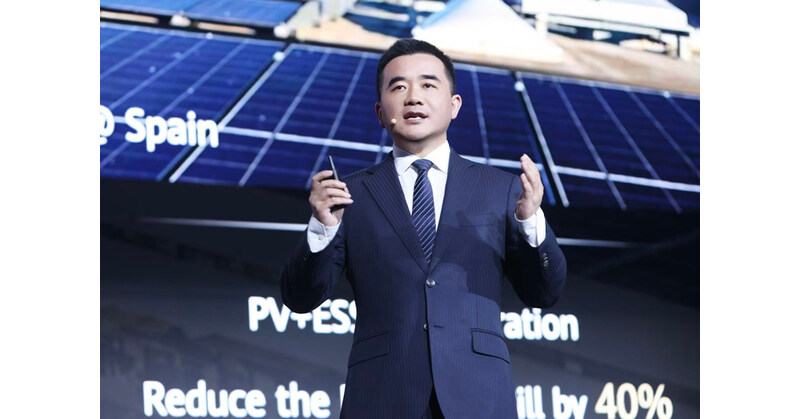
Huawei presented its grid-forming strategy for future power systems at The Smarter E 2026 in Munich, targeting higher stability and smoother integration as wind/solar are expected to reach 64% of Europe’s generation mix by 2030. The company highlighted PV+BESS “grid-forming” capabilities (incl. black start) and cited commercial impact examples: a ~10% revenue increase at Germany’s AHS business park after two years, and near ~40% electricity bill reductions for a Carrefour supermarket in Spain with an ~5-year payback. The news is largely a technology/strategy update, with limited direct near-term financial implications.
Grid-forming is important because it moves storage from a commodity kWh product toward an infrastructure product with pricing power tied to grid reliability. That shifts the profit pool toward companies that control software, certification, and systems integration, while compressing the value of undifferentiated battery hardware. For public markets, the cleaner beneficiaries are European power-management and grid-equipment names that can sell controls, protection, and service contracts rather than just modules.
For retailers and other C&I users, the real upside is not “cheap power” so much as tariff optimization and resilience. If a store network can shave peaks, reduce outage exposure, and monetize behind-the-meter flexibility, the gain shows up first in EBITDA margin and only later in expansion capex decisions. That makes Carrefour-type operators a mild operational beneficiary, but the stock impact is likely incremental unless management starts quantifying estate-wide savings.
The contrarian risk is timing: utility-scale adoption usually lags vendor demos by 12-24 months, and grid-code changes are slow. If power prices mean-revert or financing costs stay elevated, the revenue stack for BESS narrows back toward simple arbitrage, which would cap upside for the whole theme. A second risk is procurement friction around Chinese equipment in Europe; if security or certification concerns intensify, share shifts could favor Western names rather than Huawei-linked solutions.
AI-powered research, real-time alerts, and portfolio analytics for institutional investors.
Overall Sentiment
mildly positive
Sentiment Score
0.20
Ticker Sentiment
