

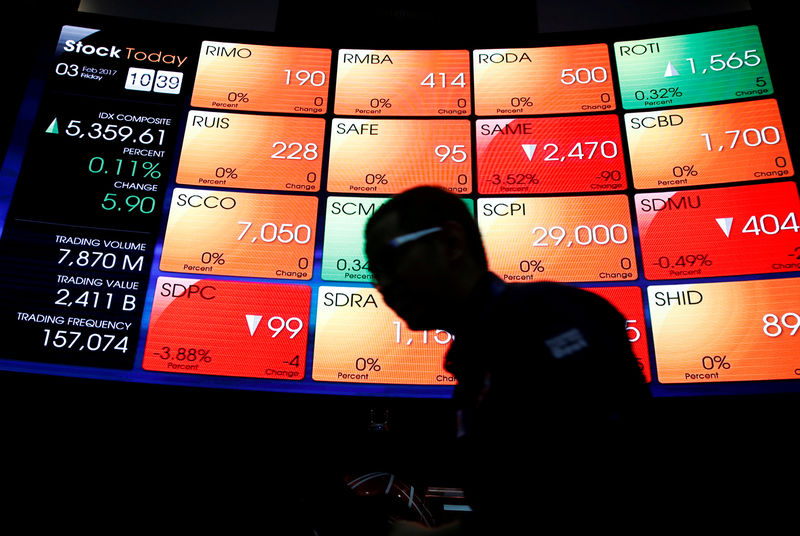
Indonesia's IDX Composite was flat at 0.00% despite broad stock-specific moves, with advancers outnumbered by decliners 369 to 322. Commodities were softer, as crude oil fell 1.15% to $93.60/barrel, Brent dropped 1.02% to $98.38, and gold eased 0.05% to $4,806.04/oz, while USD/IDR rose 0.44% to 17,185.90. The piece is largely a market wrap with added promotional commentary on AI stock picks, implying limited standalone market impact.
The cleanest read-through is not the headline noise, but the cross-asset signal: softer energy and a marginally weaker dollar are a relief valve for import-heavy emerging markets, yet the move is too small to argue for a durable macro inflection. For Indonesia, that means the immediate beneficiaries are domestically levered, rate-sensitive cyclicals and property names rather than exporters; if USD/IDR keeps grinding higher, the market will likely punish balance-sheet-stretched companies first and reward firms with low foreign-currency liabilities and pricing power.
The bigger second-order effect is positioning. A modest oil pullback after geopolitical escalation suggests the market is fading tail-risk premia, which often leaves commodity-linked equities vulnerable if headlines re-accelerate. Energy and raw materials remain the most reflexive factor to any reversal in Iran or broader Middle East risk; the asymmetry is that downside in crude from here is likely more orderly than upside, because any fresh disruption quickly forces physical buyers and systematic funds back in.
On the single-name side, the article’s AI/tech callout still matters: market participants are clearly rewarding perceived winners with visible revenue acceleration and punishing laggards with any growth deceleration. That keeps SMCI and APP in the “buy the dip if the tape stabilizes” bucket, but only if rates and the dollar don’t re-tighten meaningfully. The contrarian take is that the biggest risk to these names is not valuation in isolation, but a regime shift back toward higher real yields, which would compress multiple expansion faster than fundamental revisions can catch up.
AI-powered research, real-time alerts, and portfolio analytics for institutional investors.
Overall Sentiment
neutral
Sentiment Score
0.05
Ticker Sentiment
