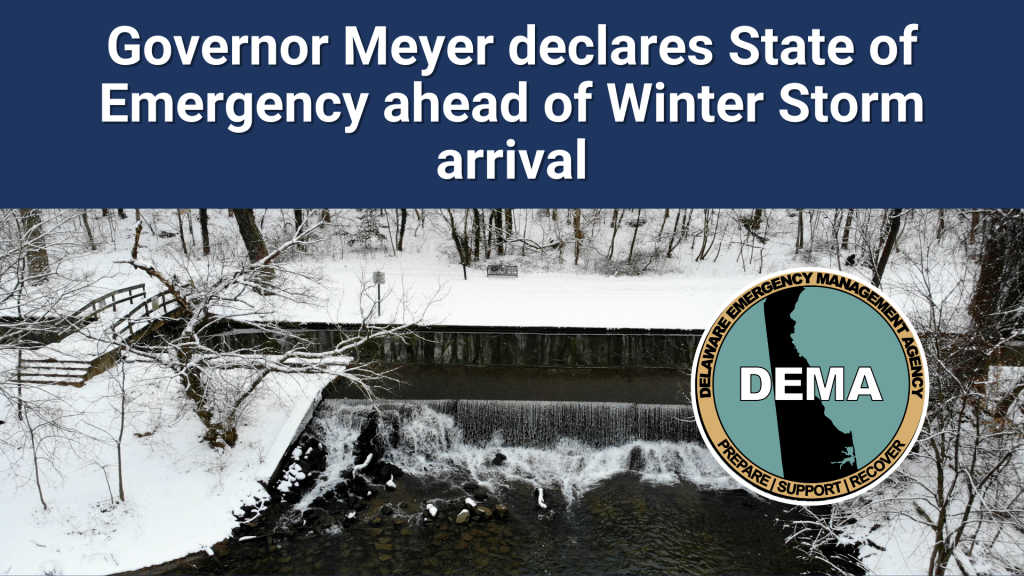
Delaware Governor Matt Meyer declared a State of Emergency effective 12:00 p.m. and activated the Delaware National Guard as the National Weather Service issued a Blizzard Warning for the state, forecasting 12–20 inches of snow and increased coastal flood risk through Monday. State agencies including DEMA, DelDOT and DSP moved to full activation and warned of likely state-mandated driving restrictions (Levels 1–3), widespread closures and infrastructure impacts that could disrupt regional transportation, utilities and local supply chains; market participants should monitor DelDOT and NWS advisories for short-term operational risks in the region.
Market structure: A declared state of emergency and 12–20" forecasted snowfall creates predictable winners (snow-removal and road-salt suppliers, emergency-generator manufacturers, utility service contractors) and losers (regional trucking/logistics, short-term retail footfall, coastal property owners). Expect near-term price-power for salt (CMP) and generator (GNRC) suppliers as municipal procurement accelerates; trucking/airfreight volumes (FDX, UPS) will see 3–10% weekday capacity hits and potential delivery windows widened by 24–72 hours. Cross-asset: short-lived bid in natural gas and diesel (heating/transport demand) and a micro spike in implied equity vols for regional transport and insurers; muni credit impact minimal unless infrastructure damage exceeds ~$50–100m locally.
Risk assessment: Tail risks include extended widespread outages (>72 hours), coastal flooding damaging port terminals (2–5% regional GDP hit scenario) or a storm surge that triggers large insurance losses and regulatory rate scrutiny. Time horizon: immediate (0–7 days) is high operational disruption; short-term (2–8 weeks) sees inventory replenishment and replacement sales; long-term (3–12 months) could raise municipal CAPEX for resiliency and benefit equipment OEMs. Hidden dependencies: municipal salt inventories, contractor labor availability, and fuel-delivery priority rules (Level 3 bans) that can amplify supply-chain chokepoints.
Trade implications: Direct plays are tactical longs in CMP and GNRC on surge in public buying; tactical shorts or put-spreads on FDX and regional air carriers to capture delivery-guidance risk over next 2–4 weeks. Options strategies: buy 2–4 week puts on FDX (5–7% OTM) or a put vertical to limit premium; buy short-dated calls on HD/LOW as post-storm replacement demand lift (entry 3–10 days after storm if shares dip >3%). Rotate 2–4% portfolio weight from discretionary leisure/retail exposure into utilities (NEE/DUK) and industrials servicing winter maintenance.
Contrarian angles: Consensus will initially punish transport and leisure; markets often underprice the follow-on demand surge for home improvement, generators and contractor services—historical parallels (2016–2018 severe snows) showed 7–15% rebound in HD/LOW within 2–3 weeks. Reaction could be overdone if storm lacks major flooding — avoid assuming insurance-sector carnage unless claims >$200m regionally. Watch municipal procurement notices (salt/contract awards) in next 7–21 days as an early signal to add to industrial exposure.
AI-powered research, real-time alerts, and portfolio analytics for institutional investors.
Request DemoOverall Sentiment
moderately negative
Sentiment Score
-0.45
