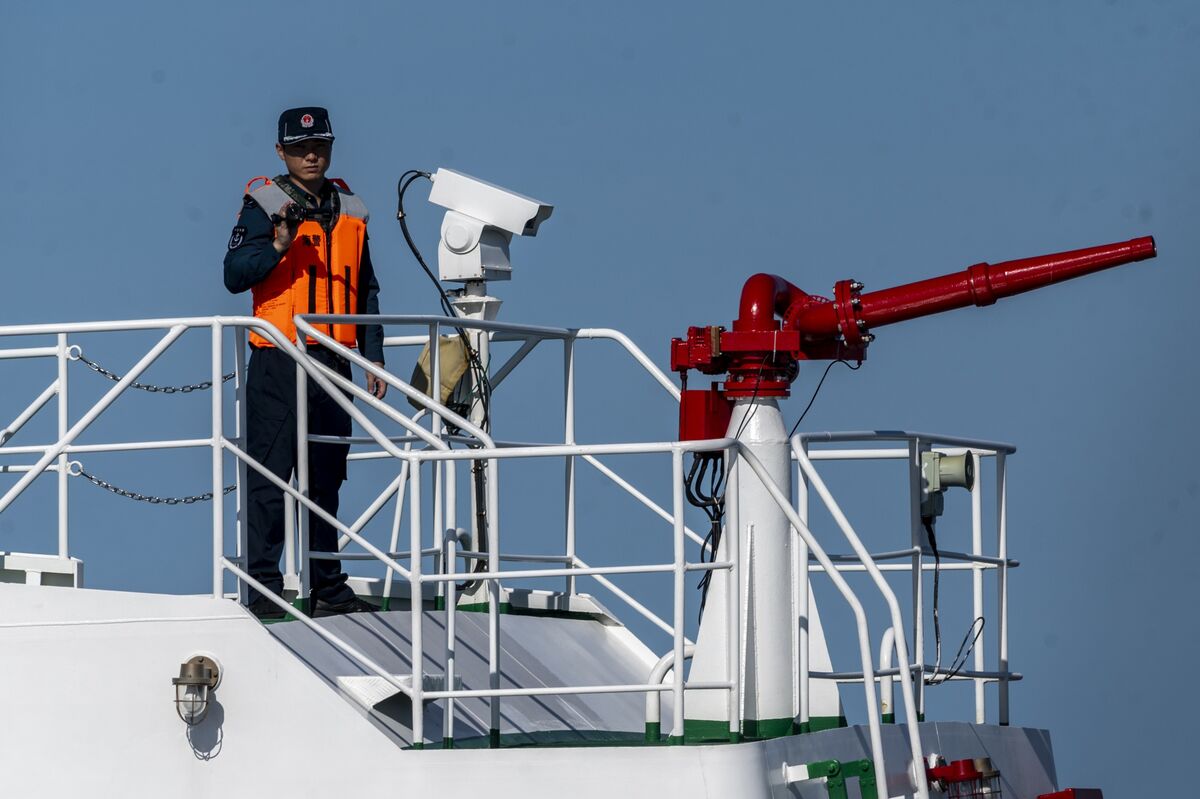
China sent maritime agency ships on a multi-day patrol east of Taiwan and, for the first time, questioned foreign commercial vessels in the area, including three merchant ships flagged in Singapore, Liberia and Benin. The move is part of Beijing's stated 'special maritime traffic law enforcement' and reflects a more assertive challenge to Taiwan's territorial claims. The development raises geopolitical risk for shipping activity and regional stability, though the immediate market impact is likely concentrated in defense and transport-related assets rather than broad markets.
This is a signaling escalation, not yet an economic blockade, but it changes the premium on operating eastbound Taiwan-adjacent sea lanes. The important second-order effect is uncertainty: even a low-level inspection regime raises the expected cost of passage via delays, insurance repricing, and rerouting risk, which matters most for time-sensitive, low-margin cargoes rather than bulk commodities. The first beneficiaries are not necessarily defense primes immediately, but marine insurers, private security, and firms with diversified routing optionality.
The near-term loser set is Taiwanese export manufacturers and regional logistics operators exposed to just-in-time shipping, especially those dependent on single-string maritime schedules and narrow inventory buffers. Over days to weeks, the market is likely to underprice the cumulative friction if the practice becomes routine: each extra interaction with foreign-flag vessels normalizes a quasi-blockade toolkit without crossing the line that would trigger an overt military response. That asymmetry tends to compress multiples in transport and industrial names with Taiwan or North Asia revenue concentration before it shows up in hard data.
The catalyst tree is straightforward: repetition, not intensity, is what matters. If the questioning expands in geography or duration over the next 2-8 weeks, expect shipping insurers to widen war-risk language, and charterers to seek alternative routes or add buffer days, which can ripple into spot freight rates and component lead times. The main reversal would be a sharp diplomatic pushback combined with visible reduction in patrol tempo; absent that, the behavior is likely to become the new baseline and be discounted too slowly by equity markets.
The contrarian view is that investors may overfocus on headline geopolitics and miss that the immediate transmission is operational, not kinetic. That makes the best risk/reward less about a broad defense bid and more about targeted exposure to shipping-friction beneficiaries versus Taiwan-sensitive industrials. If this stays below overt interdiction, the market may treat it as noise even as it quietly adds basis points to logistics costs across Asia.
AI-powered research, real-time alerts, and portfolio analytics for institutional investors.
Request DemoOverall Sentiment
mildly negative
Sentiment Score
-0.25
