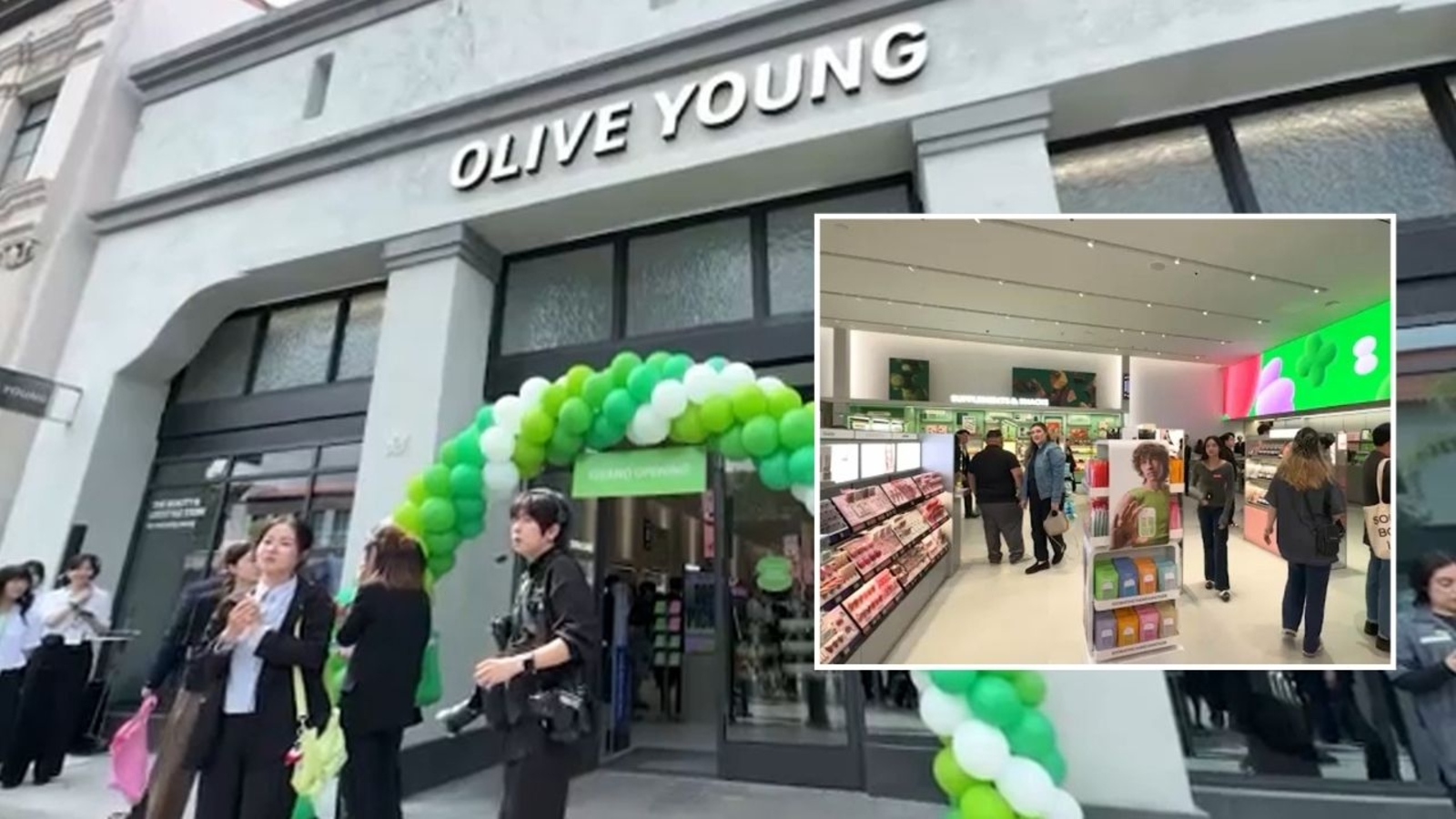
Olive Young opened its first U.S. store in Pasadena, an 8,647-square-foot location offering about 400 brands and 5,000 SKUs across skincare, makeup, hair care, wellness and inner beauty. The retailer also launched a U.S.-exclusive online store and plans a second California location at Westfield Century City in June 2026. The move expands Olive Young's U.S. footprint after cross-border e-commerce since 2018 and targets strong Los Angeles demand for K-beauty products.
The first-order takeaway is not “one more beauty store,” but the monetization of a cross-border funnel that has already validated U.S. demand. A physical node in a dense, trend-sensitive market should lift conversion and average basket, but more importantly it reduces discovery friction for higher-margin categories like devices, inner beauty, and regimen bundles, which tend to underperform online when customers cannot sample texture or efficacy. That makes this more interesting for suppliers than for the retailer itself: brands that win shelf space in an emerging U.S. K-beauty gatekeeper can see accelerated U.S. awareness without having to build distribution from scratch.
The second-order effect is on the competitive stack. Domestic prestige beauty retailers and mass chains are vulnerable at the margin because Olive Young is effectively importing a merchandising algorithm tuned to virality and fast product turnover; that can compress the innovation cycle and force incumbents to subsidize more demos, sampling, and Korean/Asian skincare adjacencies. The biggest near-term beneficiaries are the viral K-beauty brands with strong sell-through and lightweight inventory models, while slower-moving legacy skincare names risk shelf dilution if consumers substitute perceived-value routines for premium Western regimens.
The key risk is that enthusiasm is front-loaded and culturally concentrated. If in-store traffic normalizes after opening-week hype, the U.S. economics will depend on repeat visits and omnichannel retention rather than novelty, and any moderation in Korean beauty trend intensity would hit assortment productivity quickly. Over a 6-12 month horizon, the real catalyst is whether Olive Young can use L.A. as a template for national roll-out; if it can’t, this remains a niche concept with limited direct capital-market implications. If it can, expect a broader re-rating of imported beauty platform plays and select suppliers with U.S. exposure.
AI-powered research, real-time alerts, and portfolio analytics for institutional investors.
Request TrialOverall Sentiment
mildly positive
Sentiment Score
0.30
The contrarian view is that the market may be underestimating how little this says about general beauty demand and overestimating the addressable TAM. A highly curated, experience-driven store can look like category expansion while actually just reallocating share from existing channels, meaning the incremental pie may be much smaller than the crowd suggests. The better trade is not chasing the retailer story itself, but positioning around brand suppliers and incumbents most exposed to shelf-share and discovery shifts.
