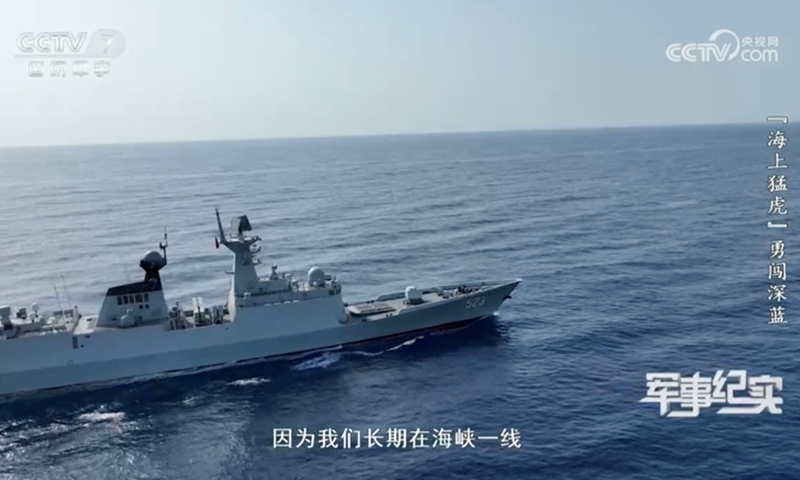
CCTV reported a more than 20-hour standoff in the Strait involving a Chinese PLA Navy Type 054A frigate, Honghe (Hull 523), which deployed with its main gun loaded after a foreign warship attempted to forcefully transit. The foreign vessel was reportedly larger in tonnage and came within 100-200 meters at the closest point before departing after failing to find a gap to exploit. The article is a geopolitical and defense update with limited direct market impact.
This is less a market event than a signal that maritime coercion in Asia is moving from rhetoric to repeated operational practice. The second-order effect is not an immediate supply shock but a gradual rise in the perceived probability of interdiction, which tends to widen risk premia for shippers, insurers, and port-adjacent assets long before any cargo is actually delayed. The key market tell is that escalation can be “managed” tactically for hours without visible macro disruption, making it easy for investors to underprice the probability of a future miscalculation.
The beneficiaries are defense primes with naval systems exposure, ISR, electronic warfare, and anti-ship missile content, because persistent gray-zone incidents typically accelerate procurement more than headline wars do. Secondary winners are satellite imagery, maritime domain awareness, and dual-use autonomy vendors that help governments and shipping firms track vessel behavior in contested waterways. The losers, over time, are Asian exporters and container/shipping names with high China/SEA route concentration, not because of immediate volume loss but because even modest insurance and route-friction increases compound into margin compression.
The contrarian view is that this kind of footage often marks signaling, not escalation: the political objective may be deterrence and domestic messaging rather than a prelude to blockade dynamics. That means the trade is better expressed as a volatility and regime-risk hedge than as a directional bet on an imminent crisis. The most important catalyst over the next 1-6 months is whether this is followed by more frequent near-miss incidents, live-fire exercises, or changes in carrier/escort posture; absent that, the market will likely fade the headline while retaining a higher baseline geopolitical discount.
AI-powered research, real-time alerts, and portfolio analytics for institutional investors.
Request TrialOverall Sentiment
neutral
Sentiment Score
-0.05
