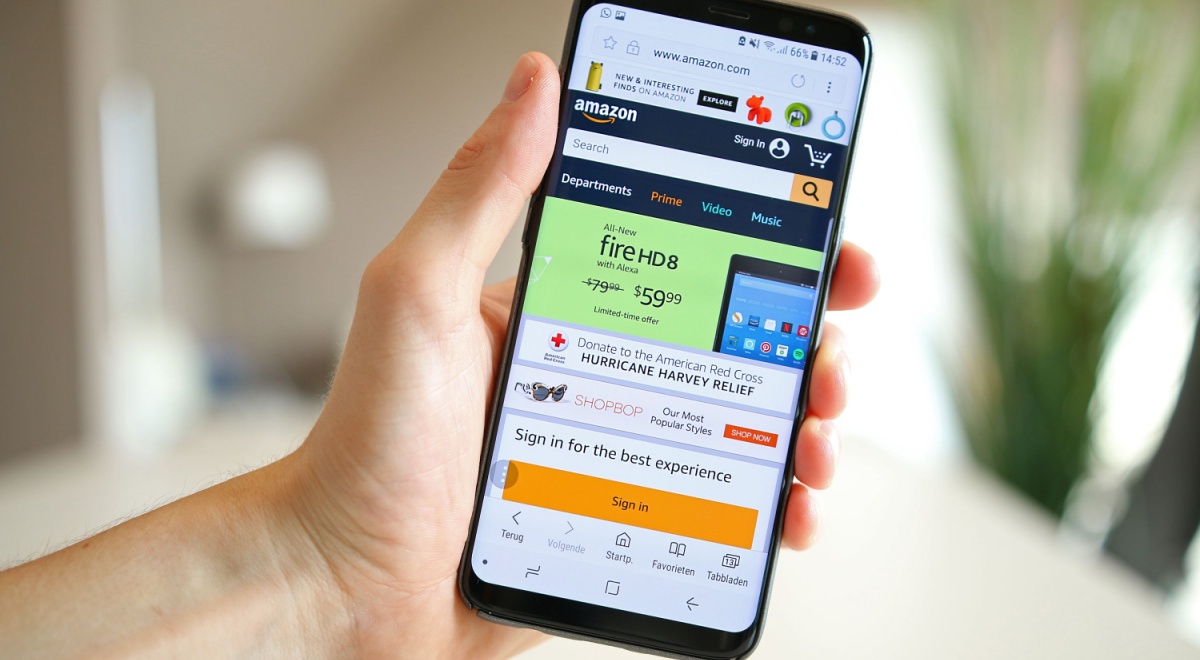
Motorola’s preinstalled Smart Feed app is reportedly hijacking Amazon app launches on some phones, redirecting users to Amazon’s website via affiliate links and raising concerns about unwanted monetization behavior. The issue appears tied to the latest Smart Feed version 2.03.0070, while older version 2.03.0056 and some devices such as the Moto F Stylus and Moto Edge 50 Pro did not reproduce the problem. Users can disable Smart Feed in Settings or uninstall it with third-party tools.
This is less about a one-off UX bug and more about a trust-tax imposed by preinstalled software that monetizes clicks it doesn’t clearly own. The incremental damage to AMZN is likely small in direct dollars, but the second-order effect is more important: any friction that routes users from app to browser raises abandonment risk at the highest-intent point in the funnel, which can hit conversion on mobile-heavy shopping cohorts. That matters most in categories with low repeat tolerance and high price comparison behavior, where even a modest increase in checkout latency can shift revenue to competitors with cleaner app flows.
The real loser may be Motorola’s brand equity and distribution leverage. Premium hardware buyers are unusually sensitive to perceived software manipulation, so this kind of controversy can widen the gap versus Samsung/Google over the next 1-2 product cycles, especially if reviewers start treating it as a platform-level governance issue rather than an isolated bug. For AMZN, the risk is reputational spillover: users rarely distinguish between the retailer and the handset OEM when the shopping journey breaks, so customer blame can land on Amazon even when the affiliate capture sits elsewhere.
Catalyst path is near-term and binary: if this is tied to a specific Smart Feed version, a patch or server-side kill switch could eliminate the issue within days to weeks. If it persists, the problem compounds into app-store-review scrutiny and possible consumer-protection noise over months, which could force Motorola to roll back monetization or deprecate the feature. The contrarian take is that the market may overstate AMZN earnings exposure but understate how quickly this can become a governance narrative for the hardware channel partner; that makes Motorola the cleaner short thesis than Amazon.
The best setup is to express this as a relative-value trade, not an outright AMZN short. The issue is too small to matter structurally for Amazon revenue, but meaningful enough to pressure Motorola/Nokia-style OEM trust dynamics if it recurs, so any public equity expression should target the ecosystem rather than the retailer.
AI-powered research, real-time alerts, and portfolio analytics for institutional investors.
Request DemoOverall Sentiment
moderately negative
Sentiment Score
-0.35
Ticker Sentiment
