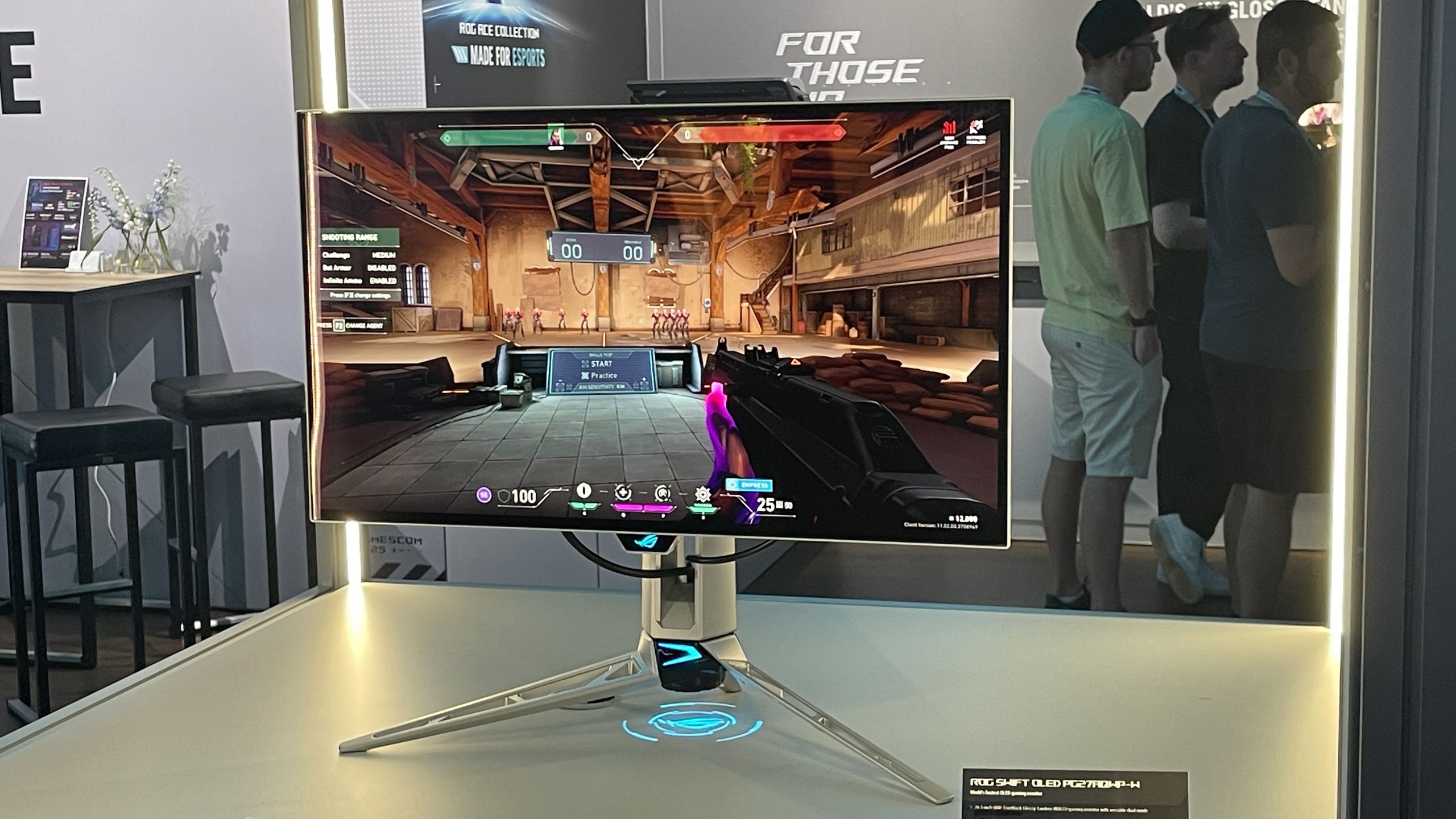
Asus ROG has teased what appears to be a 540 Hz, 24.5-inch OLED esports monitor, likely targeting 1080p competitive gaming. The product could appeal to high-end gaming enthusiasts by combining OLED image quality with ultra-high refresh performance, but the article provides no pricing, launch date, or confirmed specs beyond the teaser. Market impact is likely limited to niche gaming monitor competitors rather than the broader market.
This is less a one-off product tease than a signal that the premium gaming monitor category is still in an innovation phase, with manufacturers trying to collapse two previously separate demand pools: esports performance buyers and OLED quality-seekers. If the form factor/resolution combo lands as expected, it could force a re-rating of what “flagship” means in monitors and pull refresh-rate and panel-quality competition into the same SKU, pressuring legacy TN/IPS leaders on both spec and margin.
The second-order effect is on component mix, not just finished displays. A 540 Hz OLED at a compact size implies tighter tolerances in controller silicon, thermal management, and yield management; that tends to favor vertically integrated vendors and established OLED supply-chain partners while raising the hurdle for smaller monitor brands that compete mainly on panel procurement. In the near term, the market may underestimate how much this can accelerate premium replacement cycles among competitive PC gamers, but the adoption curve will likely be gated by GPU horsepower and game optimization, so unit demand should ramp over quarters rather than weeks.
The biggest risk is that the headline spec outruns practical usage: if image retention concerns, price premium, or insufficient frame generation prevent mass adoption, the category remains niche and the competitive threat to incumbent esports monitors is mostly symbolic. A more subtle bear case is cannibalization of high-end 240-360 Hz LCD volumes without expanding the total addressable market fast enough, which would compress ASPs across the premium monitor segment before OLED volume economics improve.
The contrarian view is that the true winner may not be the brand launching first, but the broader ecosystem that proves OLED can own both competitive and enthusiast gaming. If that thesis gains traction, the market could be underappreciating the upside for OLED materials, display drivers, and gaming-PC peripherals over the next 6-18 months, even if the initial product itself stays a halo item.
AI-powered research, real-time alerts, and portfolio analytics for institutional investors.
Request TrialOverall Sentiment
mildly positive
Sentiment Score
0.25
