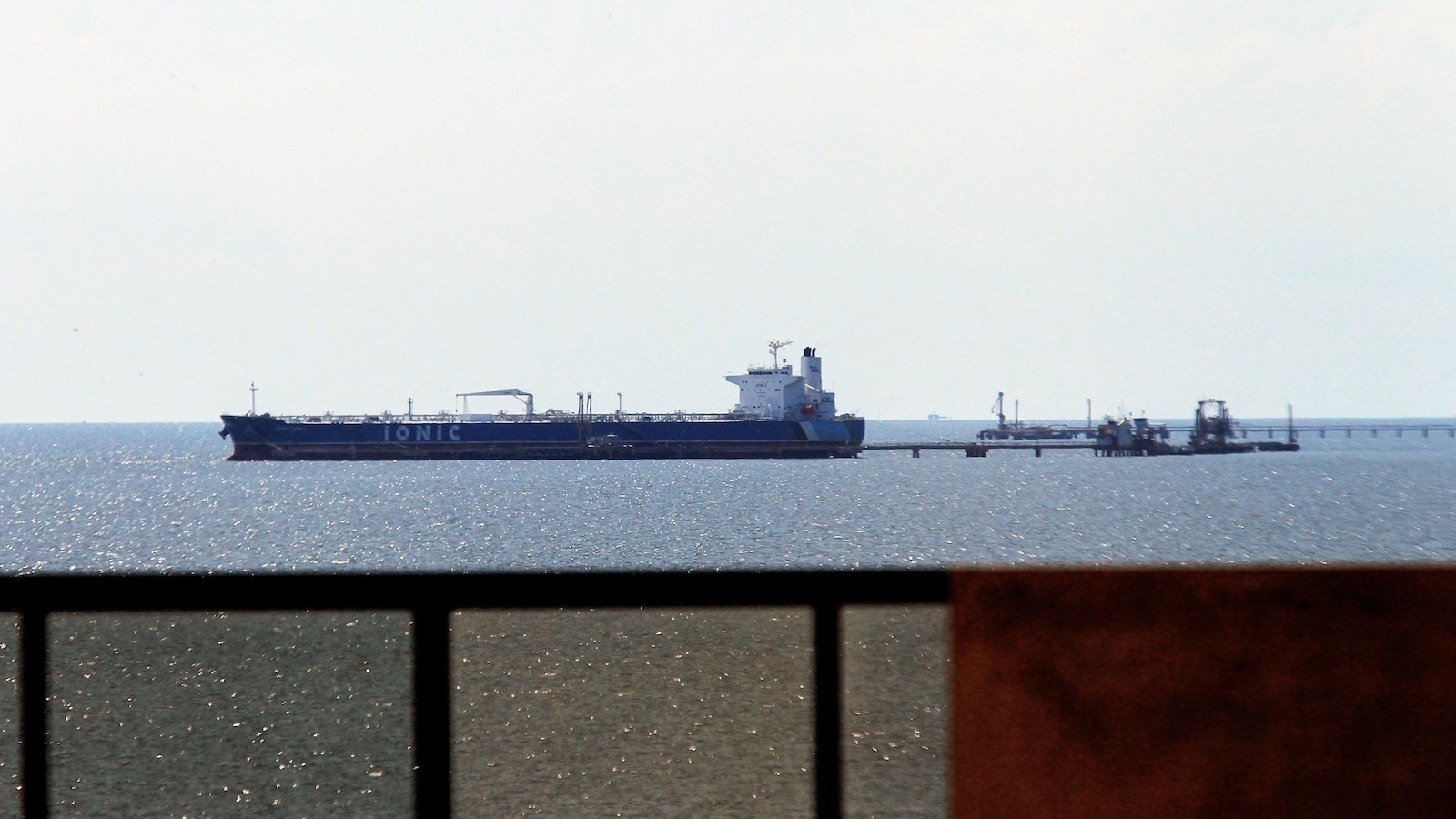
President Trump’s threat to blockade sanctioned Venezuelan oil tankers sparked a roughly 3% jump in WTI to about $56.50/bbl as markets priced in added geopolitical supply risk, even though Venezuela’s exports (~749,000 bpd) represent under 1% of global output. The U.S. has deployed 11 warships to the Caribbean, but analysts say a full blockade would be implausible and that any sustained price pressure would require a prolonged or escalated standoff — price scenarios cited range up to $65–$70/bbl. Near-term gasoline impact is likely muted (U.S. average $2.88/gal, down ~5% y/y) given seasonal demand weakness and limited Venezuelan market share.
Market structure: A tactical risk premium has been added to oil (+~3% WTI move) but Venezuela supplies <1% of global crude (~750 kb/d) so incumbents in heavy crude markets (Canadian Western Select, Mexican Maya) and shortsea tanker owners (EURN, FRO) gain pricing/charter leverage if shippers re-route. Refiners configured for heavy sour crude (VLO, PBF) face feedstock dislocation risk but may see wider crack spreads if light crude tightens. Cross-asset: expect a 5–25bp parallel move in 2s/10s yields on risk-on/off swings, USD strength in immediate risk-off, and a 10–30% spike in crude implied vol (front-month).
Risk assessment: Tail risk is a low-probability (~5–15%) but high-impact blockade or military escalation that removes 500–800 kb/d for months, which could lift WTI toward $65–70 in 3–6 months and $80+ in extreme scenarios. Short-term (days) volatility and shipping insurance rises; medium-term (1–6 months) depends on reflagging/ship‑to‑ship persistence; long-term (years) limited unless sanctions become permanent. Hidden dependency: clandestine sales, reflagging and insurance premiums mute supply loss but raise tanker freight and charter rates.
Trade implications: Tactical positions: 1) establish 2–3% portfolio exposure long XLE and buy 3‑month WTI 60/70 call spread (pay small debit) to capture a $65–70 scenario; 2) 1–2% long positions in defense primes (LMT, NOC) for sustained geopolitical premium over 3–12 months; 3) long VLCC/equity exposure (EURN or FRO) 1% to play higher freight rates if shipping disruption persists. Use stop-loss at 30% of premium on options and trim energy longs if WTI returns below $52 for 5 trading days.
Contrarian angles: The market underestimates downstream logistics: increased insurance and re-routing will widen Brent‑WTI and heavy‑light differentials, benefiting Gulf Coast refiners and heavy-crude producers (CNQ, PBR) more than spot WTI longs. Similar to 2011 Libya shocks, initial spikes often fade as alternative supply and floating storage fill gaps; therefore favor asymmetric option structures and pair trades over outright long cash positions to avoid mean reversion losses.
AI-powered research, real-time alerts, and portfolio analytics for institutional investors.
Request DemoOverall Sentiment
neutral
Sentiment Score
-0.10
