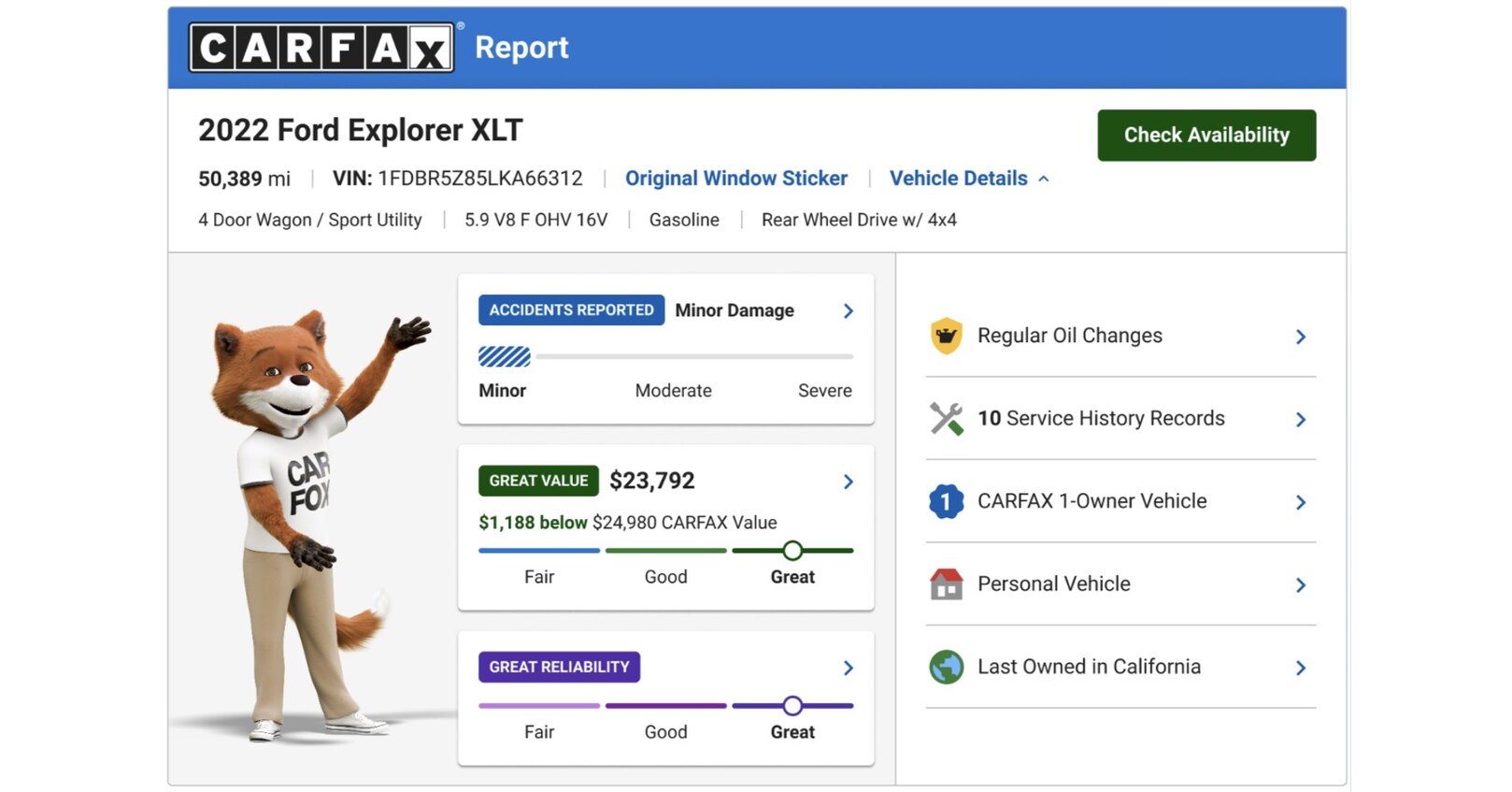
CARFAX launched “future Reliability” for individual vehicles using VIN-specific history, enabling shoppers to compare predicted long-term reliability and anticipated repair needs/costs. The company says it draws on 151,000+ data sources and 35B+ records, positioning the update as a new milestone in its ownership, service, and damage-data offering.
This is less a product launch than an attempt to monetize CARFAX’s data moat by moving from ex-post vehicle history to ex-ante pricing power. If the signal is credible, the first beneficiaries are franchised dealers and CPO-heavy operators like KMX, AN, LAD, and GPI, because they already pay to sell trust; the losers are thin-margin independents and listing-led intermediaries that depend on information asymmetry to clear inventory.
The second-order effect is inventory selection. A widely adopted reliability score should push sellers to retain cleaner units and dump problem cars sooner, which can tighten supply in the lower-price band and shift mix toward newer, better-maintained vehicles. That favors service absorption, reconditioning, and warranty attach rates over time, but it can also leave price-sensitive buyers less choice and pressure transaction volumes if affordability remains stretched.
Near term, I would treat this as a watch item rather than a clean trade: the market impact depends on whether the score meaningfully changes lead-to-sale conversion, gross per unit, or days-to-turn. The consensus risk is overestimating consumer willingness to pay for an abstract reliability label when monthly payment remains the dominant decision variable. The thesis breaks if dealers do not embed the score into listings or if actual post-sale repair outcomes fail to validate the ranking within 1-2 quarters.
AI-powered research, real-time alerts, and portfolio analytics for institutional investors.
Request DemoOverall Sentiment
mildly positive
Sentiment Score
0.15
