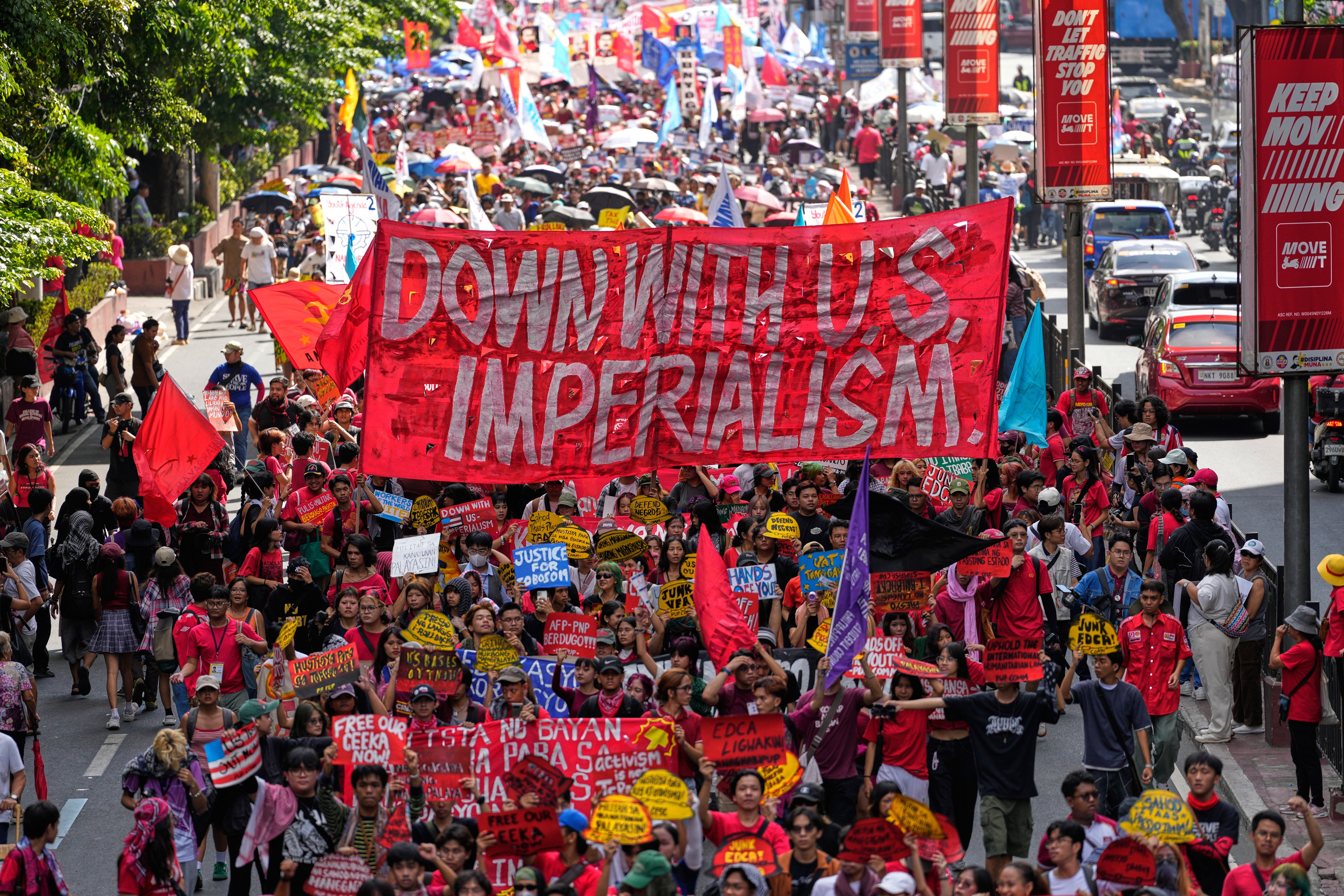
May Day protests are unfolding globally, with workers citing rising energy costs, inflation, and weaker purchasing power linked to the Iran war. The article highlights strikes and demonstrations across Europe, Asia, and the U.S., alongside labor pushback against wage suppression, labor-law changes, and Trump policies. While not a direct market event, the geopolitical and inflationary backdrop could keep pressure on energy-sensitive assets and risk sentiment.
The market implication is less about the protests themselves and more about the political response function: when labor unrest is synchronized across Europe, Asia, and the U.S. and explicitly linked to energy costs, policymakers are pushed toward subsidy, wage support, tax relief, or softer enforcement. That is bullish for consumer demand near term, but it is also a latent inflation impulse because the relief often lands with a lag while firms face immediate margin pressure. The second-order effect is that businesses with high labor intensity and weak pricing power absorb the squeeze first, especially in retail, hospitality, logistics, and small-cap domestic cyclicals.
Energy remains the key transmission channel. Even if crude retraces, elevated fuel prices act like a tax on lower-income households with a near-100% propensity to consume essentials, so the damage shows up fastest in discretionary spend, transport volumes, and delinquency trends in emerging markets. Countries with fragile external balances and IMF dependence are most exposed because they have less room to cushion prices without pressuring FX and sovereign spreads; that raises tail risk for imported inflation and policy tightening even as growth slows.
The U.S. angle is more political than macro: “workers vs billionaires” framing increases the odds that immigration, wage policy, and antitrust narratives stay elevated into the next policy cycle. In Europe, any relaxation of labor rules or expansion of Sunday/holiday work would likely be incremental and contested, making the greater risk a prolonged strike/disruption premium rather than a clean regulatory shift. Consensus may be underestimating how quickly protest-driven policy concessions can re-ignite wage inflation just as markets price disinflation.
AI-powered research, real-time alerts, and portfolio analytics for institutional investors.
Request DemoOverall Sentiment
mildly negative
Sentiment Score
-0.35
