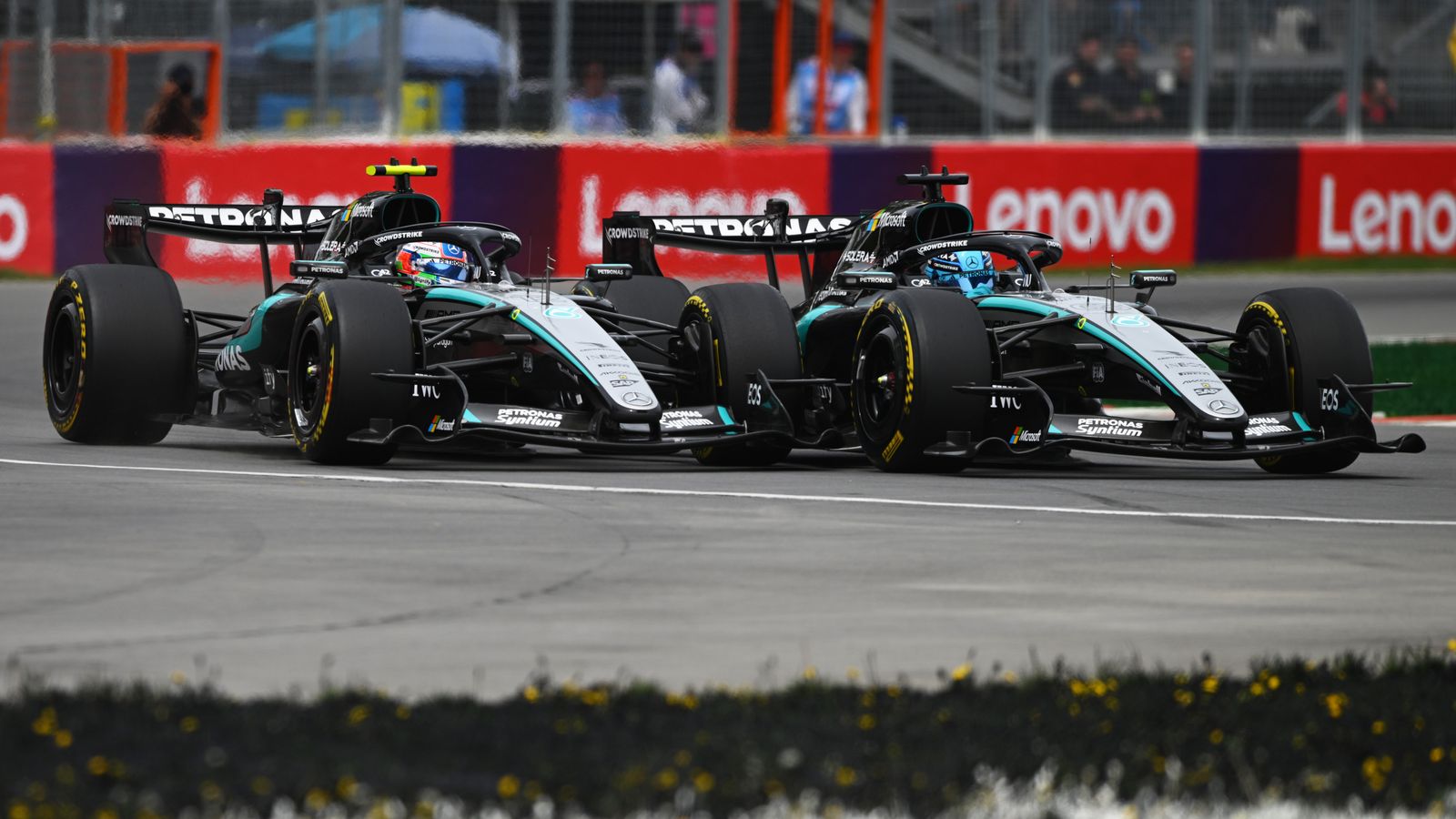
The article is a live race-weekend update for the Canadian Grand Prix in Montreal, covering Sprint and Qualifying results, highlights, and streaming information. It contains no financial figures, corporate developments, or market-moving news. The content is routine event coverage with negligible market impact.
This is a modest but non-trivial demand pulse for live sports media rather than a catalyst for broad market action. The real economics are in the ancillary monetization stack: subscription retention, incremental ad inventory, social clip engagement, and gambling traffic, all of which are disproportionately valuable because F1 weekend audiences skew affluent and internationally distributed. That makes this more relevant for platform owners and rights holders than for the race itself; the market tends to underappreciate how a single high-attention weekend can improve churn metrics and CPM realization for the quarter.
Second-order beneficiaries are the distribution and production layer: live rights holders, streaming platforms, and any advertiser with premium video budgets seeking scarcity inventory. The risk is not event-driven demand loss but substitution risk over the next 1-3 quarters if the content becomes too dependent on a narrow live-sports calendar; if viewership is concentrated in a few tentpole weekends, the market may overstate durable engagement. A weaker-than-expected race weekend can reverse the near-term lift quickly, but the more important driver is whether this converts casual viewers into recurring subscriptions before the next major race cluster.
The contrarian angle is that the market often treats live sports as universally defensive, but the real winner is whoever captures retained watch time, not raw impressions. If rights costs are already embedded, upside accrues mainly to operators with low incremental delivery cost and strong ad-tech leverage; pure rights buyers can see margin pressure even on high viewership if monetization is locked in. For logistics/transport proxies, the effect is mostly indirect through advertising budgets and premium hospitality spend, not core freight demand.
AI-powered research, real-time alerts, and portfolio analytics for institutional investors.
Request DemoOverall Sentiment
neutral
Sentiment Score
0.00
