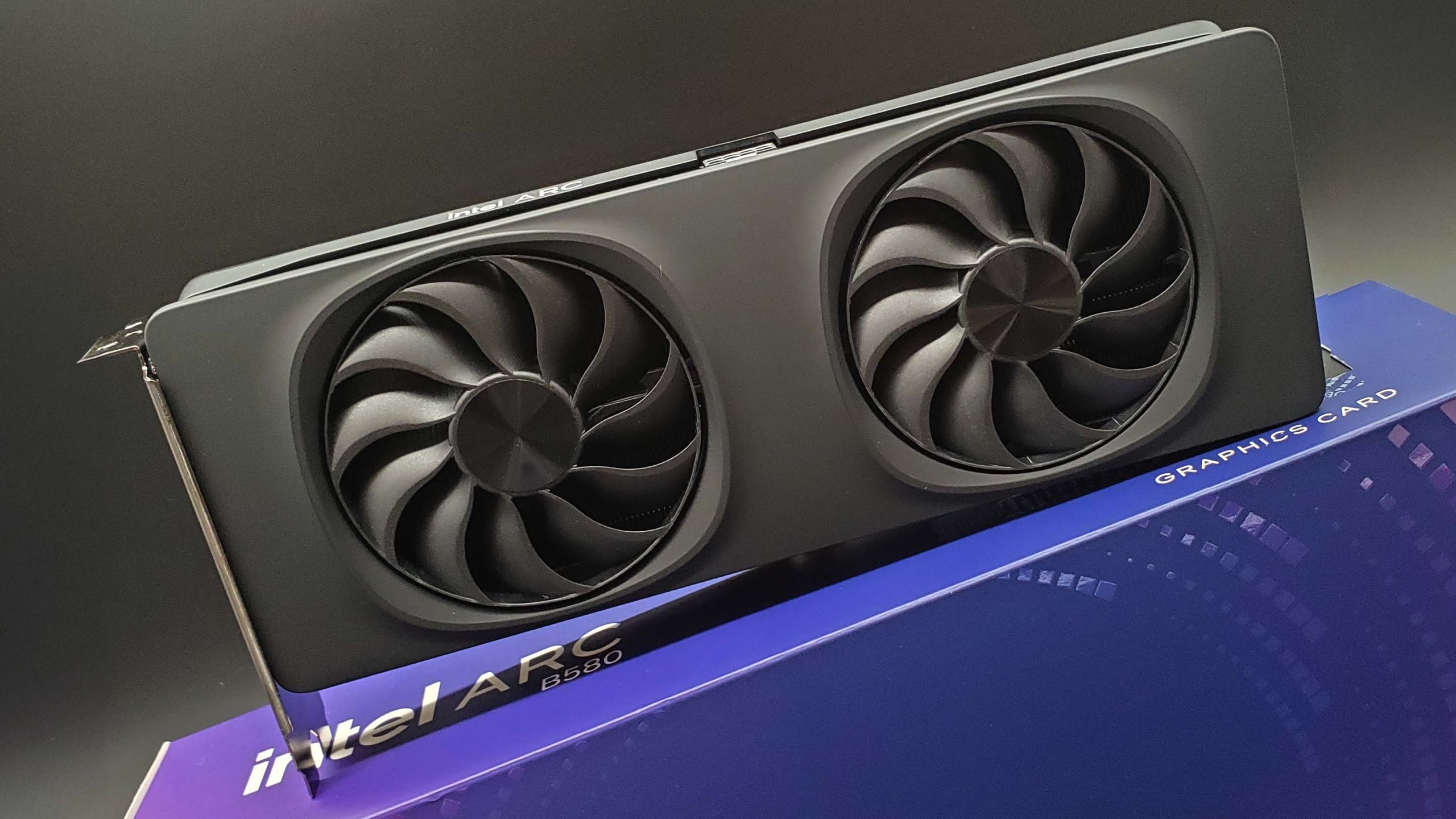
A reliable X leaker indicates Intel will soon ship its Big Battlemage (G31) GPU as the B70 Pro configured with 32 GB of VRAM; the chip is reported to be Xe2-based and a larger variant of the G21 used in the Arc B580. The configuration and large VRAM position the part as a high-cost professional/AI workstation card rather than a mainstream gaming SKU, limiting upside for consumer GPU market share in the near term; the report is unconfirmed and likely to have limited near-term market impact beyond signaling Intel’s pro/AI product cadence.
Market structure: A 32 GB G31 B70 Pro positioned as a premium professional card benefits INTC's ASPs and high-margin pro GPU TAM while creating upside for memory suppliers (Micron MU, SK Hynix, Samsung). Gaming incumbents (NVDA, AMD) face limited immediate share loss because a pro-only launch keeps mainstream price-sensitive gamers on current GeForce/Radeon lines, but pro AI/inference customers could shift incremental low-cost on-prem workloads to Intel, pressuring ASPs for entry NVDA inferencers over 12–24 months.
Risk assessment: Key tail risks are driver immaturity and launch delays (operational), supplier shortfalls for 32 GB modules (supply), and a product flop that triggers a >15% re-rating of INTC equity (financial). Immediate market reaction (days) will be rumor-driven; meaningful demand signals appear in 1–3 months via OEM design wins and in 6–18 months for revenue/stock impact; hidden dependency is software/driver parity — without it adoption stalls regardless of silicon.
Trade implications: Tactical plays: small, event-driven long in INTC (options/equity) to capture a release pop, and a 6–12 month long in memory names to capture higher VRAM content demand; protect portfolio with small NVDA put spreads to hedge re-pricing risk. If benchmarks or OEM contracts appear within 60 days showing competitive throughput/price, increase exposure; absence of such signs should trigger cutbacks.
Contrarian angles: Consensus underestimates that a pro-only G31 launch is a deliberate margin-first strategy, not a failed gaming push — this could mean steady, predictable revenue rather than share-grabbing volatility. Mispricing risk: memory suppliers may be priced for weak demand while a new class of 32 GB GPUs could lift GDDR/HBM pricing 5–15% over 6–12 months; unintended consequence: a high-price pro SKU could accelerate cloud/enterprise consolidation with NVDA if Intel can't match software stack — monitor benchmarks closely.
AI-powered research, real-time alerts, and portfolio analytics for institutional investors.
Request DemoOverall Sentiment
mixed
Sentiment Score
0.00
Ticker Sentiment
