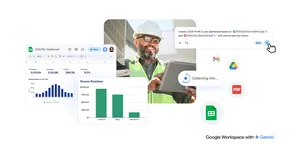
Google is rolling out a beta of Gemini integrations across Docs, Sheets, Slides and Drive to Google AI Ultra and Pro subscribers, enabling AI-driven first-draft generation, style/format matching, 'Fill with Gemini' for sheets, slide generation/editing, and 'Ask Gemini' in Drive that summarizes files with citations. The features pull context from users' files, emails and the web while emphasizing data safeguards; initial availability is English globally for Docs, Sheets and Slides and U.S. for Drive.
Embedding state-of-the-art LLMs deep into a productivity stack is less about a single feature and more about creating a durable usage->improvement feedback loop: more user interactions yield higher-quality signals, which accelerate model performance and raise switching costs. If even a low-single-digit percentage uplift in paid adoption or ARPU materializes across the Workspace base over 12–24 months, the revenue and margin leverage will be non-trivial for Alphabet because incremental subscription dollars have very high incremental margins compared with ad business volatility.
Second-order winners will include cloud infrastructure and silicon suppliers: sustained model hosting and real-time integration demands tilt enterprise procurement toward providers that can guarantee latency, SLAs and compliant data handling. Conversely, mid-market SaaS tools that monetize by being the primary layer above docs/sheets (e.g., standalone automation and lightweight task apps) face margin pressure and potential consolidation as buyers prefer one-stop integrated AI workflows.
Key short-term risks that could reverse adoption are operational rather than product-market fit: a high-profile hallucination, a data-leak incident, or adverse regulatory guidance (EU AI Act enforcement or US privacy inquiries) within 3–12 months would force retrenchment, legal costs and slower monetization. Separately, if Google absorbs more compute cost without successfully converting free users to paid tiers in the next two earnings cycles, margin dilution could appear even while top-line usage metrics look strong.
Monitor two high-leverage signals as near-term catalysts: (1) enterprise contract announcements or large Workspace migrations (12–18 months window) that include paid AI tiers, and (2) regulatory filings/agency guidance on data use in generative AI over the next 3–9 months. These will separate a durable monetization path from a transient product hype cycle and should guide sizing and hedging decisions.
AI-powered research, real-time alerts, and portfolio analytics for institutional investors.
Request DemoOverall Sentiment
moderately positive
Sentiment Score
0.35
Ticker Sentiment
