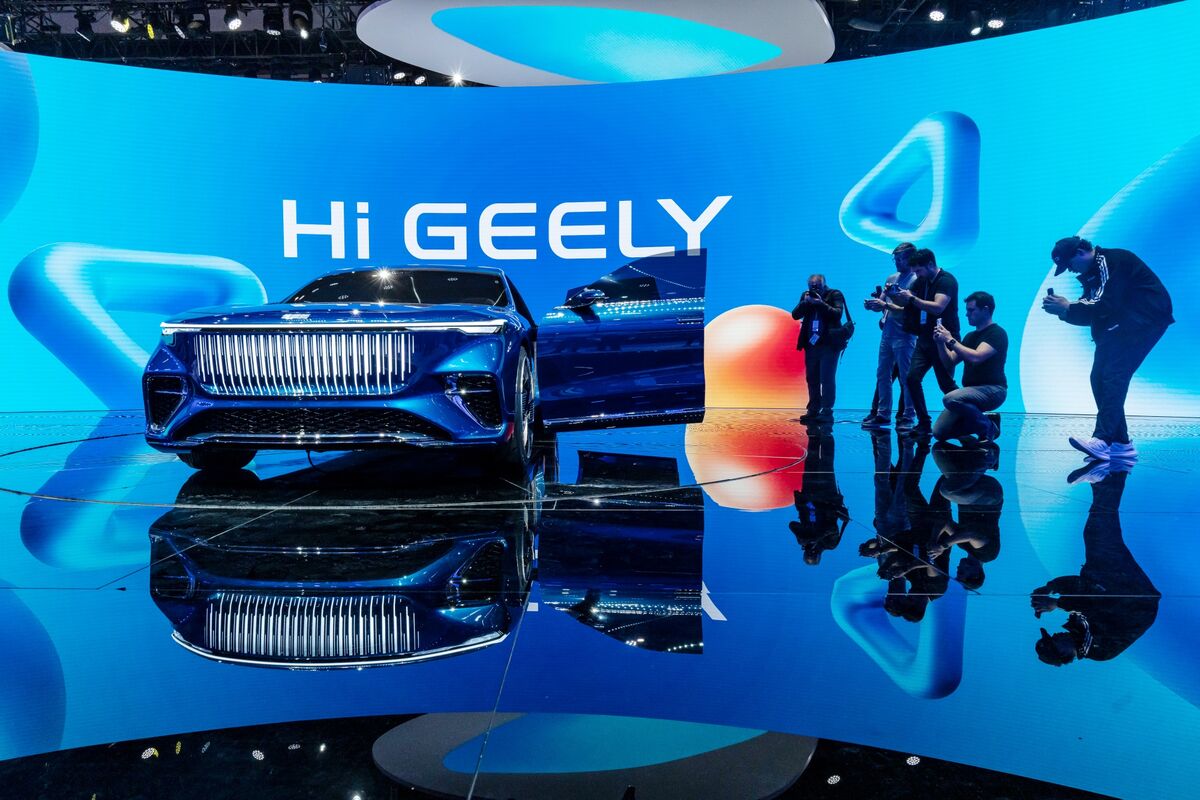
Geely will shut or merge some units as part of a restructuring aimed at concentrating resources around its Hong Kong-listed arm and improving governance. Chairman Li Shufu framed the move as a 'One Geely' strategy to rationalize relationships between operating entities and eliminate redundant units. The announcement is strategic and governance-focused, with limited immediate market impact.
This is less a headline about near-term earnings and more a governance reset that should improve capital allocation efficiency over a 6-18 month horizon. For Geely, the key second-order effect is lower internal friction: fewer overlapping entities should reduce duplicated SG&A, simplify procurement, and make EV/platform investments easier to prioritize across brands. That matters because in autos, small percentage improvements in opex and capex discipline can translate into outsized equity value when the cycle is weak and pricing power is limited.
The winners are likely the cleaner, more centralized operating platforms and external partners that can plug into a simplified group structure. Suppliers with exposure to Geely's top-volume programs may see faster decision-making and less order fragmentation, while weaker intra-group units, subscale brands, and redundant JV structures are the obvious losers. Competitively, this could pressure smaller Chinese OEMs that still rely on decentralized, cash-burning corporate sprawl; if Geely executes, it raises the bar on governance and may force peers to follow with their own restructuring, creating a multi-year industry consolidation trade.
The main risk is execution: restructurings often look value-accretive on paper but become HR/legal-heavy and can distract management from product launches for 2-4 quarters. The market will likely reward only tangible proof points such as margin improvement, lower related-party complexity, or asset sales; absent that, this stays a story stock catalyst rather than a fundamental rerating. Contrarian view: the announcement may be a signal that management is acknowledging prior inefficiency, so near-term upside could be capped unless the simplification is paired with hard capital returns or a clearer EV strategy.
Best asymmetry is to own the cleaner beneficiaries of consolidation rather than the restructuring itself. In China autos, that argues for leaning into better-governed OEMs and select suppliers with high Geely exposure, while fading subscale incumbents with bloated balance sheets and low visibility. The catalyst window is longer-dated: days for sentiment, months for evidence, and years for structural rerating.
AI-powered research, real-time alerts, and portfolio analytics for institutional investors.
Request DemoOverall Sentiment
neutral
Sentiment Score
0.05
