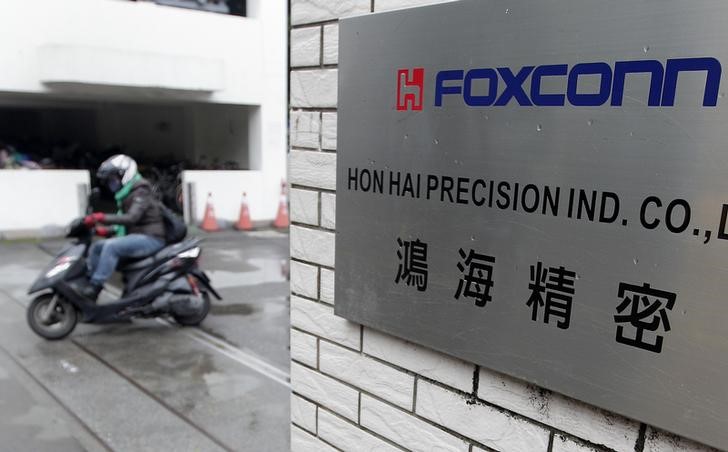
Foxconn reported Q4 net income of T$45.21bn ($1.41bn), down 2.4% year-over-year and missing Bloomberg estimates of T$59.86bn, despite a record Q4 revenue of T$2.603tn. Weak margins in consumer electronics and relatively slim server margins drove the profit shortfall even as AI-driven server demand and strong reception for Apple's iPhone 17 provided demand support. Management flagged industry headwinds including cooling consumer demand and a potential memory chip shortage that could weigh on the sector, partially offset by robust AI server orders.
Margin compression at large contract manufacturers is now a transmission mechanism from component scarcity (memory, power ICs) into OEM free cash flow; that mechanism amplifies when the volume pool is concentrated in a handful of hyperscalers because they can simultaneously demand lower unit prices and longer payment terms. The immediate second-order winners are upstream memory suppliers and small, nimble ODMs that can defend higher engineering content per box (better gross margin mix), while the losers are scale assemblers whose business model relies on thin, high-volume throughput rather than engineering differentiation.
Timing matters: expect headline margin noise to persist for the next 2–4 quarters as memory tightness and parts reallocation play out; if memory OEMs step up capex, price relief could start materializing in 12–24 months and flip this story. Tail risks include a sudden softening in AI server orders from hyperscalers (60–120 day order cycles can swing inventories) or a rapid ramp of DRAM/NAND supply that would erase the memory-price uplift and compress gross margins across the stack.
Consensus overlooks that thin server-level margins are structurally different from consumer-product margin squeezes — server volume growth can hide unit-level margin pressure for years while still producing outsized vendor cashflows. That creates asymmetric outcomes: GPU vendors retain pricing power and margin expansion, while assemblers with fixed-cost footprints can see FCF volatility; position sizing should therefore separate exposure to component price cycles (memory) from exposure to assembly/mix risk (contract manufacturers).
AI-powered research, real-time alerts, and portfolio analytics for institutional investors.
Overall Sentiment
mildly negative
Sentiment Score
-0.25
Ticker Sentiment
