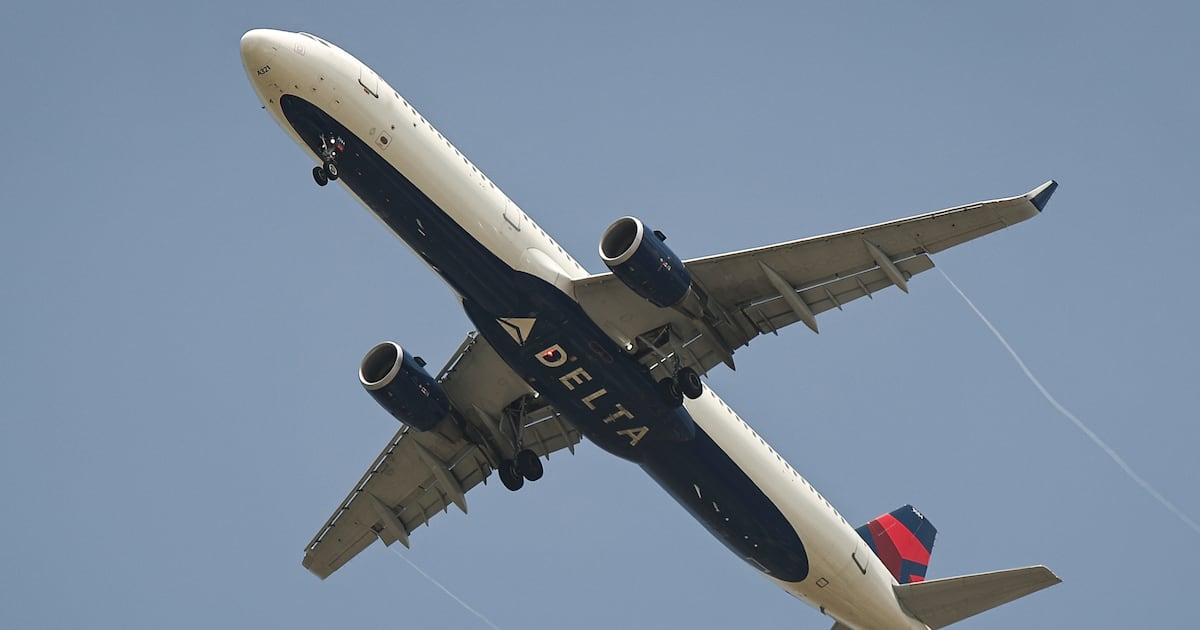
A Delta Air Lines flight carrying 178 passengers and 6 crew diverted from Albuquerque to Farmington after a disabled aircraft blocked the runway and limited fuel became a concern. The aircraft landed at Four Corners Regional Airport, passengers were bused back to Albuquerque, and the flight later returned without passengers that night. The incident was operationally disruptive but appears isolated and limited in market impact.
This is less a one-off operational nuisance than a reminder that network integrity matters more than headline load factors. For airlines, small runway disruptions can cascade into missed turns, crew duty-time friction, reaccommodation costs, and knock-on schedule compression later in the day; the economics are worst when the incident forces a diversion but not a cancellation, because the carrier eats fuel, ground handling, and passenger compensation while still having to preserve the remainder of the rotation.
The key second-order effect is on reliability perception, not immediate revenue. Delta tends to defend share on schedule quality and premium trust, so even isolated irregular ops can matter if they cluster during peak summer demand; however, the equity impact should stay contained unless this becomes part of a broader pattern of ATC/airport fragility or fuel-planning scrutiny. The real losers are lower-frequency travelers and corporate contracts, where even a modest deterioration in on-time arrival can shift share toward the most dependable network carrier over a multi-quarter horizon.
Contrarian angle: the market may over-attribute micro-disruptions to company execution when the causal chain is largely airport infrastructure and third-party runway availability. That means any selloff in DAL tied to this headline is likely tradeable rather than structural unless subsequent disclosures show multiple similar diversions or a measurable uptick in irregular-ops expense. The catalyst to watch is whether summer systemwide completion factor and PRASM commentary remain intact over the next 1-2 earnings prints; if so, the event fades fast.
From a risk standpoint, the asymmetry is in operational repetition: one incident is noise, several in a season can force more conservative scheduling, higher spare-aircraft costs, and margin drag. If broader airport congestion worsens, network carriers with stronger schedule recovery tools should gain relative to ULCCs and weaker legacy peers.
AI-powered research, real-time alerts, and portfolio analytics for institutional investors.
Request DemoOverall Sentiment
mildly negative
Sentiment Score
-0.15
Ticker Sentiment
