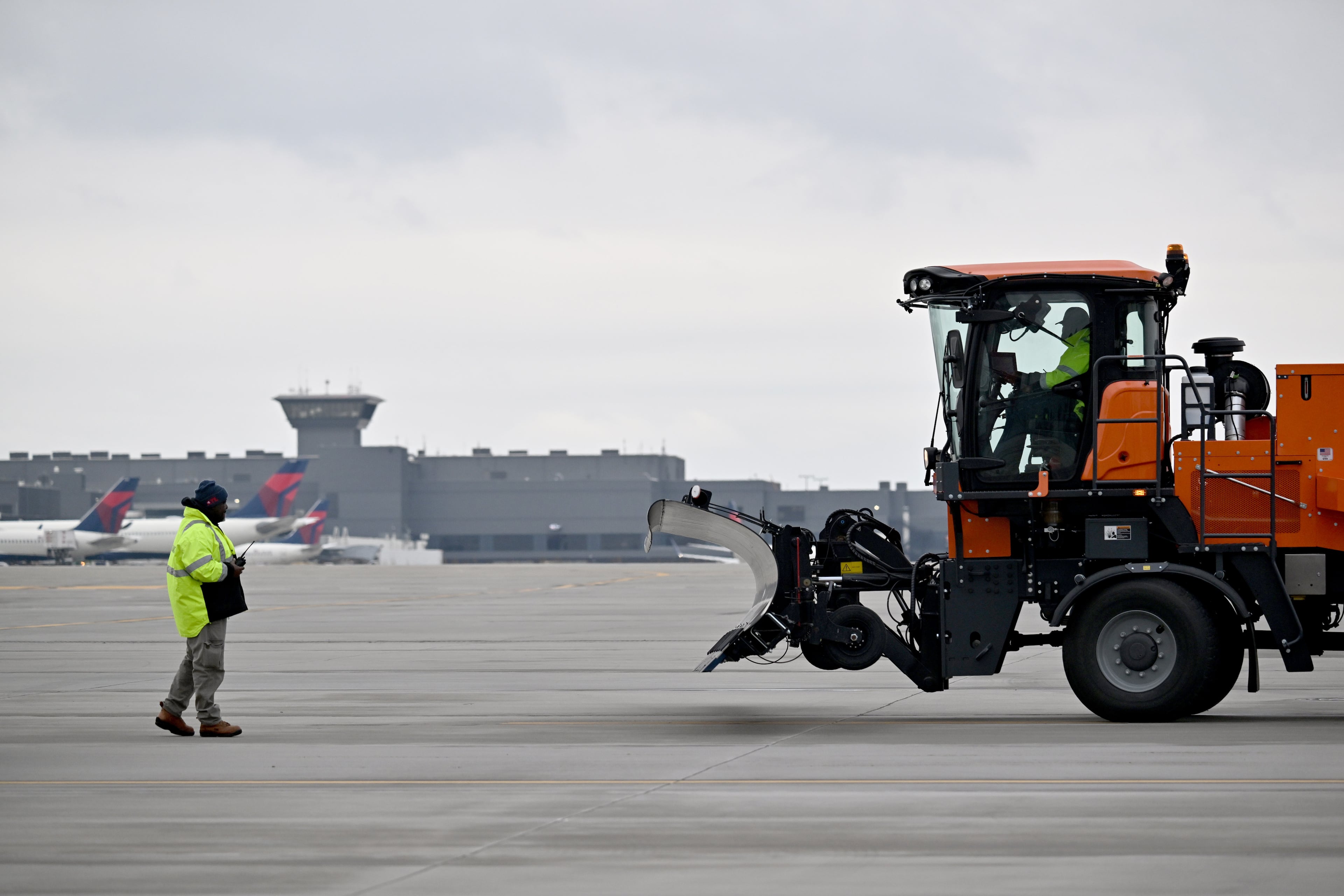
Hartsfield-Jackson Atlanta International Airport is mobilizing for a major winter storm after investing roughly $3 million–$5 million last year in about five new de-icing/ice-removal machines that can clear runways in ~15 minutes versus 30–45 minutes for older equipment; crews will pretreat and run operations 24/7 in 12-hour shifts. The storm, which could bring up to an inch of ice, has prompted major carriers (notably Delta) to offer waivers and advise schedule changes, and TSA has activated contingency staffing measures including mandatory overtime, K-9 teams, cots and staging hotel rooms to mitigate security delays observed during a similar event last January.
Market structure: Short-term winners are ground-handling and de-icing equipment providers and airport operators that invested in capex (fewer cancellations = less operational loss); losers are Atlanta-centric carriers (Delta, DAL) and travel-dependent services facing immediate revenue and rebooking costs. Faster runway turnaround (15 vs 30–45 minutes) reduces marginal cost of delays but only if staffing and power hold; pricing power shifts slightly toward airports/handlers for contracted winter services over the next 1–3 seasons. Risk assessment: Tail risks include prolonged multi-day icing + power outages that cause cascading cancellations, forcing airlines to take 1–3% quarterly revenue hits and TSA/FAA scrutiny (operational/regulatory); reputational damage to DAL could depress near-term yields. Immediate risk window is 0–7 days (flight disruptions), 1–3 months for revenue recognition and ticket repricing, and 1–3 years for capital allocation decisions by airports. Trade implications: Tactical trades favor short, near-term Delta exposure (equity or options) and buying protection in airline indices; cyclical longer-term exposure to equipment makers and airport service contractors benefits if airports accelerate capex. Cross-asset: expect short-term widening in airline credit spreads (+10–30bps), higher airline equity implied volatility (IV +20–40%), and muted commodity moves (jet fuel largely unaffected unless disruptions persist beyond 1 week). Contrarian angles: Consensus focuses on immediate cancellations; underappreciated is that airports with recent capex may capture market share from less-equipped hubs over 6–24 months. Reaction to a single storm is likely overdone for full-year airline earnings but underdone for selected suppliers—mispricing window is 3–8 trading days after storm clarity.
AI-powered research, real-time alerts, and portfolio analytics for institutional investors.
Request DemoOverall Sentiment
neutral
Sentiment Score
-0.10
Ticker Sentiment
