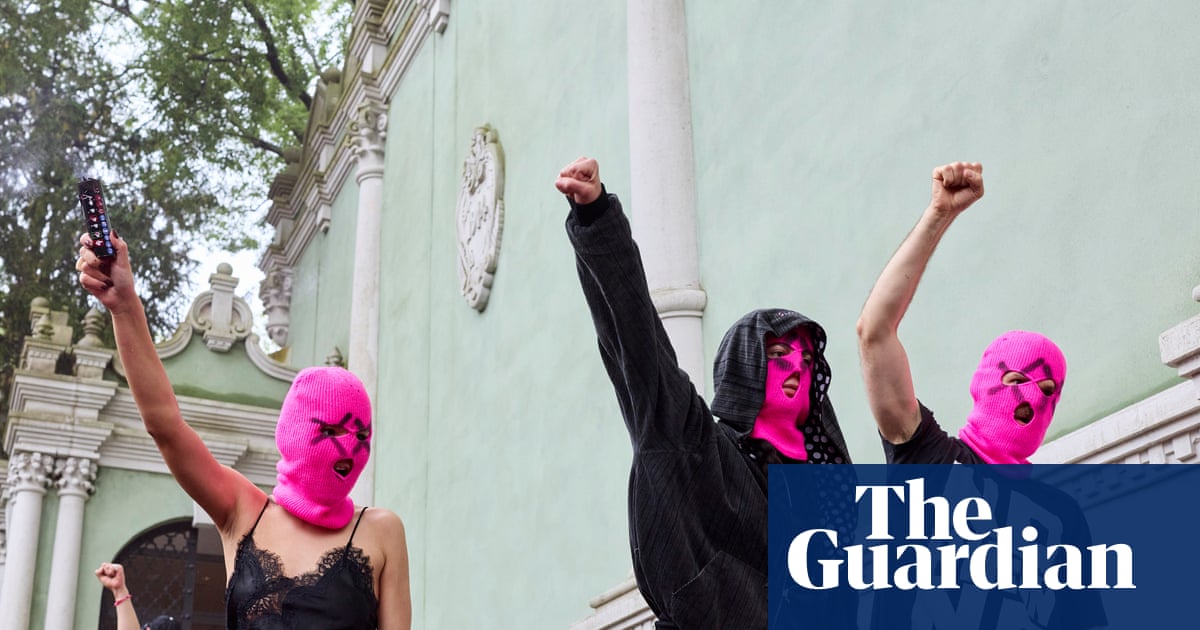
The article focuses on political controversy around major cultural events, including the Venice Biennale, Eurovision, Cannes, and the Oscars, rather than on direct financial results. Key flashpoints include Russia's pavilion being opened then closed to the public, Israel's participation triggering artist protests, and the risk of a €2m EU-funds penalty for the Venice Biennale. The piece suggests a broader shift toward politicization and globalized artistic identity, but it implies limited direct market impact.
The investable signal is not “art vs politics,” but a broader degradation of the nation-state as a reliable wrapper for cultural IP. That matters because funding, distribution, and award architecture are increasingly cross-border: once the label on the work is decoupled from the actual capital base, the veto power shifts from ministries to sponsors, broadcasters, and venue operators. In the near term, that creates headline-driven volatility around events with national representation formats; over 6-18 months it should favor institutions with globalized production pipelines and penalize organizations dependent on politically legible country branding.
The first-order losers are legacy gatekeepers whose value proposition rests on national prestige and procedural legitimacy. The more interesting second-order effect is on adjacent monetization: brands and broadcasters will become more sensitive to boycott risk, which raises the discount rate on live-event advertising and sponsorship around politically exposed competitions. That pressure should be greatest in Europe, where public funding, regulatory scrutiny, and activist coordination can create fast-moving cancellation risk even when audience demand is intact.
The contrarian view is that consensus may be overestimating the durability of boycott movements relative to the commercial logic of these franchises. Most viewers do not consume these events for governance correctness, and once the news cycle moves on, participation typically normalizes faster than activist capital can stay organized. So the better trade is not a blanket bearish call on “culture,” but a barbell: short the most politically entangled live-event monetization, while owning global distributors and production platforms that benefit from the same decoupling of content from nationality.
AI-powered research, real-time alerts, and portfolio analytics for institutional investors.
Request DemoOverall Sentiment
neutral
Sentiment Score
-0.10
