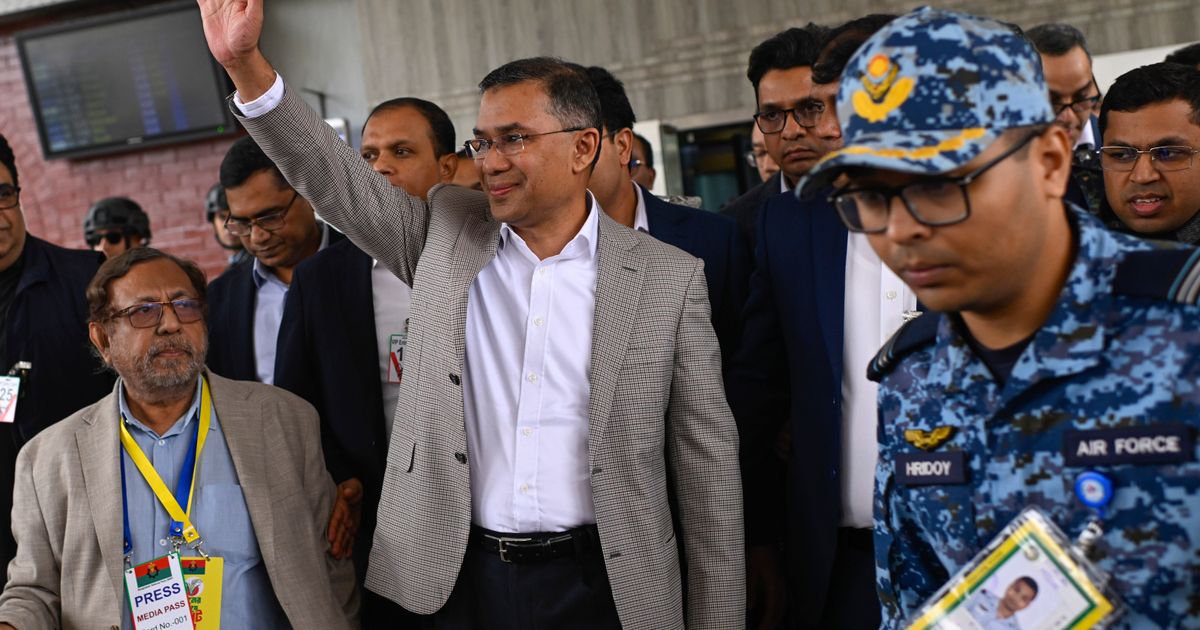
Tarique Rahman, acting chairman of the Bangladesh Nationalist Party, returned to Dhaka after more than 17 years in self-imposed exile ahead of the Feb. 12 national election under an interim government led by Nobel laureate Muhammad Yunus. His arrival, massive supporter mobilization, recent acquittals of past criminal charges and the absence of rival Sheikh Hasina (sentenced in absentia and in India) heighten political uncertainty in Bangladesh, posing a potential near-term risk to investor sentiment and market stability in the country.
Market structure: Tarique Rahman’s high‑profile return ahead of the Feb 12 election raises near‑term political volatility in Bangladesh and tilts winners toward security contractors, state‑linked importers, FX liquidity providers and exporters (textiles) that benefit from a weaker taka. Losers are bank and real‑estate creditors, dollar‑bond holders and consumer discretionary names exposed to urban demand; expect BDT pressure, local yields +50–200bps in stressed scenarios and equity drawdowns of 10–30% if unrest escalates.
Risk assessment: Short‑term (days–weeks) the biggest risks are crowd violence and localized disruptions (20–40% chance); medium (weeks–months) risk is policy uncertainty that could trigger IMF/aid conditionality reviews and sanctions (10–25% tail). Hidden dependencies include military posture, India’s diplomatic stance and status of Hasina’s legal/extraordinary remedies — any adverse change can amplify capital flight and FX illiquidity. Key catalysts: Feb 12 election outcome, court rulings on party leaders, IMF/World Bank commentary within 30–90 days.
Trade implications: Defensive plays: reduce direct Bangladesh equity exposure and establish sovereign downside protection. Rotate 0.5–1.5% AUM from Bangladesh into India via INDA or large‑cap Indian ETFs and raise cash by 1–3% for optionality. Hedging: buy 3‑month EEM put spreads (5–15% OTM) sized to cover 50–75% of EM beta; purchase 1–3yr CDS or use USD‑bond puts to protect 2–5% notional of sovereign/sovereign‑linked holdings.
Contrarian angles: Consensus assumes prolonged instability; underlooked is a rapid political consolidation scenario (20–30% probability) that could spark a 10–25% rebound in local equities within 3–6 months if finance ministers reassure donors. Trade the optionality: set limit buy orders to accumulate exporters (textiles) if DSE falls >15% in 30 days, and be ready to trim hedges if CDS tightens >100bps post‑election indicating return of confidence.
AI-powered research, real-time alerts, and portfolio analytics for institutional investors.
Request DemoOverall Sentiment
neutral
Sentiment Score
-0.15
