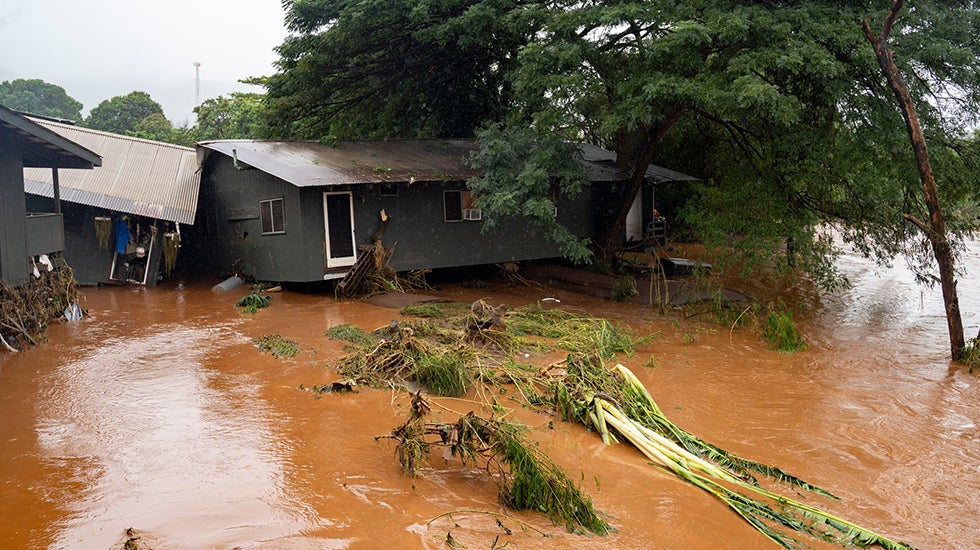
Damage estimates have topped $1 billion as Oahu endures its worst flooding in over 20 years; roughly 5,500 people remain under evacuation orders and more than 230 have been rescued. Officials warn the 120-year-old Wahiawa dam is near critical levels and "may collapse or breach at any time," prompting immediate evacuation orders and National Guard activation. Parts of Oahu have received 8+ inches of rain with additional rainfall expected, emergency crews have airlifted 72 people and at least 10 hospitalized for hypothermia, while homes, roads, airports and a hospital have been impacted.
A localized catastrophic weather event creates a choke point in island logistics and short-duration demand shock to travel/tourism that will compress near-term cashflows while creating multi-quarter reconstruction demand. Expect spot inter-island freight rates and expedited airfreight demand to spike for 1–6 weeks as firms prioritize perishables and building materials, which then sustains elevated volumes for contractors and specialty shippers over the following 3–9 months.
Property & casualty balance sheets will feel a concentrated hit to loss ratios this quarter, but the bigger market-moving mechanism is behavioral: insurers and reinsurers will push for higher rates at the next renewal cycle, likely materializing in 6–12 month rate hardening in affected segments (flood/parametric products, coastal property). That pricing response, not the immediate claims, is the lever that reallocates capital into catastrophe risk-transfer and remediation supply chains.
Construction, remediation, and specialty logistics firms with pre-existing island operations or rapid-mobilization capability are the structural winners — their incremental margins on reconstruction work typically exceed corporate averages because of pricing power and change-order capture. Conversely, localized operators in travel, small commercial real estate, and franchise hospitality will see outsized volatility in cashflow metrics, creating short-duration alpha for active managers.
The consensus risk-off reaction can overstate systemic consequences; this is geographically concentrated so macro growth and national consumer demand remain intact. That divergence opens asymmetric trades: capture short-term operational dislocations (options/short-dated hedges) while taking selective medium-term exposure to reconstruction winners and reinsurance repricing beneficiaries.
AI-powered research, real-time alerts, and portfolio analytics for institutional investors.
Request DemoOverall Sentiment
strongly negative
Sentiment Score
-0.75
