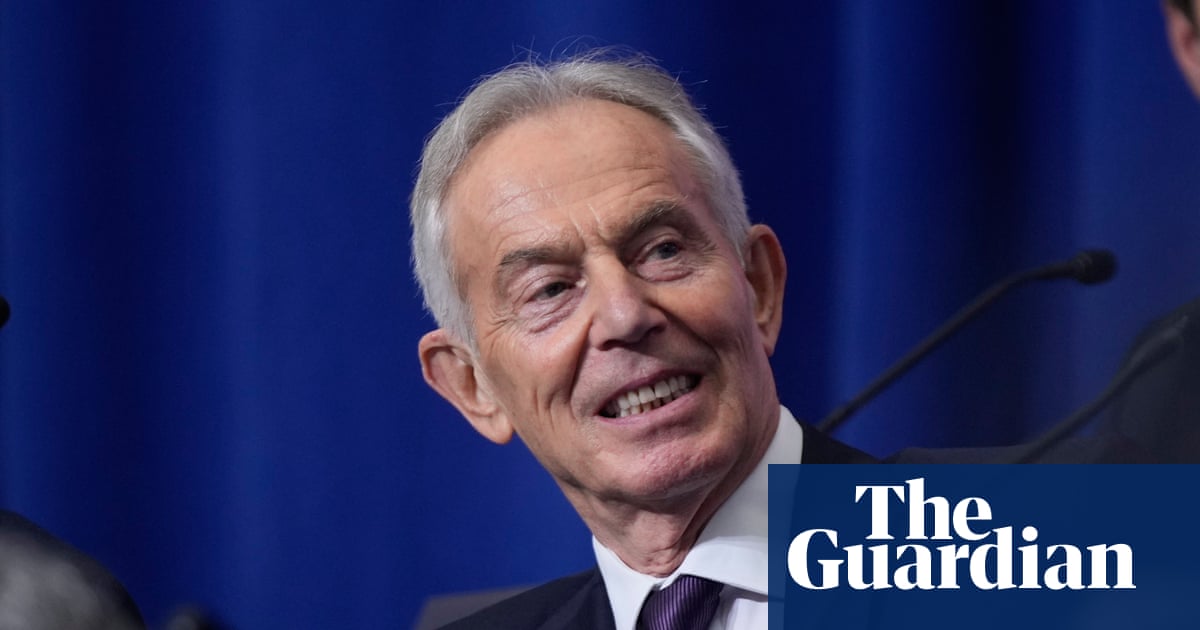
Tony Blair warned Labour is likely to lose the next election unless it shifts toward the political center and adopts a more pro-business policy mix. He criticized Starmer, Burnham and Streeting on welfare, taxes, oil and gas licensing, net zero, aid and EU relations, while urging cuts to welfare spending, stronger AI/planning reform and better ties with Trump. The piece is a high-profile political intervention with limited immediate market impact, though it flags potential policy shifts in UK taxation, energy and regulation.
This is less a leadership story than a regime-signal for UK policy risk: Blair is effectively telling markets that the current Labour configuration cannot credibly anchor a pro-growth platform, which raises the odds of a fiscal squeeze or policy whiplash over the next 6-18 months. That matters because UK assets are already priced for mediocre trend growth; any drift toward higher welfare spending, tougher labor regulation, or looser climate transition sequencing would hit domestically leveraged cyclicals, capex-heavy utilities, and small/mid caps first.
The second-order effect is that Blair’s intervention legitimizes the idea that the government may need to choose between political cohesion and market credibility. If the party shifts left to contain internal pressure, gilts likely face term-premium pressure via wider supply expectations and lower confidence in spending discipline, while sterling-sensitive importers and consumer names absorb the hit through weaker currency and higher wage/input intensity. If it shifts back toward the center, the near-term risk is intra-party volatility, but the medium-term setup improves for UK banks, housebuilders, and domestic industrials that need planning reform and steadier business confidence.
The contrarian point is that this is not uniformly negative for the market. A visible internal fight can force earlier policy clarification, and the strongest asset-price reaction may come from a reduced probability of a “quiet drift” into incoherent compromise. In other words, the best outcome for risk assets may be a sharper, more credible centrist reset rather than the current ambiguity; the worst outcome is not Blair’s critique itself, but a prolonged period where no faction can impose a budget, energy, or welfare framework that businesses can underwrite.
The geopolitical angle is also underappreciated: a re-prioritization of transatlantic alignment and North Sea energy could be mildly supportive for UK energy names and defense-adjacent exporters if it translates into more permissive domestic supply policy and less regulatory friction. But if the internal debate hardens into anti-business rhetoric, the bigger loser is UK listed quality growth, where valuation multiples depend on policy stability more than earnings momentum.
AI-powered research, real-time alerts, and portfolio analytics for institutional investors.
Request DemoOverall Sentiment
mildly negative
Sentiment Score
-0.15
