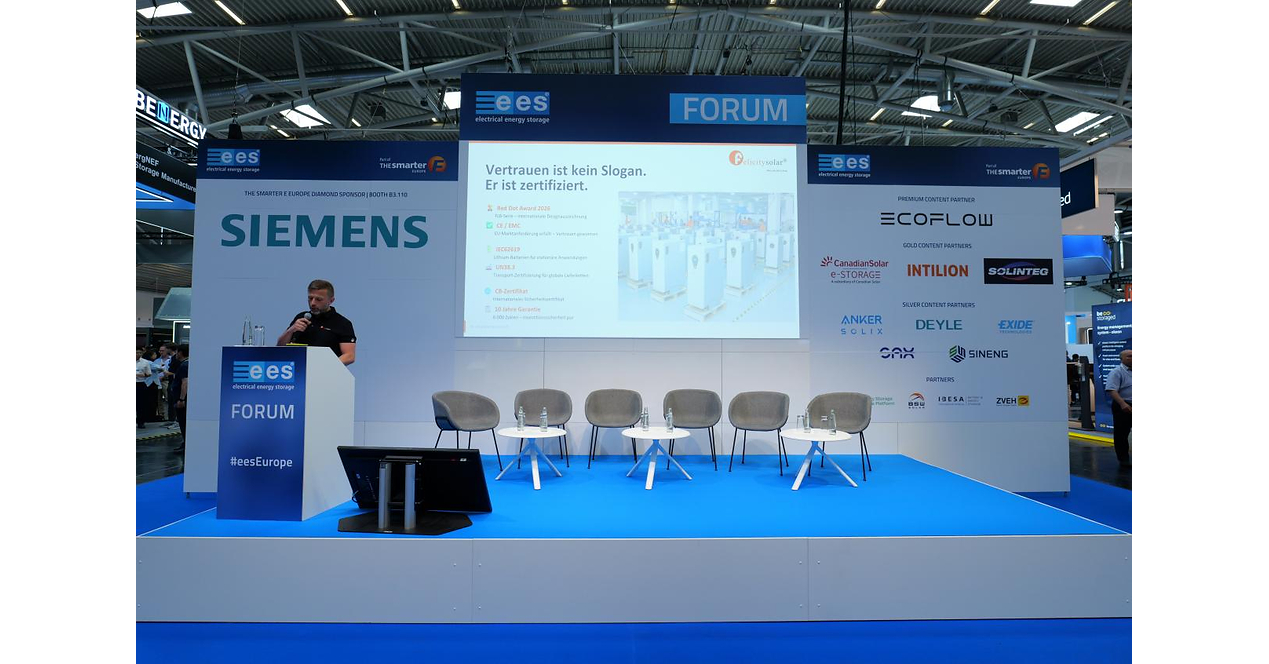
Felicitysolar showcased integrated energy-storage and smart energy-management systems at The Smarter E Europe 2026 in Munich, moving from single-device demos to full energy-ecosystem presentations. Key hardware highlighted includes 8kW/20kW home storage units, low-voltage FLB batteries, and a 125kW C&I hybrid inverter with modular FLH high-voltage battery storage plus an all-in-one 125kW liquid-cooled solution. The company also emphasized digital platforms (Felux for monitoring/forecasting/optimization and Fsolar for product/service support) and noted Spain certification of its 125kW system via an SGS authorization ceremony. Overall, the update is constructive for its European positioning but appears more like product/market expansion news than a direct financial catalyst.
This reads more like a channel-penetration signal than a fundamental inflection. The real mechanism is not product breadth; it is the combination of lower-cost bundled hardware plus local service/certification, which can compress ASPs for incumbents that rely on inverter attach rates and aftermarket lock-in. If Felicitysolar is genuinely getting spec’d by installers and EPCs in Europe, the first-order winner is the distributor/install channel, while the second-order loser is any vendor whose moat is software and brand rather than balance-sheet-backed service coverage.
The most exposed public names are ENPH and SEDG, with SMA as the local incumbent most vulnerable if Chinese bundles win on price and compliance. The near-term read-through is modest because trade-show visibility does not equal booked demand, but over 1-3 months the risk is inventory destocking and discounting in Europe if distributors test these systems. Over 6-18 months, the structural threat is margin compression in residential and C&I storage as “good-enough” integrated solutions proliferate and local service becomes table stakes rather than differentiation.
The contrarian view is that the market may be underestimating the execution barrier: Europe punishes vendors that cannot sustain warranty response times, grid-code updates, and installer training. If the company’s certification and local support are thin, this is mostly marketing; if they convert it into repeat EPC relationships, the impact shows up first in lost share for legacy inverter vendors, not in headline market growth. What would falsify the bearish read is stable Europe revenue guidance and no ASP compression at ENPH/SEDG despite broader low-cost competition.
From a catalyst standpoint, watch for distributor announcements, Spain/Italy certification follow-through, and any evidence of channel stocking over the next quarter. The move is not a day-one catalyst; it is a slow-burn competitive pressure story unless accompanied by a meaningful contract win or local warehousing footprint.
AI-powered research, real-time alerts, and portfolio analytics for institutional investors.
Request DemoOverall Sentiment
mildly positive
Sentiment Score
0.18
