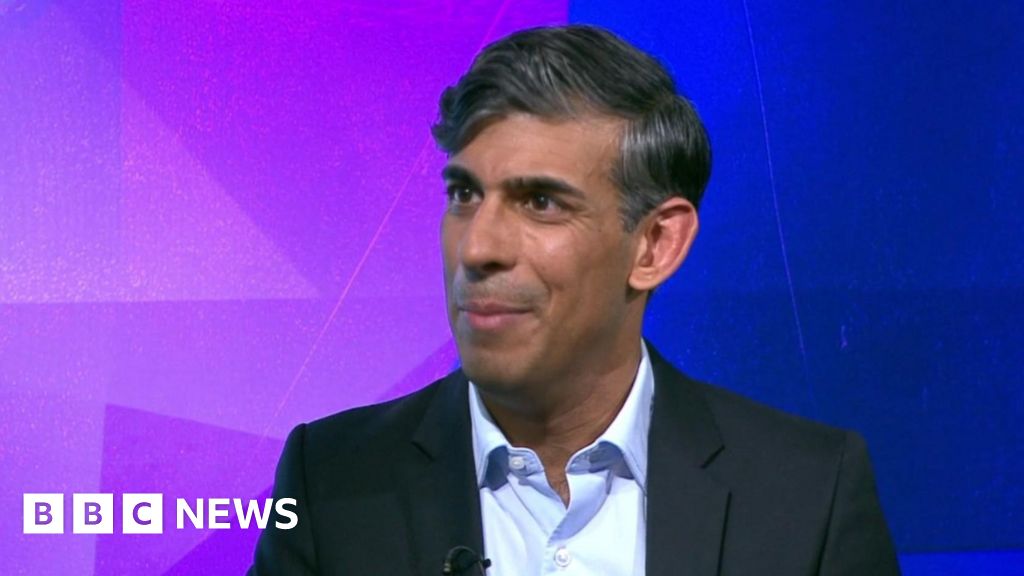
Rishi Sunak said AI is flattening hiring for young workers, especially in service sectors like law, accountancy and creative industries, and argued the UK should eventually abolish National Insurance and fund the gap with higher corporate profit taxes. He also warned that Anthropic's new Claude Mythos model highlights the need for stronger oversight of company-led AI safety claims. The article is more policy and labor-market commentary than a direct market catalyst, though it reinforces AI-related regulatory and workforce concerns.
The market implication is less about near-term revenue and more about labor-intensity repricing across business models. If AI lets firms hold output flat while compressing entry-level hiring, the biggest winners are software platforms that monetize workflow automation at seat-level pricing, while the losers are labor-arbitrage-heavy service providers whose margin expansion has relied on fresh graduate intake. That argues for a wider dispersion trade: AI beneficiaries with pricing power should outperform, but consultancies, BPO, and professional-services proxies will likely see slower headcount growth and lower operating leverage over the next 2-4 quarters.
The more interesting second-order effect is fiscal, not technological. A sustained shift away from payroll-linked taxes would, in theory, transfer some of the burden from labor to capital, which is structurally supportive for companies with high free-cash-flow conversion and low labor share — especially large-cap software and cloud vendors. But the transition path matters: any policy discussion around taxing profits more heavily could compress multiples for domestic UK high-cashflow firms before the productivity offset shows up, creating a temporary risk-off overhang in UK domestic equities even if the long-run AI story improves.
Cyber/security is the hidden beneficiary of the article’s logic. If frontier models are already handling more offensive and defensive tasks, the spend doesn’t disappear — it shifts toward verification, monitoring, and model governance, which tends to expand total security budgets rather than shrink them. That is positive for firms selling AI security, identity, and compliance tooling, while also raising the probability of a regulatory shock if a high-profile misuse event forces governments to slow deployment.
Consensus is probably too focused on “AI boosts productivity” and underweighting the employment bridge risk: a weak graduate market can become a broad consumption headwind before productivity gains show up in GDP. That makes this a months-long rather than days-long trade, with reversal only if hiring resumes in services or regulators force models into narrower use cases. In the near term, the best setup is to own the enablers and fade the most labor-sensitive intermediaries.
AI-powered research, real-time alerts, and portfolio analytics for institutional investors.
Request TrialOverall Sentiment
mildly negative
Sentiment Score
-0.15
Ticker Sentiment
