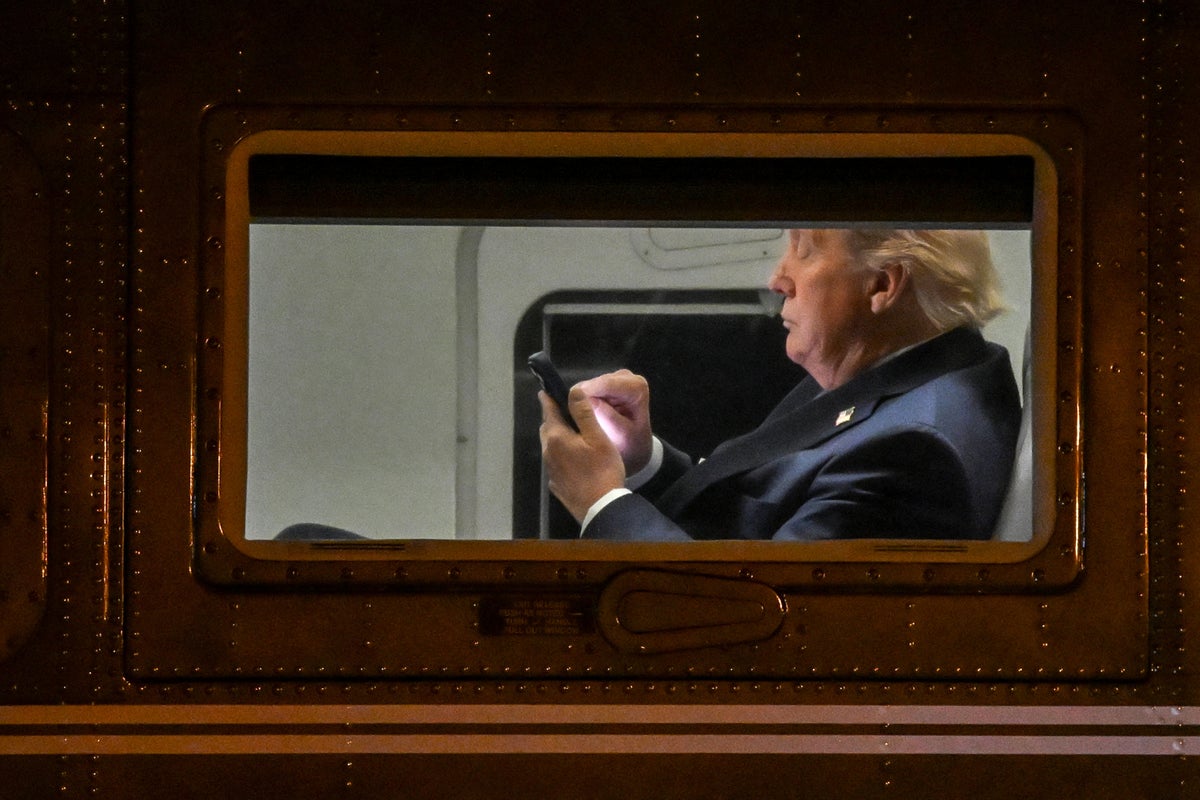
Trump escalated criticism of wind farms, the Supreme Court, The Wall Street Journal, and Iran in a series of Truth Social posts. He said Pennsylvania coal plants will stay open instead of being replaced by wind farms, attacked the WSJ over its coverage of Iran, and blasted Supreme Court justices for insufficient loyalty. The article also highlighted his extension of the Iran ceasefire and ongoing uncertainty around the Strait of Hormuz, which has helped keep gas prices elevated.
The immediate market read is not the rhetoric; it is the signal that policy will remain highly discretionary and litigation-heavy, which raises the discount rate for capital-intensive sectors with long-duration payoffs. That is most negative for regulated renewables and transmission-adjacent supply chains: even where federal support is intact, project timelines, financing terms, and PPA pricing can all be repriced lower as counterparties demand more policy risk premium. The more subtle winner is legacy dispatchable generation and fuel logistics, especially if political pressure keeps uneconomic coal capacity alive longer than modeled.
Energy markets care more about the Strait of Hormuz than the sound bites. Any extension of uncertainty keeps a volatility bid under crude, refined products, and especially shipping/insurance names tied to the Gulf route, while also supporting domestic midstream and LNG exposure as “security of supply” becomes the dominant policy frame. The second-order effect is that gasoline prices can stay elevated even without a sharp move in Brent if product availability tightens, which keeps political pressure on the administration to seek a face-saving off-ramp within days to weeks.
The Supreme Court attack matters for positioning because it reinforces institutional conflict ahead of a set of decisions that could constrain executive authority. That creates a binary setup for sectors exposed to tariff, immigration, and administrative-rule reversals: the market may be underestimating how much a court loss could unwind policy support in 1-3 months, especially if the administration responds with more aggressive, less durable executive actions. Media is less investable on headlines alone, but legal overhang increases the probability of more discovery-driven shocks in legacy publishers and platform-adjacent firms.
Contrarian view: the most crowded trade is to buy every headline as a straight-line bearish signal on renewables and judicial risk. In practice, this kind of noise often accelerates negotiations and leads to selective carve-outs rather than wholesale reversals, so the better expression is volatility, not a clean directional macro bet. The setup favors relative-value trades where policy sensitivity is asymmetric rather than outright sector shorts.
AI-powered research, real-time alerts, and portfolio analytics for institutional investors.
Request TrialOverall Sentiment
mildly negative
Sentiment Score
-0.15
