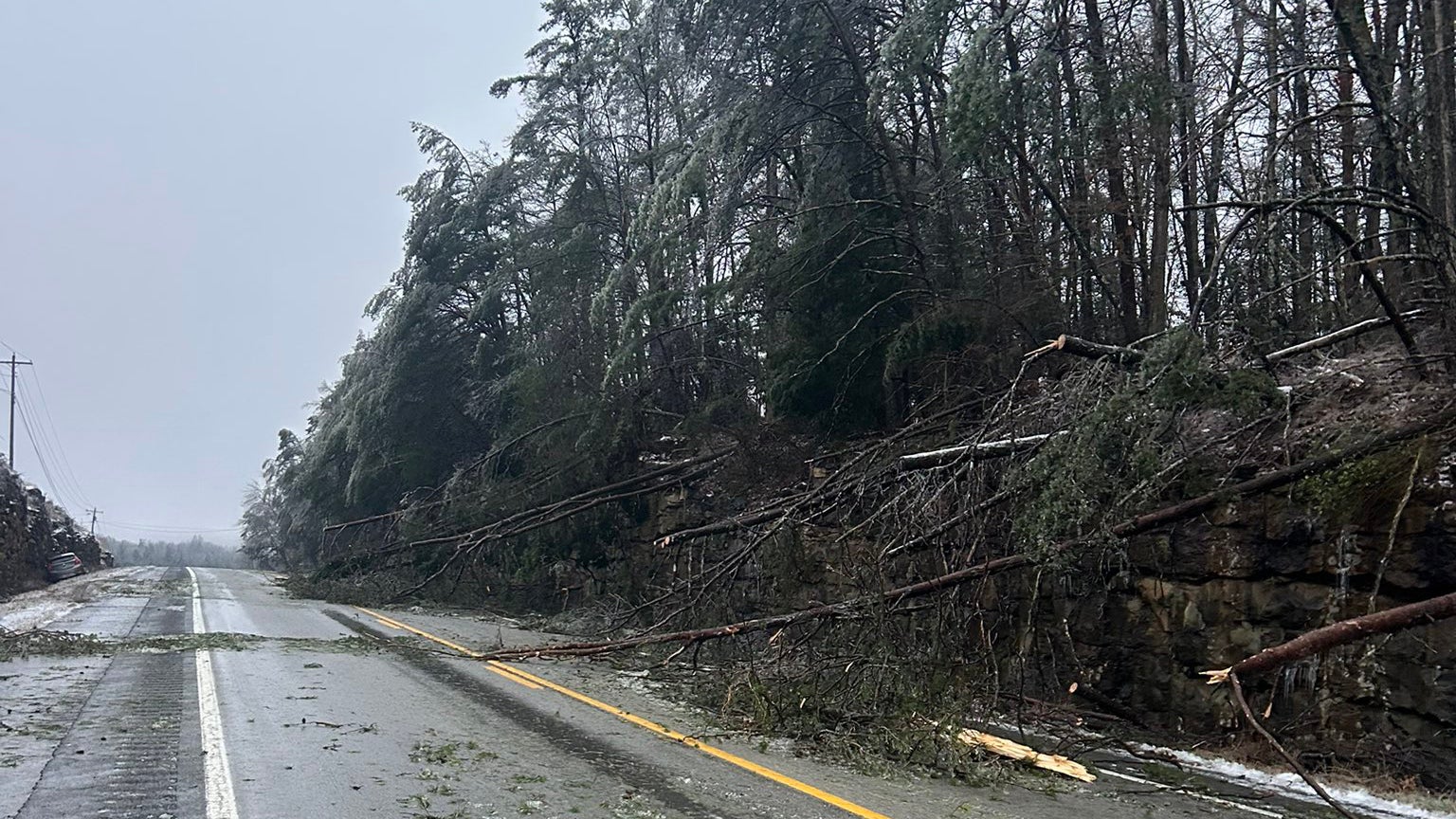
Winter Storm Fern has produced heavy snow and damaging ice from New Mexico to the Northeast, prompting 24 state emergency declarations, grounding more than 13,000 flights and cutting power to roughly 547,000 customers nationwide (PowerOutage.us). Outages are concentrated in Texas (~90,000), Mississippi (~80,000), Louisiana (>70,000) and Tennessee (>30,000), while major hubs and roadways are experiencing significant disruptions. The storm poses near-term downside risks to regional economic activity, transportation networks and utility operations, with potential strain on grid restoration resources and localized business interruption.
Market structure: Winners are grid-equipment and backup-generator manufacturers (Eaton ETN, Cummins CMI), regulated utilities (Duke DUK, AEP AEP) and short-term natural gas suppliers; losers include domestic airlines (AAL, DAL) and regional airports plus logistics operators facing stoppages. Expect a 5–15% near-term spike in regional (ERCOT, Midcontinent) power nodal prices and spot natural gas for 7–21 days if cold persists, boosting generator and fuel sales while depressing airline revenues for the next 1–3 weeks.
Risk assessment: Tail risks include multi-week wide-area outages forcing regulatory probes and emergency capex mandates (risk to smaller muni/co-op balance sheets) and supply-chain constraints for replacement transformers (6–9 month lead times). Immediate horizon (days): flight cancellations, spot gas/power moves; short-term (weeks–months): insurance and utility rate-case impacts; long-term (quarters–years): accelerated grid hardening capex and potential higher insurance pricing.
Trade implications: Favored tactical plays are short-dated NG exposure and long exposure to ETN/CMI via call spreads; defensively increase regulated-utility exposure (DUK/AEP) on pullbacks for a 6–12 month hold. Airlines are a short/put target for 2–6 weeks; consumer cyclical plays (HD, LOW) should outperform transient travel names as repair/backup demand lifts retail sales for 4–8 weeks.
Contrarian angles: The market underprices medium-term grid-capex acceleration — a 12–24 month regime of rate-base upgrades could rerate utilities and equipment names by 10–25%. Conversely, the sell-off in major carriers may be overdone if cancellations normalize within 2–4 weeks, creating a mean-reversion trade in large-cap carriers (DAL) after >20% drawdowns.
AI-powered research, real-time alerts, and portfolio analytics for institutional investors.
Request DemoOverall Sentiment
moderately negative
Sentiment Score
-0.50
