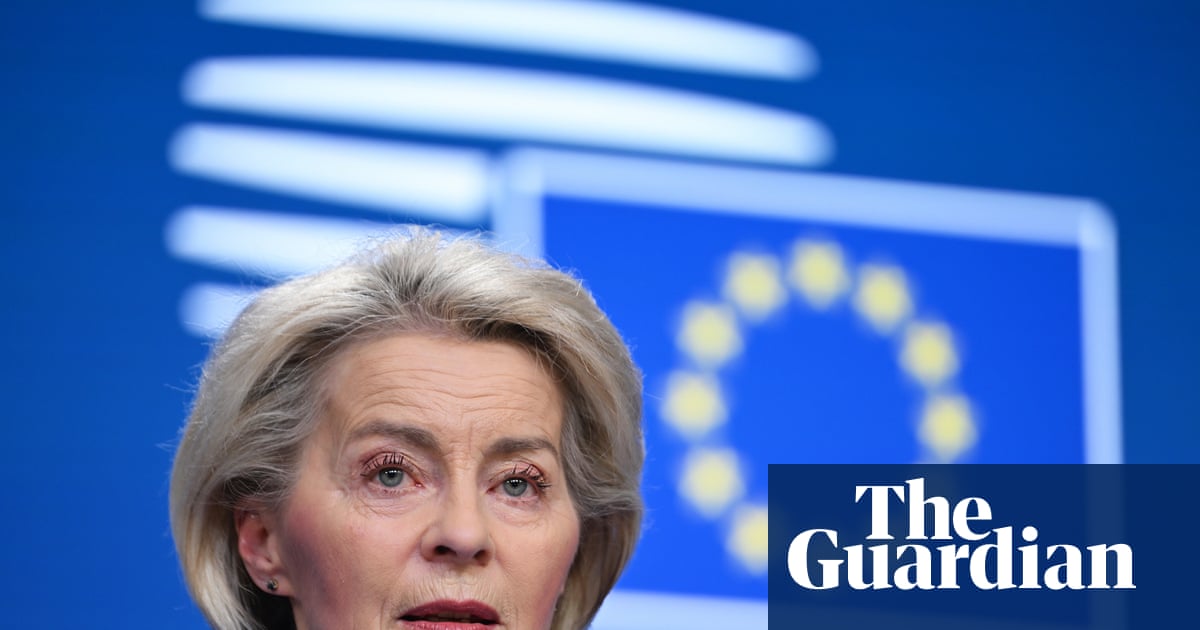
A promised €90bn ($104.2bn) EU loan to Ukraine remains blocked by Hungary, but EC President von der Leyen pledged the EU will pay Kyiv “one way or the other.” IMF staff are in Kyiv to review compliance with a new $8.1bn program, US–Ukraine negotiators meet Saturday to revive talks, Belarus released 250 political prisoners under a US deal, and the ICRC is facilitating exchanges of roughly 1,000 bodies per month amid ongoing conflict. These developments sustain geopolitical risk and fiscal uncertainty for Ukraine and EU policymaking, with potential implications for sovereign funding and regional stability.
The EU’s likely fiscal engineering to deliver large-scale support without unanimous political approval shifts risk from a one-off budgetary transfer to a structural precedent: temporary off-balance mechanisms (guarantees, ESM-style credit lines, Commission-backed bond issuance) that effectively socialize war-related credit risk across core euro-area balance sheets. That process will compress available fiscal headroom for non-defense priorities in the near term and place a premium on high-quality liquid collateral (German Bunds, ECB repo-eligible assets) as institutions re-price counterparty and sovereign risk over the next 3–12 months.
Procurement and inventory restocking cycles are now the highest-conviction commercial impulse: a 6–24 month acceleration in orders will disproportionately benefit firms with short cycle-times and existing production lines for munitions, avionics and C5ISR, while upstream commodity players (steel, specialty chemicals, electronics test & assembly) will see margin tailwinds. Expect supply-chain bottlenecks to show up as price inflation in discrete inputs (copper, tungsten, high-grade aluminium, precision machining capacity) before primary OEM revenue recognition—this front-loads suppliers’ cashflows relative to large-platform primes.
Politically driven fragmentation of EU decision-making is a durable negative for euro-denominated risk and peripheral sovereigns if Hungary’s veto power becomes a recurring negotiating lever. Short-term catalysts that would reverse the drift: a legal workaround accepted by markets as robust (days–weeks), a rapid diplomatic resolution to the broader conflict (weeks), or a material de-escalation that removes the demand shock for defense procurement (months). Tail risks include further bloc-level politicization that forces permanent recalibration of EU fiscal rules and credit mutualization debates (12–36 months), which could re-rate sovereign curves and ECB policy assumptions.
AI-powered research, real-time alerts, and portfolio analytics for institutional investors.
Request DemoOverall Sentiment
mildly negative
Sentiment Score
-0.25
