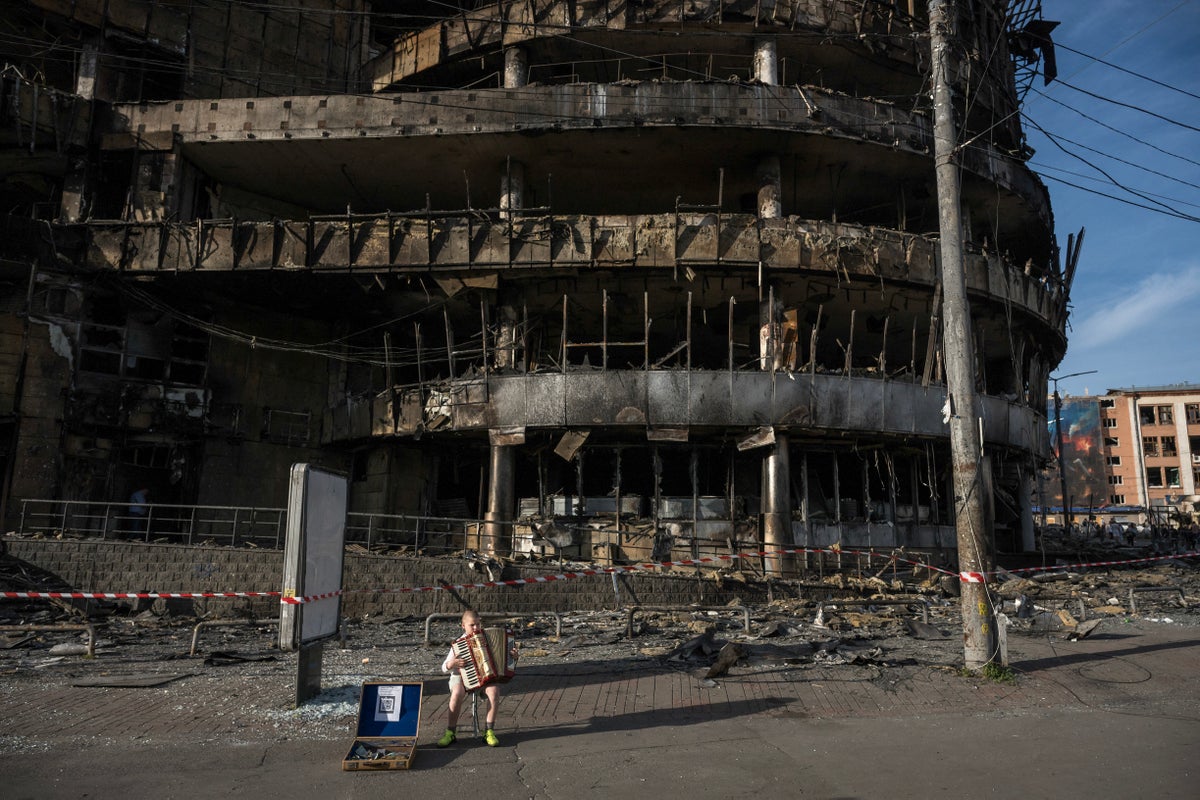
Russia warned foreign citizens, diplomatic missions, and the US embassy to leave Kyiv immediately as it prepares "systematic strikes" on Ukrainian military-linked sites and decision-making centres. The article also reports at least four killed in the latest mass attack on Kyiv, Ukraine's use of Storm Shadow missiles against Russian targets in occupied Luhansk, and continued military and diplomatic escalation. Zelensky said Ukraine has made battlefield gains, while the EU said it is staying in Kyiv despite Moscow's threat.
The market implication is not the headline escalation itself, but the move toward a more persistent attritional phase where air defense consumption, strike persistence, and command-and-control survivability become the binding constraints. That favors firms with replenishment exposure and layered air-defense architectures more than pure munitions names: the near-term bottleneck is interceptor availability, radar uptime, and battle damage repair, not just offensive payload delivery. In this setup, the highest-beta beneficiaries are European defense platforms with missile-defense, sensors, and EW content; the operational loser is any supply chain dependent on stable Ukrainian urban logistics or short-cycle workforces near Kyiv.
A second-order effect is on FX and local financial stability. Sustained threat to the capital raises the probability of episodic outflows, delayed donor disbursement execution, and higher hedging demand for regional currencies, even if the broader war premium is already embedded. The more interesting read-through is to European defense spending: if allies conclude the conflict is entering a longer-range strike regime, procurement shifts from tanks and armor toward interceptors, C2, drones, and satellite-enabled targeting, which is a better mix for repeatable revenues and less lumpy order books.
The contrarian view is that this may be more about signaling than immediate operational capacity, and markets often overprice rhetoric when actual strike cadence cannot be sustained at scale. If the next 2-4 weeks do not produce materially higher damage intensity, defense equities could fade on “headline fatigue,” while the bigger trade stays in missile-defense backlog and inventory rebuild rather than front-page escalation. The key catalyst to watch is whether Western air-defense replenishment accelerates; if it does, the trade extends for quarters, not days, because the war becomes a procurement cycle story.
AI-powered research, real-time alerts, and portfolio analytics for institutional investors.
Request DemoOverall Sentiment
strongly negative
Sentiment Score
-0.82
Ticker Sentiment
