
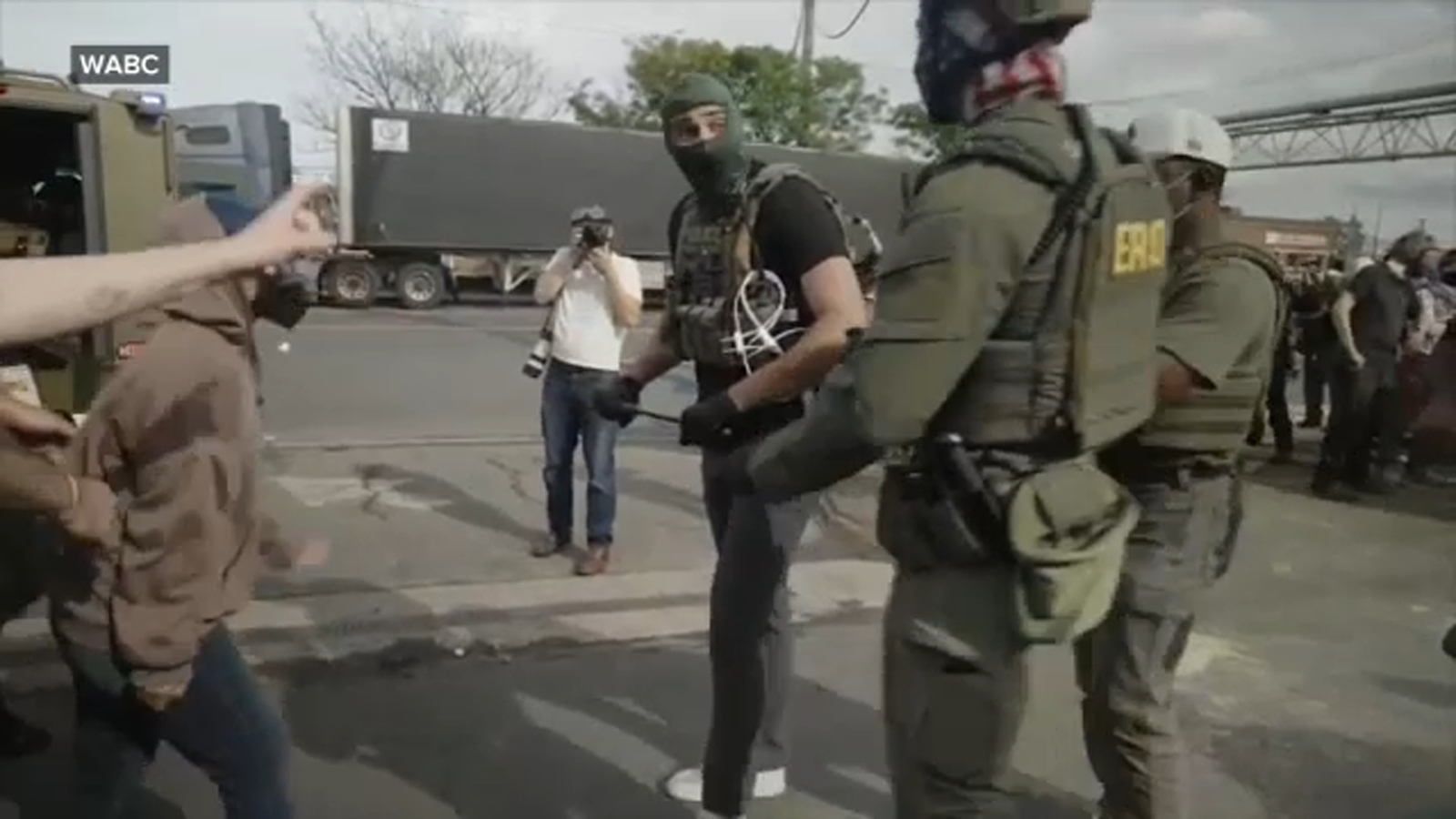
Protests and clashes continued outside Delaney Hall, where 3 people have been arrested and detainees are alleging inhumane conditions, retaliation, and inadequate medical care. Members of Congress said they observed sparse food, unsanitary conditions, and reported that 13 detainees were moved after the hunger strike began. The dispute adds political pressure on the Trump administration and DHS, but it is unlikely to have a direct market impact.
This is less a direct earnings event for ICE than a reputational and procedural risk event that can migrate from headline noise into operational friction. The near-term market impact is muted, but the escalation path matters: if congressional pressure forces inspections, document requests, or local injunctions, the cost is not just legal expense — it raises the probability of tighter contracting standards, slower bed utilization, and more expensive county/private partnerships across the detention ecosystem. That would hit the economics of any operator dependent on high occupancy and low scrutiny.
The second-order loser is the broader immigration-enforcement supply chain: transport contractors, private security vendors, and facility service providers can see margin compression if incidents force staffing increases, food/medical upgrades, or transfer delays. Politically, this also hardens the odds of “symbolic” federal actions in sanctuary jurisdictions, which can create noise but usually do little to change the actual detention pipeline in the next few weeks. The key time horizon is 1-3 months for media-driven volatility; 6-12 months if litigation or procurement changes materially slow growth in detention capacity.
The contrarian view is that the market may be overpricing the headline by assuming a direct revenue hit to ICE rather than an indirect overhang on facility operators and contractors. If oversight visits produce no hard evidence that survives legal review, the issue likely fades quickly. But if the facility narrative broadens to other centers, the risk becomes a sector-wide multiple compression for private correctional/immigration services, not a one-off event.
The clean trade is to express the risk through the more levered service model rather than the agency abstraction: short the private-detention complex on any rally, or use call spreads to define risk ahead of further hearings. The biggest near-term catalyst is not the protest itself, but whether Senate/House committees convert it into subpoenas or funding restrictions.
AI-powered research, real-time alerts, and portfolio analytics for institutional investors.
Request TrialOverall Sentiment
moderately negative
Sentiment Score
-0.35
Ticker Sentiment
