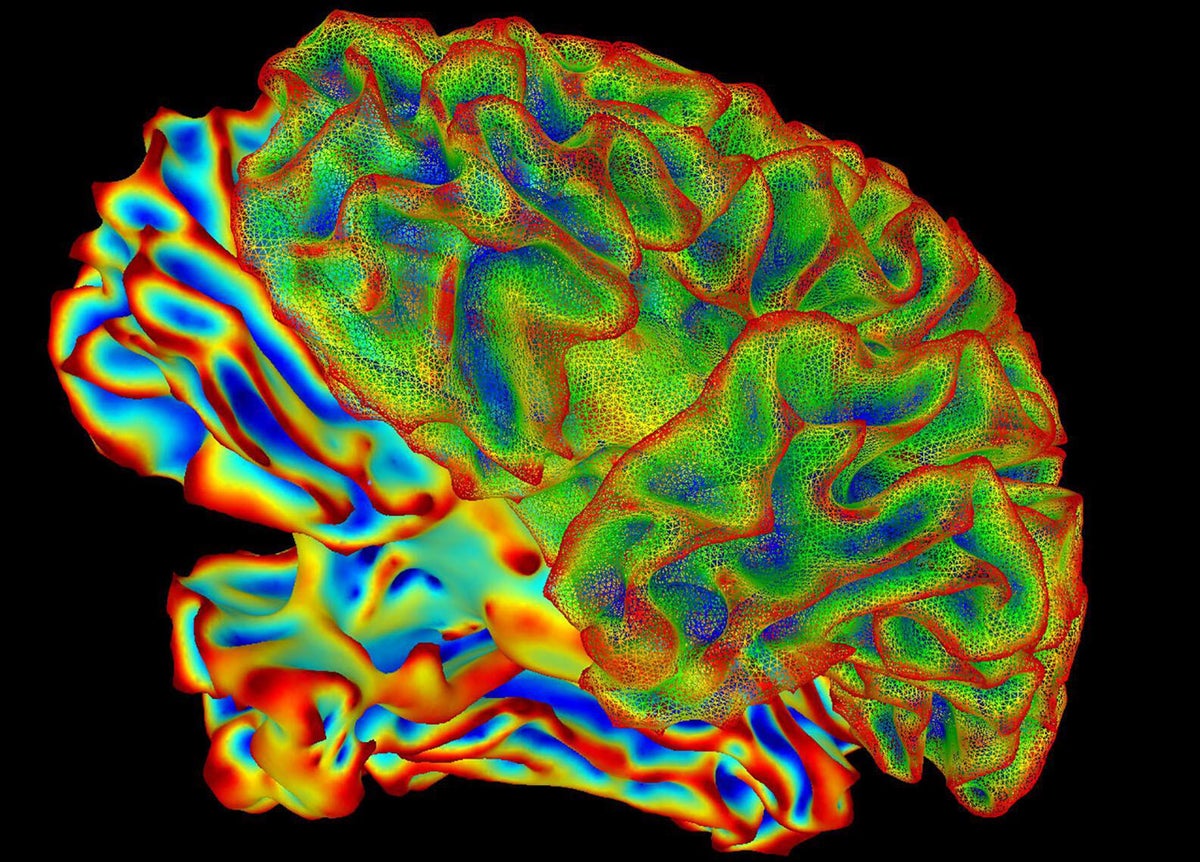
Researchers have developed a novel 'mind captioning' technique, detailed in Science Advances, that utilizes AI to translate brain activity into descriptive sentences of a person's visual perceptions or thoughts with impressive accuracy. This breakthrough, led by computational neuroscientists like Tomoyasu Horikawa, holds significant potential for enhancing communication for individuals with language difficulties and advancing brain-computer interface technologies. While offering promising applications, the development also raises ethical considerations regarding mental privacy, though current models require explicit consent and cannot discern private thoughts.
A novel 'mind captioning' technique, published in Science Advances, leverages AI to translate non-invasive brain activity into descriptive sentences of visual perceptions or thoughts. This breakthrough, led by researchers including Tomoyasu Horikawa, marks a significant advancement in neuro-linguistic decoding and brain-computer interface (BCI) capabilities. The model demonstrates impressive accuracy in generating detailed descriptions from brain scans, even for recalled memories.
This technology holds substantial promise for enhancing communication for individuals with severe language difficulties, such as stroke patients, by providing a direct textual output from their mental representations. It could also significantly improve the efficacy of implanted BCI systems by translating non-verbal mental representations into text. The ability to decode both viewing and remembering brain activity highlights its broad applicability.
Despite its potential, the development raises critical ethical concerns regarding mental privacy, surveillance, and potential discrimination, as noted by Alex Huth. However, current models require explicit user consent and are not yet capable of discerning private, unexpressed thoughts, thereby limiting immediate privacy risks. The market impact is currently very low (0.08), indicating a long-term thematic relevance rather than an immediate equity catalyst.
AI-powered research, real-time alerts, and portfolio analytics for institutional investors.
Overall Sentiment
moderately positive
Sentiment Score
0.35
