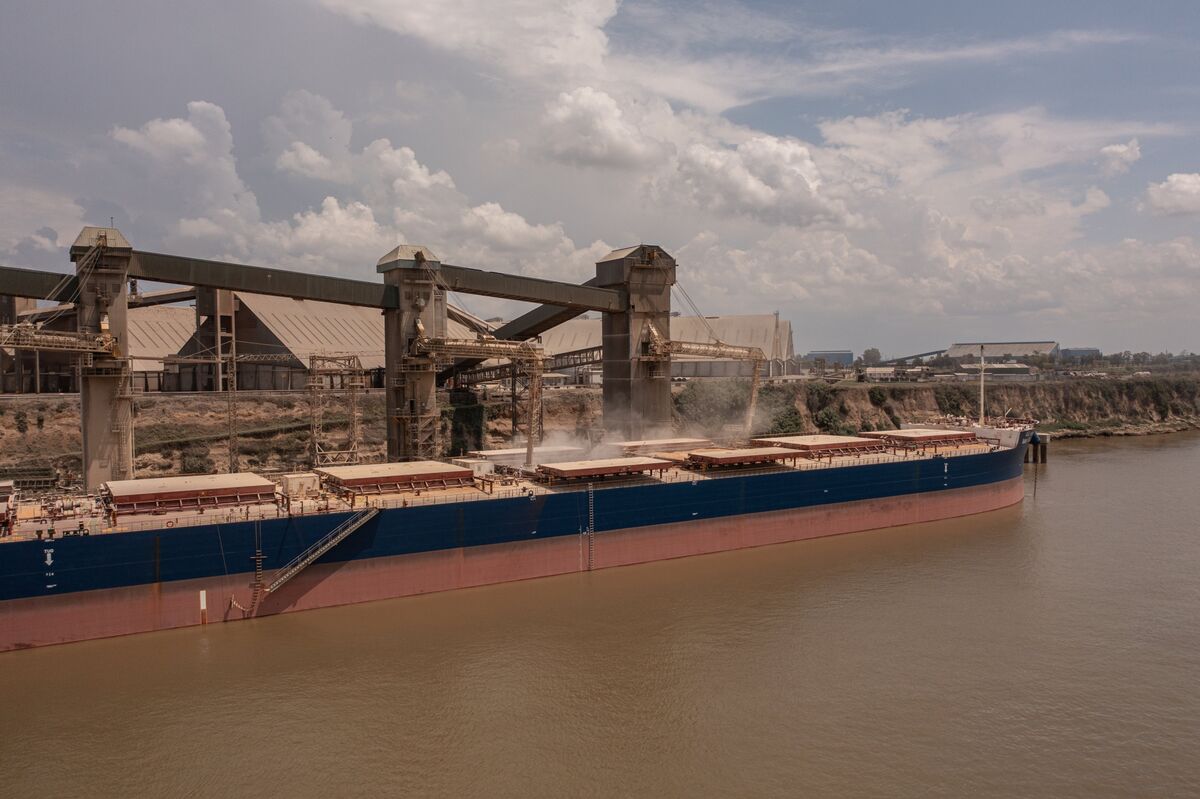
Argentina is set to receive roughly $30 billion in hard currency inflows over the next six months, which could materially rebuild the central bank's depleted reserves. The reserve boost may ease investor and IMF concerns, support the peso, and help reduce persistently high Argentine yields, improving Milei's access to international capital markets.
This is less a macro “good news” story than a short-duration balance-of-payments window that can reprice Argentine risk premia if the authorities choose to convert inflows into reserves instead of immediate domestic support. The key second-order effect is on dollarized liabilities and local duration: even a modest rebuild in reserves can compress expected devaluation, lower the probability of a disorderly FX adjustment, and pull front-end sovereign curves in faster than the long end. That matters because Argentina’s market access is constrained less by growth than by credibility of the reserve buffer.
The biggest beneficiaries are likely the sovereign curve, local banks, and any domestically exposed corporates that trade on funding stress rather than earnings. A stronger reserve position reduces the odds of capital controls tightening further, which can improve deposit stability and reduce forced asset-mismatch behavior in the banking system. The less obvious loser is the “scarcity premium” embedded in hard-currency assets: if the market starts believing reserves can be rebuilt sustainably, rally performance may be strongest in the most distressed paper, leaving high-beta equity proxies underwhelming relative to the move in sovereign debt.
The critical risk is sequencing: if the inflow is spent too quickly to suppress inflation or support the currency, the reserve rebuild becomes cosmetic and the market will fade it within weeks. The trade is therefore more tactical than structural; the cleanest window is over the next 1–3 months, while the real test is whether reserves remain higher after the inflow wave passes. Another reversal catalyst would be any policy drift that signals renewed monetization or ad hoc FX intervention, which would re-ignite devaluation expectations immediately.
Consensus may be underestimating how much of Argentina’s risk premium is a reserve-flow problem rather than a pure solvency problem. If these dollars actually stick, the marginal buyer of Argentine paper changes from distressed-specialists to crossover accounts, and that can produce a nonlinear rally in sovereigns well before fundamentals improve. But the move is likely underdone in duration: six months of inflows does not fix structural credibility, so any rally should be treated as a refinancing window, not a regime change.
AI-powered research, real-time alerts, and portfolio analytics for institutional investors.
Request TrialOverall Sentiment
mildly positive
Sentiment Score
0.45
