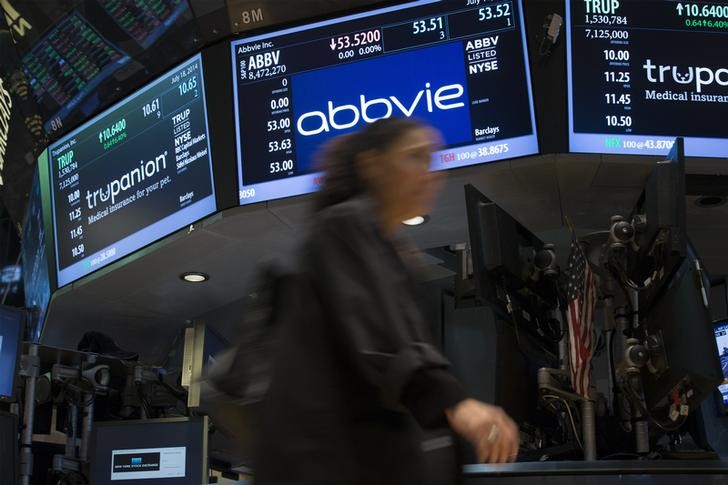
AbbVie agreed to buy Apogee Therapeutics for $135.11 per share in cash, valuing the deal at about $10.9 billion and expected to close in Q3 2026 pending shareholder and regulatory approvals. The acquisition adds clinical-stage assets in inflammatory and immunological diseases, including zumilokibart for atopic dermatitis and APG333 for asthma, with management saying the deal should be accretive to adjusted EPS beginning in 2032. AbbVie also highlighted a $1.73 quarterly dividend, an elevated 3.2% yield, and a positive outlook from S&P Global Ratings, supporting a constructive view on the company.
This is a classic late-cycle pipeline insurance trade for ABBV: the market should treat the deal less as a near-term EPS event and more as a de-risking of the post-Humira growth bridge. The key second-order effect is that AbbVie is buying optionality in immunology at a point when its own base business is still compounding, which should support multiple stability rather than just earnings accretion far out on the curve. That makes the stock more resilient to any temporary chatter about patent cliffs because the acquisition shifts the narrative from single-asset dependence to portfolio durability.
For APGE, the premium likely compresses takeover variance across mid-cap immunology names in the near term, especially those with clean mechanism stories and mid-stage data. The important nuance is that strategic value in this space is being assigned not just to efficacy, but to dosing convenience and combination flexibility; that should extend the M&A look-through to companies with long-acting antibodies or differentiated delivery profiles. Expect competitors with similar IL-13/TSLP or type-2 inflammation exposure to trade with a sympathy bid, but the follow-on effect may be more pronounced in names where big pharma can bolt on platform value rather than replace a single asset.
The main risk is regulatory and timing slippage: the spread between announcement and close creates a months-long window where risk arb can get paid to wait, but any antitrust pushback is probably more about precedent than direct overlap. The deeper contrarian point is that AbbVie may be paying up for assets that only become meaningfully accretive in 2032 and beyond, which implies this is a balance-sheet-allocation decision as much as a pipeline decision. If investor focus shifts back to capital returns, the market may punish the deal less than feared because ABBV can still defend its dividend narrative while buying growth optionality.
NVDA is largely incidental here, but the presence of an unrelated ticker in the structured set means no direct read-through; any sympathy move would be a data-noise opportunity rather than a fundamental link. The cleaner trade is in relative value across large-cap biotech: ABBV should outperform peers with weaker internal pipelines, while APGE becomes a merger-arb instrument rather than a standalone biotech beta name. Over the next 1-3 weeks, the sharper trade is likely in spread capture and sector rotation, not in outright directional biotech exposure.
AI-powered research, real-time alerts, and portfolio analytics for institutional investors.
Request DemoOverall Sentiment
moderately positive
Sentiment Score
0.62
Ticker Sentiment
