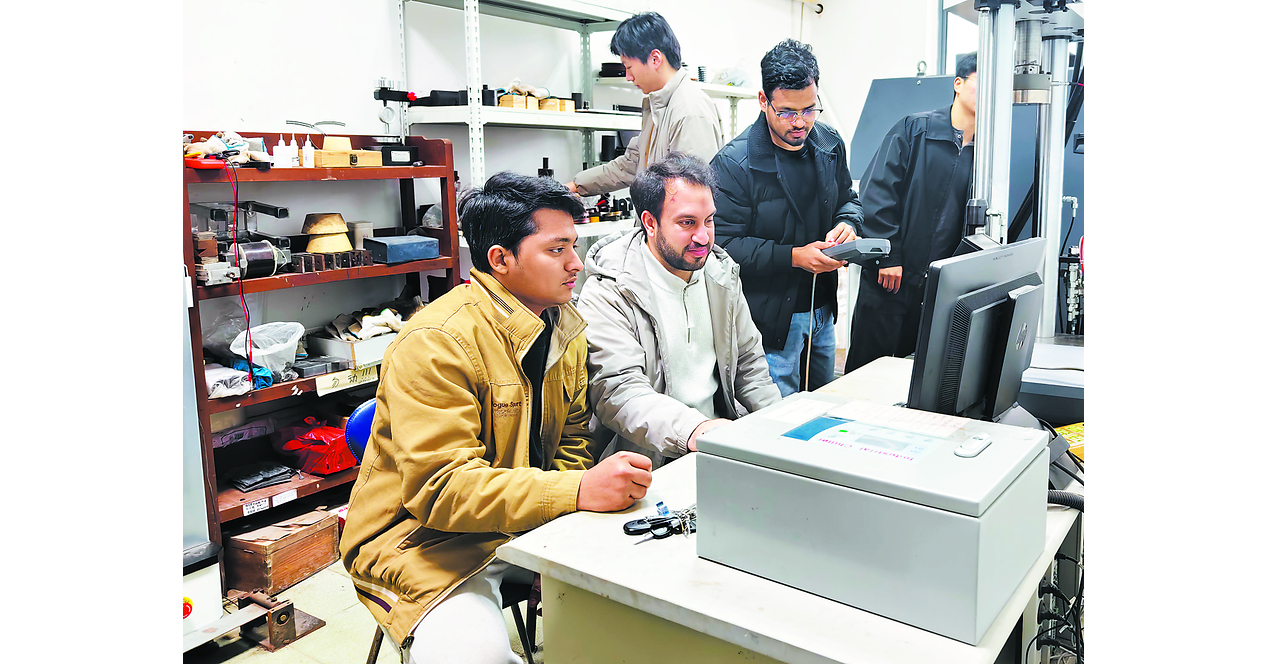
China and Pakistan launched a China-Pakistan Belt and Road Joint Laboratory on Smart Disaster Prevention of Major Infrastructures to improve earthquake and multi-hazard resilience across BRI partner countries. The article cites that since 2001 earthquakes have been the deadliest natural-disaster type for BRI partners and that cumulative annual economic losses from disasters have exceeded RMB 1 trillion over the past two decades. Focus areas include AI/big-data monitoring and emergency response upgrades, alongside plans to localize and implement Chinese technical standards in Pakistan.
This reads less like an earnings event and more like an early-stage standards/export-of-capability signal. The investable implication is that resilience spending in BRI markets should increasingly favor vendors that sell an integrated stack—sensing, monitoring, analytics, retrofit engineering—over pure civil contractors, because the latter only earn on one-off build cycles while the former can monetize recurring inspection and compliance budgets. Any real beneficiary set is likely a few layers down the supply chain, not the obvious headline names.
The first-order loser is the generic EPC model: when buyers prioritize disaster mitigation, budget shifts from new square footage to retrofit, condition monitoring, and code enforcement. That is usually margin-accretive for software/sensor/inspection providers and margin-neutral to negative for commodity contractors. The second-order effect is that localized standards can become a procurement moat; once specifications are written around one technical ecosystem, late entrants face a 1-3 year qualification lag.
The main risk is that this remains a policy-and-academic narrative with no tender cadence behind it. Over the next 1-3 months, the market will care only if there are actual pilot awards, framework agreements, or budgeted infrastructure projects in Pakistan/adjacent BRI markets. Over 6-18 months, the thesis is broken if fiscal stress or IMF-driven austerity delays capex, or if geopolitical friction blocks Chinese standards from translating into contracts.
Contrarian view: consensus tends to overprice "strategic cooperation" headlines and underprice execution friction. The likely tradeable edge is not to chase the story, but to wait for procurement evidence. If resilience spending does materialize, the upside is probably in small-cap inspection and monitoring names rather than the obvious construction complex.
AI-powered research, real-time alerts, and portfolio analytics for institutional investors.
Request DemoOverall Sentiment
mildly positive
Sentiment Score
0.12
Ticker Sentiment
