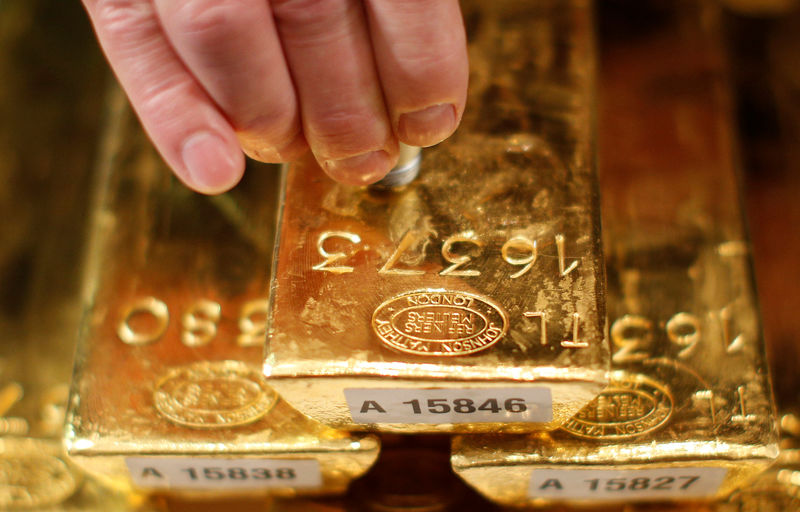
A preliminary U.S.-Iran peace agreement boosted risk appetite, sending the Dow to a record close and helping Brent crude hit three-month lows. Spot gold was little changed at $4,313.35/oz, while U.S. gold futures slipped 0.4% to $4,333.90 and silver fell 0.8% to $69.41/oz as lower geopolitical risk reduced safe-haven demand. Markets are now focused on this week’s central bank meetings, with the Fed expected to hold rates steady and traders watching for guidance on the policy path.
The immediate market winner is not just broad risk assets but the parts of the market most sensitive to the inflation path. If the Strait of Hormuz stays open, the first-order effect is lower terminal inflation expectations, which should mechanically compress real yields and ease pressure on duration-sensitive equities; that is more important than the headline equity pop itself. The second-order beneficiary is the Fed’s policy flexibility: a softer energy tape gives policymakers cover to sound less restrictive without needing to actually cut, which tends to support cyclicals and growth at the same time.
The biggest loser is the inflation hedge complex, but the move is likely more asymmetric in commodities than in equities. Gold’s reaction is constrained by the fact that peace-driven disinflation lowers one support pillar while still leaving central-bank demand intact, so the commodity may stagnate rather than unwind sharply unless real yields back up meaningfully after the Fed. Energy is the cleaner short only if the geopolitical truce holds through formal signing; otherwise the market is pricing away a supply shock that can reprice in days, not months.
The contrarian risk is that the market is extrapolating de-escalation into a durable macro regime shift too quickly. A temporary framework can narrow shipping risk premia without restoring full confidence in trade routes, so oil could rebound on any delay, compliance issue, or hardline rhetoric. Also, if central banks stay hawkish despite easier energy, the relief rally in rate-sensitive assets could fade fast as the market realizes lower gasoline does not equal lower core inflation overnight.
From a positioning standpoint, this is a better expression via relative-value than outright beta. The cleanest setup is long duration equities or REITs versus energy, because the macro impulse is lower discount rates and lower input costs rather than a pure growth shock. In commodities, the risk/reward favors selling strength in oil-related volatility, while treating gold weakness as a slower-burn trade unless nominal yields rise and the dollar stabilizes.
AI-powered research, real-time alerts, and portfolio analytics for institutional investors.
Request DemoOverall Sentiment
mildly positive
Sentiment Score
0.20
