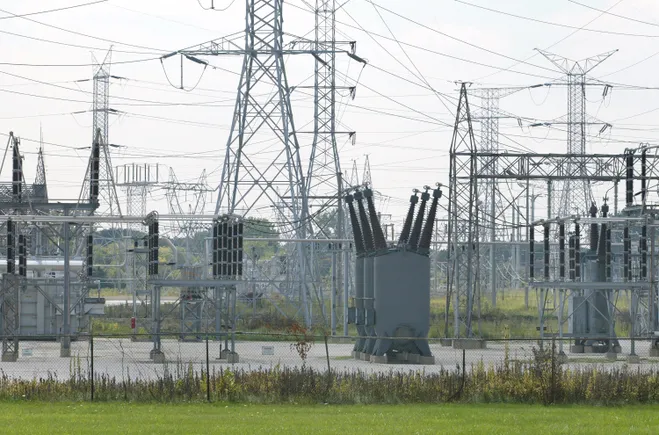
DOE announced a public-private partnership with SoftBank and AEP Ohio to develop 10 GW of new power generation in Ohio, including 9.2 GW of natural gas, supported by $33.3 billion in Japanese funding. SB Energy will build the gas assets and has committed $4.2 billion with AEP Ohio for transmission upgrades; construction is expected to begin this year and the project is presented as at 'no cost to American families' while lowering regional electricity costs.
Large, concentrated thermal and transmission builds in a single regional grid will reprice local energy and capacity markets even before plants are online. Expect basis compression at the regional node vs Henry Hub when firm pipeline capacity is procured, but meaningful merchant cash margins only show up once capacity payments reset—likely across two PJM auctions (6–30 months). Turbine and converter delivery windows (18–36 months) plus skilled-labor bottlenecks mean construction slippage is the base case, which magnifies capex overruns and creates short-term vendor optionality.
Regulatory and political vectors are the most actionable near-term risks: state commission cost-recovery decisions, interconnection queue challenges, and CFIUS-like scrutiny of large foreign capital injections can delay or reprice projects within 3–24 months. Environmental permitting and community pushback introduce binary risk to merchant plants’ revenue models; a permit reversal or mandated emissions retrofits would convert an economics-improving regional shock into a stranded-asset story. FX and repatriation constraints on foreign funding create a conditionality that can surface as covenant renegotiations or tranche delays.
Winners include OEMs, grid-equipment suppliers and midstream firms that secure long-lead contracts and firm transport agreements; losers are marginal merchant thermal assets and some solar-plus-storage projects whose capacity value is diluted. Second-order, expect downward pressure on wholesale prices when projects enter commercial operation, compressing spark spreads for peakers and altering hedge curves for utilities and retailers over 2–5 years. The opportunity set is therefore in order-flow-exposed industrials and regulated-rate-base beneficiaries, not in pure merchant generation developers with high leverage.
AI-powered research, real-time alerts, and portfolio analytics for institutional investors.
Request DemoOverall Sentiment
strongly positive
Sentiment Score
0.70
