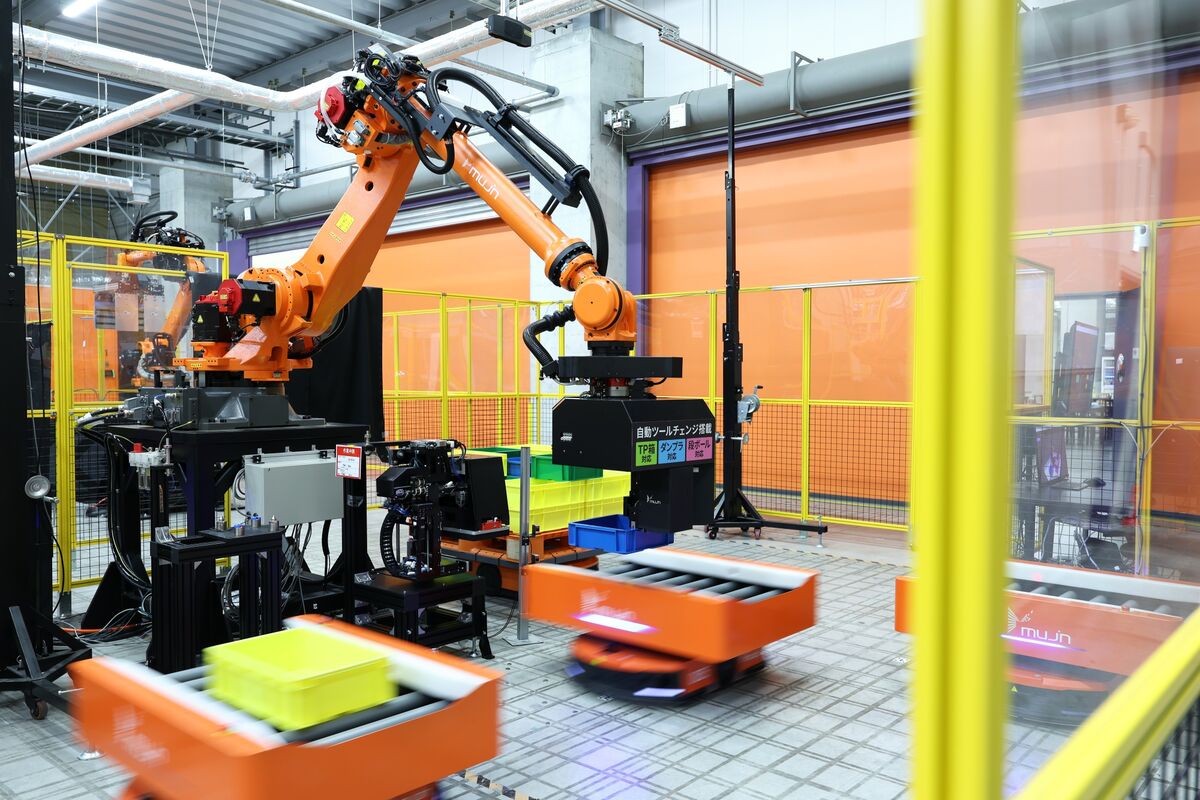
Mujin is raising an extension to its $233 million Series D after reaching a valuation of more than $1 billion, with plans to go public by 2030. The Japanese factory AI software developer said the new capital should fund it through the IPO and expects to break even before then. The update is constructive for the company and the industrial AI theme, but is unlikely to move broader markets.
The important signal is not the funding itself, but that a niche industrial AI vendor thinks it can finance to breakeven and IPO on a multi-year runway while still at a private-market premium. That implies investors are underwriting not just software revenue, but a platform wedge into factory automation budgets where payback periods matter more than model sophistication. If that thesis holds, the real second-order winner is the broader ecosystem of robot OEMs, vision sensors, motion-control chips, and industrial integrators that gain attach rates as factories move from point automation to software-orchestrated fleets.
The competitive risk is that industrial AI is a much harsher market than horizontal software: deployment cycles are long, switching costs are high, and every deployment is a proof-of-ROI sale. If capital markets stay open, the category may consolidate around a few vendors with enough balance sheet to subsidize implementation and support; if they tighten, smaller players will be forced into channel partnerships or takeout at compressed valuations. That favors incumbents with distribution and existing service relationships over pure-play startups, even if the latter get the narrative premium.
The contrarian miss is that “AI for factories” may be less about near-term margin expansion and more about preserving labor availability in aging manufacturing economies. That means demand could be steadier than typical software hype cycles, but monetization may lag because customers will push for outcome-based pricing and longer pilots. In other words, the upside is real, but the path to breakeven is likely more volatile than management guidance suggests, especially if industrial capex softens in a recession or if implementation delays stretch cash burn beyond the next 12-18 months.
AI-powered research, real-time alerts, and portfolio analytics for institutional investors.
Overall Sentiment
moderately positive
Sentiment Score
0.55
