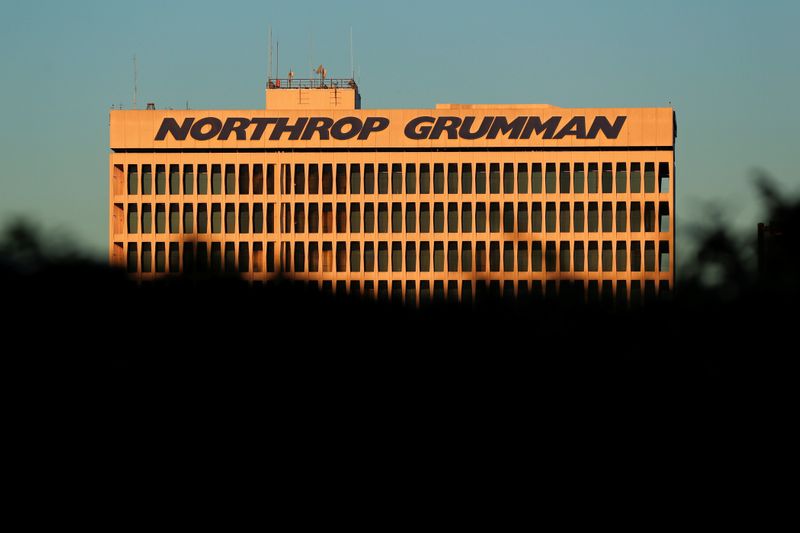
Northrop Grumman beat Q1 expectations with EPS of $6.14 versus $6.05 consensus and revenue of $9.88 billion versus $9.76 billion expected, while operating income jumped 73% to $989 million and margins expanded to 10.0% from 6.1%. Net awards were $9.8 billion and backlog reached $95.6 billion, supporting the defense contractor’s reaffirmed 2026 guidance for $43.5 billion-$44.0 billion in sales and $27.40-$27.90 in MTM-adjusted EPS. Shares were down 0.8% despite the strong print.
The market is still underestimating how much of NOC’s earnings quality is turning from cyclical to structural. The key second-order effect is that higher backlog plus a better execution profile reduces the probability of downward revisions in out-years, which matters more than the current quarter beat because defense multiples usually rerate on guidance durability, not one-off margin expansion. The balance sheet and cash conversion profile should also improve as program mix shifts toward higher-throughput production, creating room for more capital return without needing heroic sales growth.
The bigger winner may be the broader defense supply chain: suppliers tied to airframes, propulsion, sensors, and mission systems should see a longer runway for volume visibility as primes push capacity expansion through the chain. That said, the risk is that margin normalization can stall once the easy comparison from prior loss provisions rolls off; if execution slips even modestly, the stock can de-rate quickly because current expectations already assume sustained margin recovery. In other words, the setup is better on visibility than on multiple expansion.
Contrarian angle: consensus is likely treating this as a clean “defense spend up = buy primes” trade, but the more interesting opportunity is in relative value where the market is least pricing the second-order beneficiary of capacity buildouts. The best risk/reward may be in pairing stable backlog names against weaker executors or lower-quality defense beneficiaries that need perfect program timing to justify valuations. Over the next 1-2 quarters, watch for any change in bookings conversion or working-capital absorption; those are the earliest signals that the current optimism is becoming overextended.
AI-powered research, real-time alerts, and portfolio analytics for institutional investors.
Request TrialOverall Sentiment
moderately positive
Sentiment Score
0.55
Ticker Sentiment
