
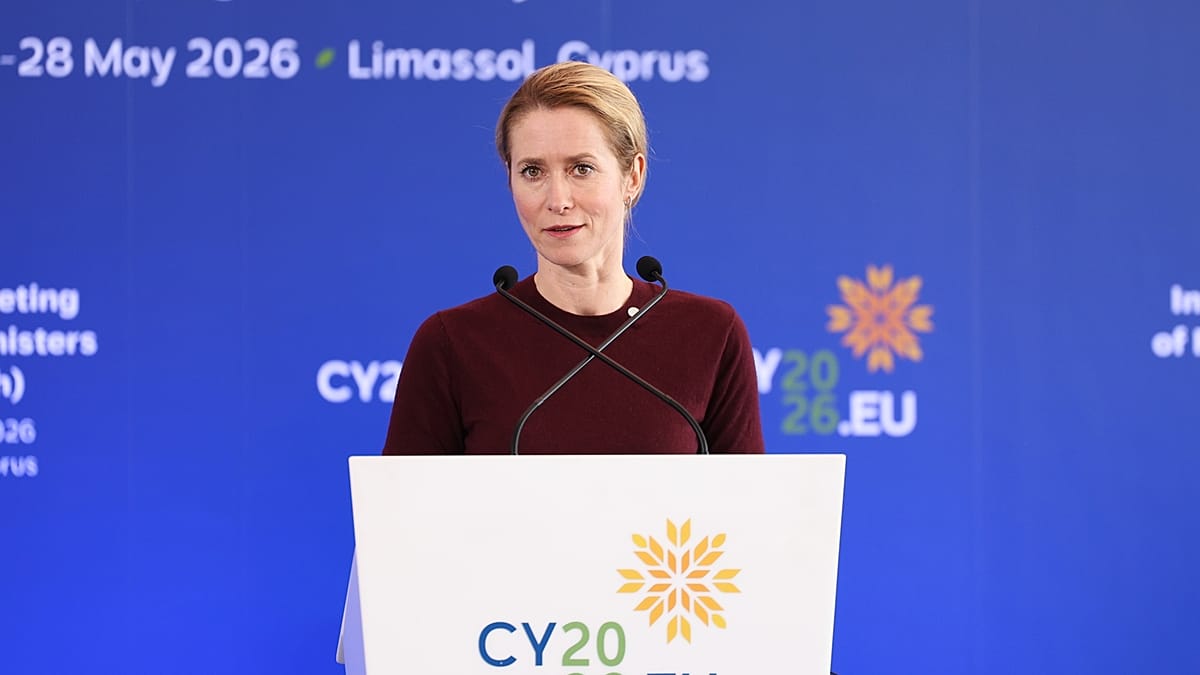
EU foreign policy chief Kaja Kallas said the bloc will not act as a neutral mediator between Russia and Ukraine and will not replace the United States in peace talks. The EU instead plans to focus on defining Russia’s concessions, red lines and conditions, including non-recognition of occupied territories, reparations, prisoner and child returns, and limits on Russia’s rearmament. The article also underscores ongoing Russian strikes on Kyiv and continued diplomatic friction, but it contains no direct market or company-specific financial catalyst.
The key market signal is not a new peace process, but a higher probability of a drawn-out, Europe-led sanctions and financing regime with no near-term diplomatic off-ramp. That favors defense, ISR, cyber, air-defense, and infrastructure hardening spend across the EU over any assets priced for a rapid normalization in Eastern Europe. The second-order effect is that European policymakers are now more likely to formalize a long-duration security budget rather than rely on episodic crisis response, which is constructive for contractors with multi-year backlog visibility and for utilities/grid suppliers tied to resilience capex.
The other underappreciated implication is that Ukraine aid becomes more politically salient in Europe precisely as U.S. bandwidth is constrained, increasing the chance of fragmented procurement, duplicate command structures, and slower disbursement. That typically benefits the largest prime contractors and ammunition suppliers over smaller regional names, while pressuring highly levered European industrials exposed to any renewed energy or logistics disruption. If Russia escalates to test European cohesion, the immediate winners are air-defense and counter-drone systems; the losers are continental transport, insurance, and select chemicals/steel names with Eastern Europe exposure.
From a timing standpoint, the next 2-8 weeks matter for rhetoric and budget signaling, but the real catalyst is whether member states converge on a common negotiating mandate or continue to split over envoy/mediation mechanics. A unified line would extend the current defense-spend repricing; a visible U.S. re-engagement in talks would be the main downside catalyst for the sector basket. I would treat any headline-driven pullback in defense as a buying opportunity unless it is paired with concrete evidence of ceasefire sequencing and sanctions relief, which still looks low probability over the next several months.
The contrarian point is that a refusal to mediate is not necessarily hawkish enough to keep the war premium bid forever; it may instead signal policy fatigue and a lack of actionable European leverage. If markets conclude that Europe cannot translate rhetoric into operational support, the premium could leak out of names that have already rerated on security spending expectations. The better asymmetry is in providers of low-cost, high-volume consumables and critical infrastructure protection rather than in the most crowded large-cap defense benchmarks.
AI-powered research, real-time alerts, and portfolio analytics for institutional investors.
Request TrialOverall Sentiment
neutral
Sentiment Score
-0.05
Ticker Sentiment
