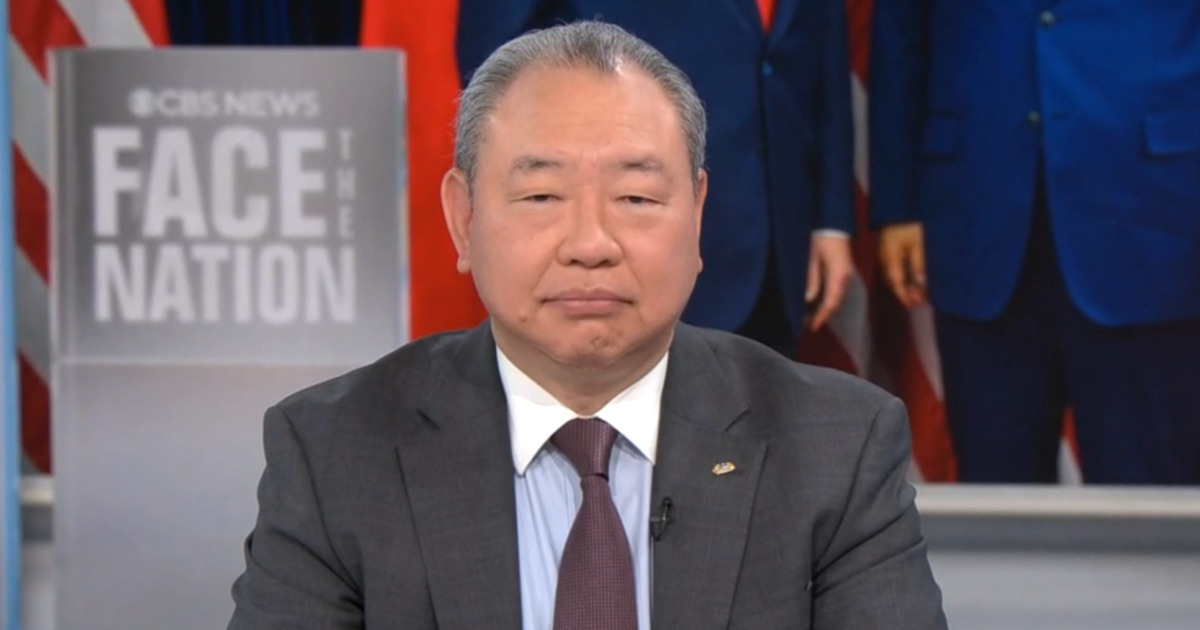
Taiwan’s representative said the island wants to maintain the status quo and avoid war with China, while urging continued U.S. arms sales to strengthen deterrence. The interview highlighted uncertainty around a possible Trump-Lai call and concern that Trump may use pending Taiwan weapons sales as leverage in talks with Beijing. The tone is cautious and geopolitically negative, with meaningful implications for regional defense and broader Taiwan Strait risk.
The market implication is not the rhetoric itself; it is the widening gap between headline support and operational follow-through. If weapon deliveries become bargaining chips, the immediate loser is Taiwan’s near-dated deterrence curve: the value of promised inventory falls sharply when delivery timing becomes uncertain, which raises the odds of a coercion test before the political window closes. That tends to hit the whole Taiwan supply chain asymmetrically — not just pure-play defense beneficiaries, but also upstream electronics and foundry exposure tied to island risk premium.
The second-order effect is on U.S. defense prime economics. A pause in Taiwan-related shipments does not reduce long-run demand; it compresses visibility and can force a repricing of backlog conversion, especially for programs with export-production sequencing. The real beneficiaries may be systems with less Taiwan-specific exposure and more diversified allied demand, while suppliers concentrated in Taiwan air-defense, ISR, and anti-ship systems face a timing overhang rather than a volume problem.
From a risk standpoint, the main catalyst is not an invasion scenario; it is a short-cycle escalation around inspections, airspace, or maritime signaling over the next 1-6 months. The consensus likely underestimates how quickly Beijing can exploit any perceived U.S. wavering to intensify gray-zone pressure without crossing a red line. Conversely, a formal delivery schedule or a visible presidential engagement with Taipei would likely compress risk premia fast, but that would be a policy event rather than a macro one.
Contrarian view: the trade may be better expressed as a volatility bid than as a simple long/short on defense. The market is likely overconfident that strategic ambiguity will remain stable if arms deliveries slip; in reality, ambiguity plus delay is the unstable combination. That argues for owning downside protection on Taiwan-exposed equities and selectively buying names that benefit from a higher sustained Indo-Pacific security budget cycle.
AI-powered research, real-time alerts, and portfolio analytics for institutional investors.
Request DemoOverall Sentiment
mildly negative
Sentiment Score
-0.10
