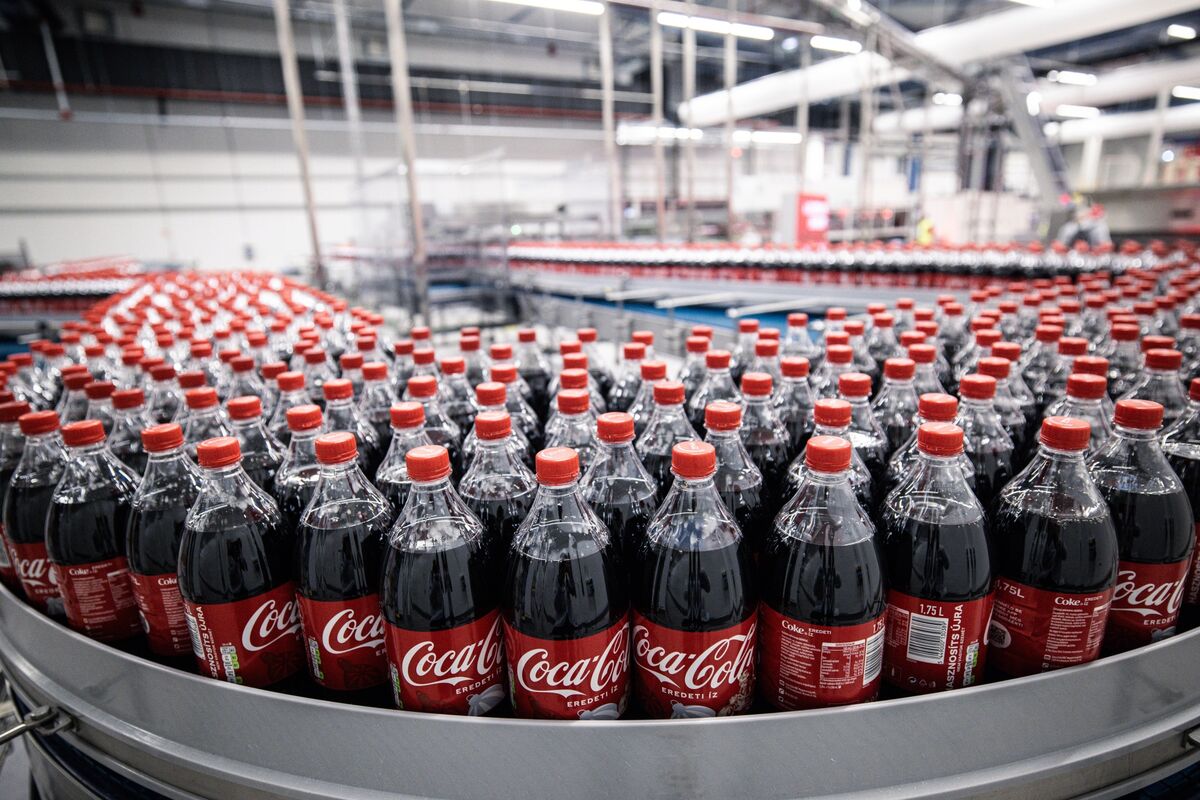
Coca-Cola reported first-quarter organic revenue growth of 10%, beating Wall Street expectations, with adjusted EPS also ahead of estimates. Results were supported by stronger purchases of smaller package sizes and higher prices, indicating resilient consumer demand and pricing power.
KO’s print suggests the company is monetizing a consumer that is still buying, but trading down in format rather than abandoning the category. That matters because smaller pack sizes typically carry better mix optics and faster price realization, but they can also mask unit softness: the headline looks healthy even if liters sold are flattening. If this pattern persists for another 2-3 quarters, it becomes a validation of a higher-price/low-volume equilibrium rather than a one-off EPS beat.
The second-order winner is not just KO’s margin profile, but the bottling and distribution stack that can keep throughput high while SKU complexity rises. The likely losers are private-label soda and adjacent value beverages, which struggle to match the combination of brand demand and package-engineered affordability. Watch competitors with more exposed mass-market channels: if they chase KO’s pricing, they risk unit erosion; if they don’t, they concede shelf space and promo share.
The key risk is that “smaller sizes + higher prices” is inherently fragile once household budgets tighten or promo intensity returns. The trend can reverse quickly over a 1-2 quarter horizon if retailer resistance builds, emerging-market FX weakens, or consumers start downshifting to cheaper liquid alternatives. A more subtle longer-dated risk is that persistent price architecture may eventually cap volume growth, making the current revenue beat less transferable into durable top-line compounding.
Consensus is probably underestimating how much of this is mix management rather than demand elasticity triumph. That means the stock can work as a near-term quality/defensive trade, but the underlying operating leverage is less clean than it appears, so the upside may be more multiple-driven than estimate-driven. If management starts talking about sustained volume gains rather than just pricing, that would be the signal the market is still underpricing the duration of the story.
AI-powered research, real-time alerts, and portfolio analytics for institutional investors.
Request DemoOverall Sentiment
moderately positive
Sentiment Score
0.55
Ticker Sentiment
