
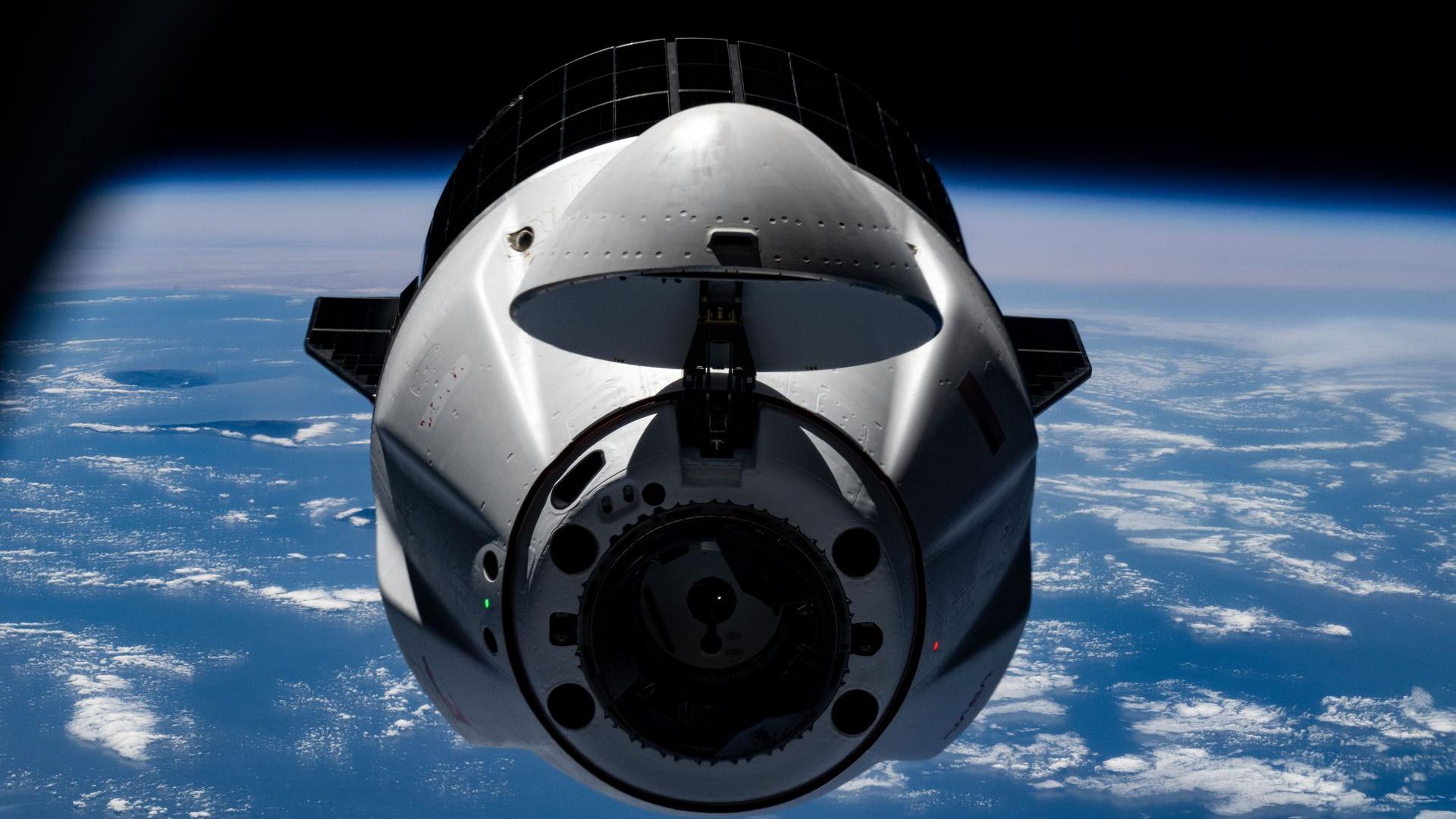
SpaceX's Dragon cargo capsule will undock from the ISS on Feb. 26 after a roughly six‑month CRS‑33 mission that delivered ~5,000 lb (2,270 kg) of supplies and demonstrated a novel station-reboost capability. While docked Dragon performed six reboost maneuvers (five in 2025, final on Jan. 23), showcasing a reusable alternative to Russia's Progress and adding redundancy alongside Cygnus and Japan's HTV‑X; the capsule is slated to splash down off California on Feb. 27. The operational milestone underscores SpaceX's growing technical role in station maintenance and has strategic implications if Russia's ISS participation changes, but it is unlikely to be materially market‑moving on its own.
Market Structure: SpaceX’s Dragon demonstrating reliable reboost and reusable downmass capability shifts marginal power toward reusable commercial providers and national primes that can offer round-trip logistics. Direct winners are U.S. primes and suppliers that integrate Dragon-compatible payload return (benefit capture window 6–36 months); losers are disposable freighter models and any supplier uniquely tied to Russian Progress dependency. Pricing power: NASA and commercial customers gain leverage to demand lower per-kg return costs; expect a 5–15% compression in per-kg downmass pricing over 2–4 years as reusability scales.
Risk Assessment: Key tail risks are (1) a Dragon reentry failure within days that would halt downmass flights and spike insurance costs, (2) an unexpected Roscosmos commitment extension that delays contract awards, and (3) U.S. budget cuts to ISS servicing programs in FY2026–27. Immediate (days) impact is operational reputation around splashdown; short-term (3–12 months) hinges on NASA RFP timing and Roscosmos statements; long-term (1–5 years) depends on ISS life extension and follow-on platforms.
Trade Implications: Tactical: use NOC (Northrop Grumman) exposure as the clearest liquid play—modest long exposure 1–2% or defined-risk call spreads 3–6 months to capture potential near-term contract announcements. Overweight Aerospace & Defense (LMT, RTX, NOC) by 1–3% vs underweight Commercial Aerospace (BA, airlines) by 1–2% as capital flows to space/logistics. Cross-asset: buy 6–12 month protection on high-beta A&D holdings if Dragon anomaly occurs; FX: a confirmed Russian exit supports weaker RUB over 3–12 months.
Contrarian Angles: Consensus underprices the commercial value of reliable downmass for monetizing space R&D — this creates a multi-year revenue stream (sample return fees, premium logistics) not captured in current valuations. Conversely, if Russia stays and/or NASA delays procurement, short-term upside is capped; historical analogy: post-Shuttle gaps created outsized wins for early commercial providers. Unintended consequence: faster commoditization of downmass could compress margins for disposable freighters and suppliers not adapted to return-capable hardware.
AI-powered research, real-time alerts, and portfolio analytics for institutional investors.
Request TrialOverall Sentiment
mildly positive
Sentiment Score
0.25
Ticker Sentiment
