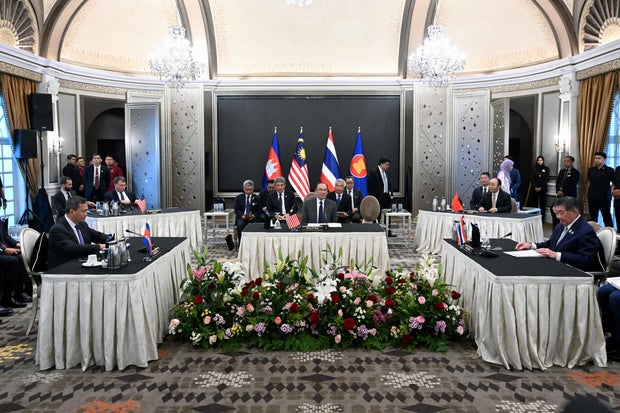
Thailand and Cambodia have agreed to an "immediate and unconditional" ceasefire to end deadly border clashes, effective July 28, following mediation by Malaysian Prime Minister Anwar Ibrahim. The agreement, which aims to de-escalate a conflict that killed 35 and displaced over 260,000 people, was significantly influenced by direct pressure from President Trump, who had warned of potential trade deal impacts if hostilities continued. While fighting was still reported Monday and Thailand expressed distrust regarding Cambodia's sincerity, this resolution marks a critical step in stabilizing a rare military confrontation between ASEAN member states, potentially paving the way for renewed trade negotiations with the U.S.
A ceasefire agreement between Thailand and Cambodia, brokered by ASEAN and effective July 28, marks a significant de-escalation of a border conflict that resulted in 35 fatalities and the displacement of over 260,000 people. The resolution was critically influenced by external pressure from the United States, with President Trump explicitly linking the resumption of trade negotiations to the cessation of hostilities. Consequently, the U.S. has directed its trade team to restart talks, presenting a tangible economic upside to the diplomatic breakthrough. However, risks to the stability of the agreement persist, as highlighted by the Thai Acting Prime Minister's stated distrust of Cambodian sincerity and contemporaneous reports of ongoing fighting. The event, a rare military confrontation between ASEAN members, underscores the region's vulnerability to geopolitical flare-ups and the powerful role of economic leverage by major trade partners in enforcing stability.
AI-powered research, real-time alerts, and portfolio analytics for institutional investors.
Request DemoOverall Sentiment
moderately positive
Sentiment Score
0.60
