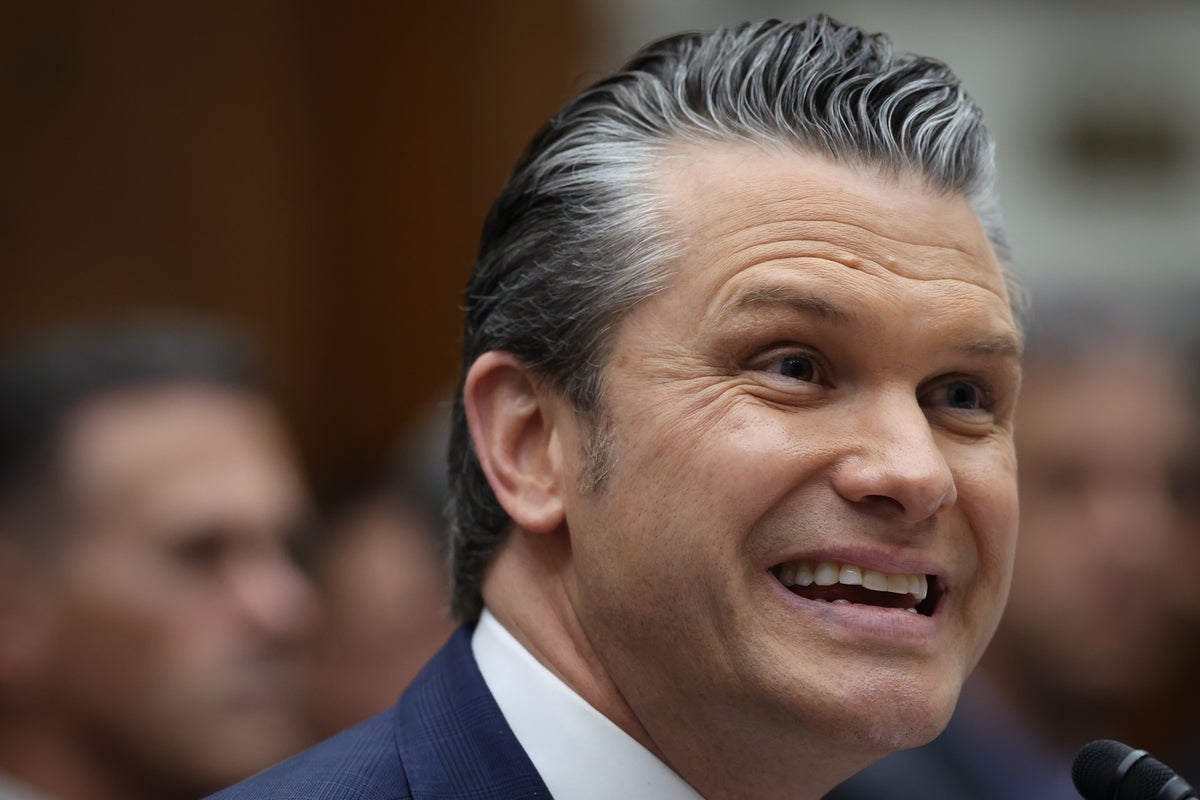
The article describes a contentious House Armed Services Committee hearing in which Defense Secretary Pete Hegseth was pressed on strategy for the Iran war, the Strait of Hormuz blockade, and Ukraine, but repeatedly failed to answer directly. Lawmakers criticized the administration for economic damage, deteriorating diplomacy, and lack of a coherent plan, while Hegseth responded with combative soundbites rather than specifics. The piece is politically charged but centers on war policy and defense leadership, giving it potential sector and macro relevance.
The market-relevant signal here is not the theater; it is the growing probability of policy volatility around a live geopolitical shock. When a defense secretary cannot articulate a coherent end-state under scrutiny, it raises the odds of decision-making by slogan, which typically increases tail-risk premia in energy, shipping, defense procurement, and cyclicals tied to imported input costs. The first-order move is already in commodities, but the second-order trade is a widening gap between “headline beta” assets and businesses with real pricing power or domestic revenue.
The more important near-term implication is fiscal. A prolonged conflict that elevates fuel and logistics costs while inviting extra defense outlays is a classic margin squeeze for transport, consumer discretionary, and mid-cap industrials over the next 1-3 quarters. If the administration responds with larger appropriations or emergency funding, long-duration Treasuries can rally on growth fears even as front-end yields stay sticky on inflation expectations — a shape that favors curve steepeners only if the market believes the shock is temporary.
On defense, the rhetoric may be bearish for procurement efficiency but bullish for prime contractors with exposure to replenishment and munitions, especially if Congress uses this as a justification to press for faster stockpile rebuilds. The contrarian point: the market may be overpricing incompetence as if it automatically means escalation. In practice, a publicly embarrassed Pentagon often becomes more cautious in the next 2-6 weeks, not less, which could cap the implied tail in energy and defense unless there is a fresh operational event.
The cleanest trade is to own the beneficiaries of sustained uncertainty while fading the broad beta that gets hit by higher fuel and tax-adjacent fiscal drain. Use the next 1-2 sessions, while headlines are still digesting, to express that view with limited downside and tight risk controls around any diplomatic de-escalation headline.
AI-powered research, real-time alerts, and portfolio analytics for institutional investors.
Request DemoOverall Sentiment
moderately negative
Sentiment Score
-0.45
