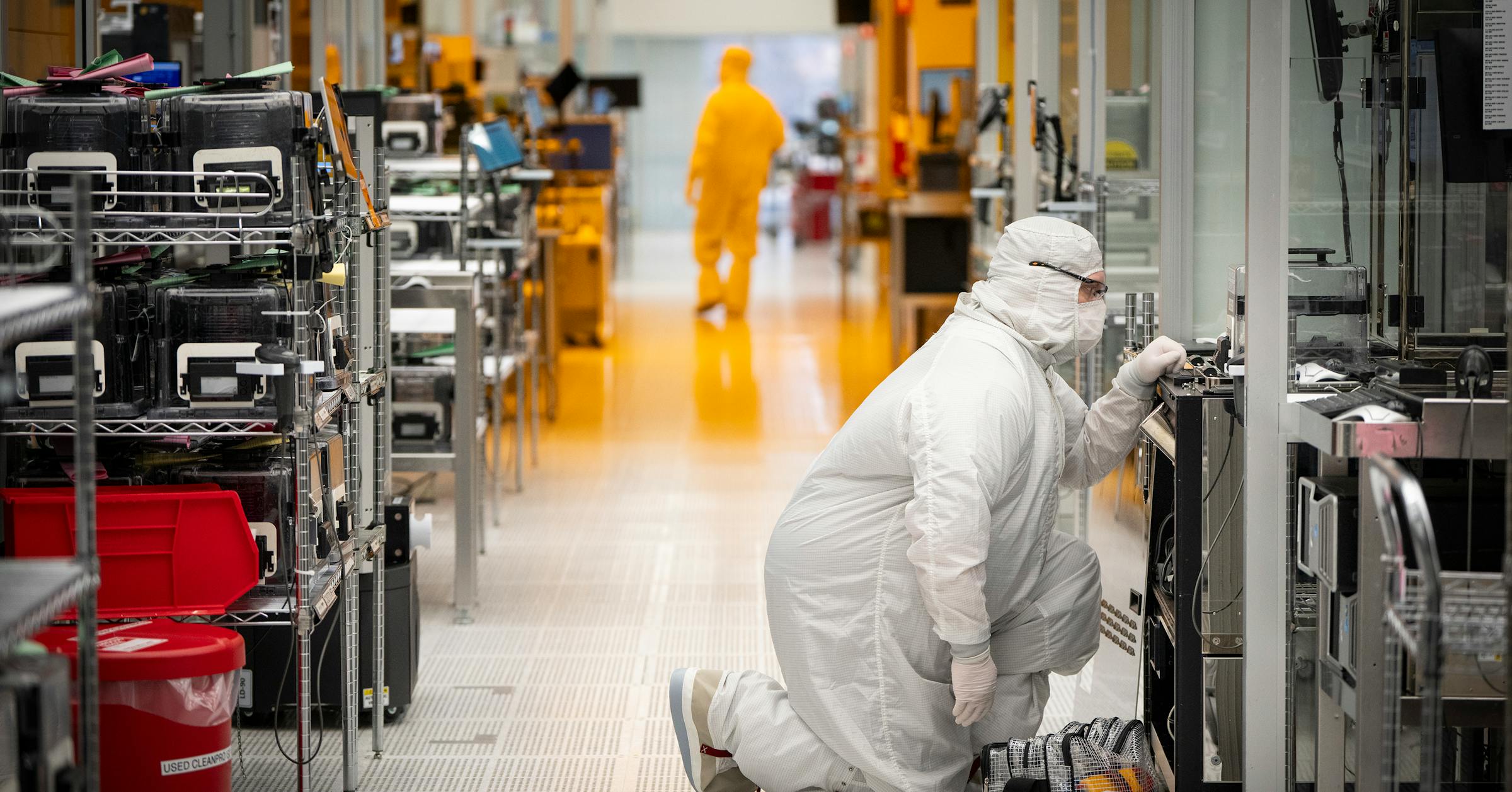
The Trump administration will take $2 billion in equity stakes across nine quantum-computing companies, including about $100 million for D-Wave and a smaller stake for PsiQuantum, underscoring a major U.S. push in quantum technology. The move should benefit SkyWater Technology, which partners with D-Wave and could see increased demand as quantum spending scales. Separately, IonQ is in the process of buying SkyWater in a $1.8 billion deal, adding further strategic relevance to the company.
This is less a clean “quantum wins” headline than a state-backed demand signal that changes financing and procurement risk across the ecosystem. The largest near-term beneficiary is the company with the most leverage to public-sector validation and manufacturing bottlenecks, because government participation tends to pull forward follow-on capital, customer diligence, and supplier qualification. That should mechanically help the domestic foundry/advanced packaging layer more than pure-play quantum software, since hardware scale-up remains the gating factor and the easiest way for Washington to de-risk the sector is to subsidize physical capacity and trusted supply chains.
IBM’s outsized allocation likely matters more as a platform-credibility event than as direct economics: it reinforces the idea that quantum is transitioning from science project to strategic infrastructure, which can support higher multiple durability for adjacent AI/compute narratives. For NVDA, the direct economic impact is limited, but the second-order read-through is favorable because quantum funding usually expands the perceived TAM for cryo-control, high-performance interconnects, and hybrid classical-quantum workflows. The real knock-on may be on smaller private competitors that lack political sponsorship; capital will likely concentrate further into a handful of “national champion” names.
The main risk is timing mismatch. Government stakes can create a short-term re-rating, but revenue contribution from quantum remains years away, so any move that feels like a mini-industrial policy bubble can reverse fast if milestones slip or if the administration shifts from equity support to procurement-only support. The M&A angle also raises execution risk: if IonQ’s deal closes, SkyWater’s strategic value could be trapped between a takeout premium and policy-driven upside, limiting clean equity upside unless terms are re-traded higher.
Consensus is probably underestimating how this alters fundraising power for the named winners and overestimating how much it changes near-term fundamentals. The better trade is not a blanket long on “quantum,” but a relative-value bet on the domestic supply chain and the most politically embedded operator versus the broader semiconductor complex. If this becomes the template for other strategic technologies, expect a valuation premium for firms with cleared fabs, defense adjacency, and government-aligned ownership structures.
AI-powered research, real-time alerts, and portfolio analytics for institutional investors.
Request DemoOverall Sentiment
mildly positive
Sentiment Score
0.48
Ticker Sentiment
