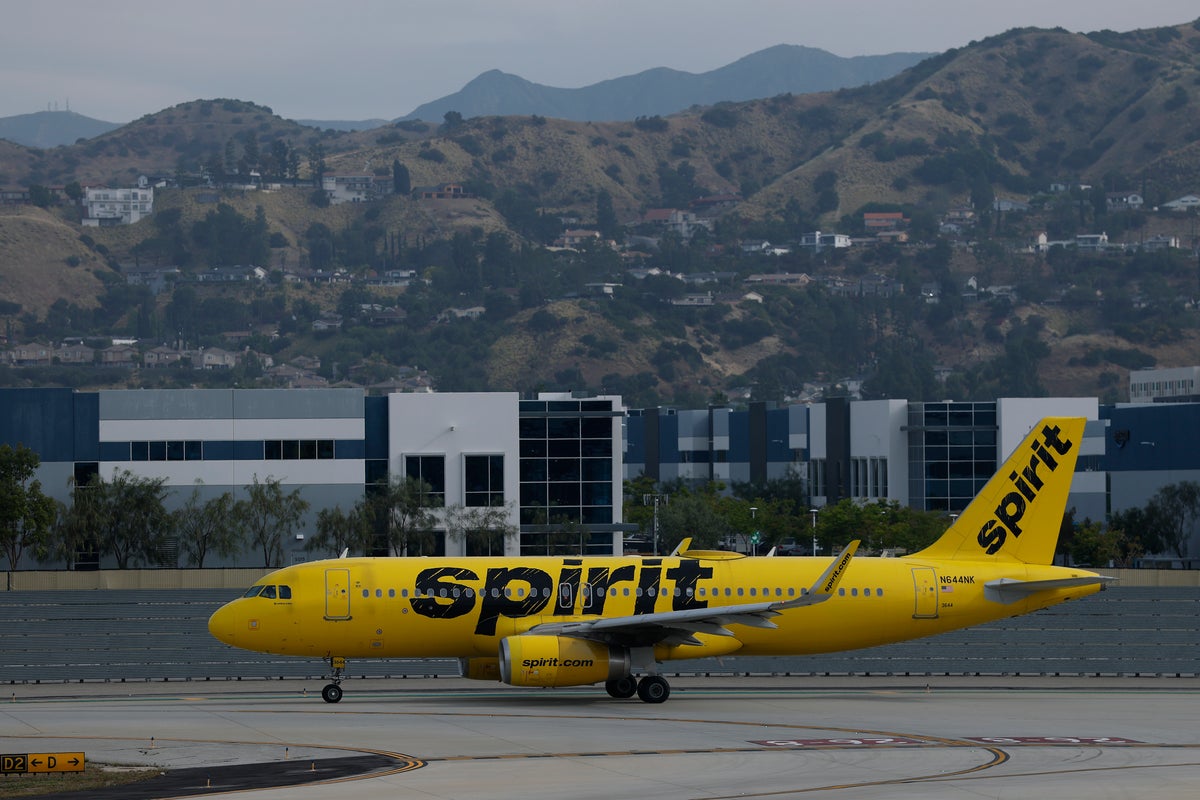
Spirit Airlines is seeking hundreds of millions of dollars in emergency funding as a surge in jet fuel prices to about $4.24 per gallon threatens liquidation. The carrier had planned fuel costs of roughly $2.24 per gallon this year and $2.14 next year, but the Iran-related oil shock derailed its bankruptcy recovery and raised near-term solvency risk. The situation is highly negative for Spirit and could affect travelers if liquidation proceeds, though the company says operations continue as normal.
This is less a single-company rescue story than a stress test for the weakest balance sheets in the domestic travel stack. If fuel stays elevated, the first-order loser is any carrier with thin liquidity, high leverage, and limited pricing power; the second-order winner is the rest of the industry, which gets a forced capacity reset and better load factors once marginal seats disappear. In other words, a liquidation outcome would be disinflationary for fares only in the very near term, but medium-term it should widen unit revenue dispersion in favor of stronger network carriers and disciplined low-cost operators.
The more interesting market signal is that a fuel shock is colliding with a post-restructuring capital structure before the company can even “reset.” That creates a binary time horizon: days-to-weeks for rescue funding or debtor-in-possession style support, versus months for a broader capacity exit if no backstop arrives. If policymakers do step in, it likely won’t be equity-friendly; the market should assume dilution, creditor concessions, or an expensive quasi-governmental lifeline that merely postpones liquidation risk.
The contrarian angle is that the market may be overestimating the permanence of the fuel shock and underestimating political incentives to avoid consumer disruption. Once the geopolitical premium in crude fades, the same carrier may regain some runway; but the equity could still be structurally impaired because the episode highlights that the business model has no margin for error. More broadly, this is a reminder that cheap airfare is not a moat when financing costs and fuel volatility both move against you at once.
For peers, the supply exit is more important than the bailout headline. Any forced reduction in domestic seat capacity should flow to incumbents with stronger pricing and loyalty franchises, while airports and adjacent travel services see less volume risk than the market may fear because displaced passengers are rebooked rather than lost. The real downside contagion is to other subscale airlines with similar fuel sensitivity and weaker liquidity, not to the broad travel complex.
AI-powered research, real-time alerts, and portfolio analytics for institutional investors.
Request TrialOverall Sentiment
extremely negative
Sentiment Score
-0.85
