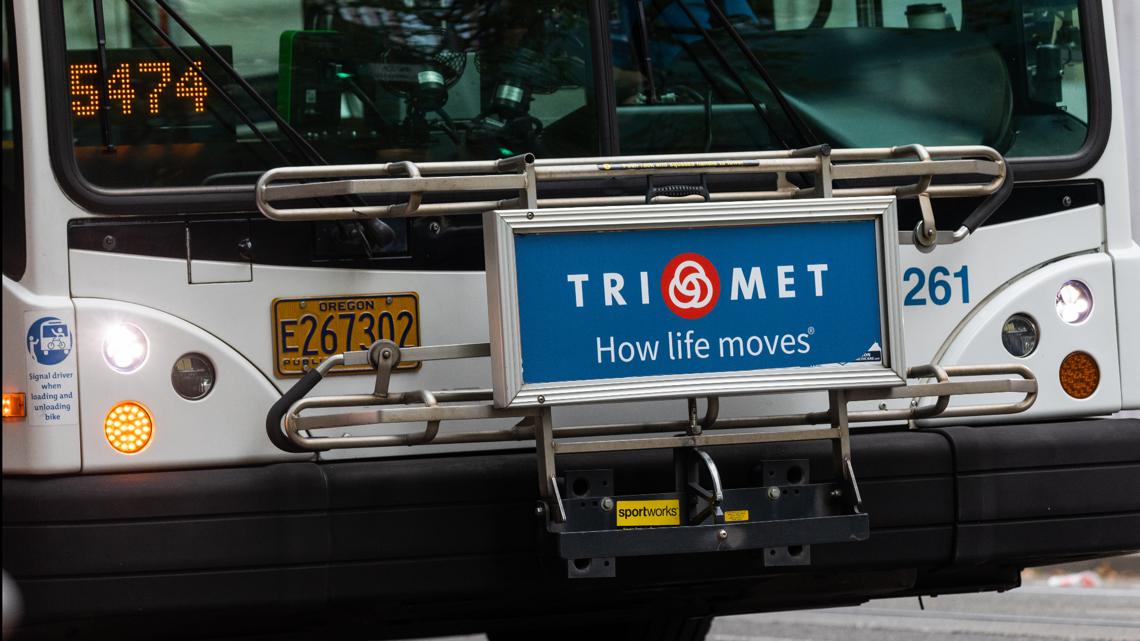
TriMet will eliminate about 170 employee positions starting July 1 as part of a $64.5 million fiscal 2027 cost-cutting plan, including $53 million in administrative cuts and $11 million in service cuts. The agency is reducing its workforce from 3,708 to 3,204 and says it faces a $300 million structural budget deficit and a potential fiscal cliff if it cannot keep cutting costs. The move reflects ongoing budget pressure rather than a market-moving event.
This reads less like a one-off municipal belt-tightening and more like a stress test of fare-funded, labor-heavy public operators in a higher-rate, higher-wage environment. The key second-order effect is that cost resets at transit agencies often lag inflation by 12-24 months, so the market is seeing the front end of a multi-year operating de-rating rather than a single fiscal year fix. If service rationalization persists, the immediate “winner” is private mobility substitution: parking operators, rideshare, paratransit contractors, and suburban commuter alternatives can gain marginal share as reliability deteriorates.
The larger risk is a self-reinforcing demand spiral. Cutting service to close a deficit can reduce ridership, which then weakens farebox recovery and political support for future subsidies, especially if commuters adjust habits over a 6-18 month horizon. That dynamic matters because once service levels are cut, restoring them is operationally and politically slower than cutting them, so the downside to the agency’s network quality is asymmetric.
From an investor lens, this is a governance signal for other public transportation systems with aging cost structures: expect pressure on wage agreements, headcount, and capex deferment across the sector. Vendors tied to transit operations, bus procurement, maintenance, and station services face delayed orders and margin compression if agencies prioritize preservation of core service over expansion. The contrarian view is that the market may be underestimating subsidy optionality; if the service reductions create visible commuter pain, local or state backfill can arrive faster than expected, limiting the duration of the austerity narrative.
For public markets, the cleanest read-through is not a direct short on transit, but a relative long in private-mobility exposure versus urban transit-adjacent assets. The catalyst window is near term: staffing cuts and service changes hit rider experience within quarters, while any subsidy response or labor renegotiation would likely take one budget cycle or longer. That asymmetry favors tactical positioning around local disruption rather than a structural thesis on transportation demand.
AI-powered research, real-time alerts, and portfolio analytics for institutional investors.
Request TrialOverall Sentiment
moderately negative
Sentiment Score
-0.42
