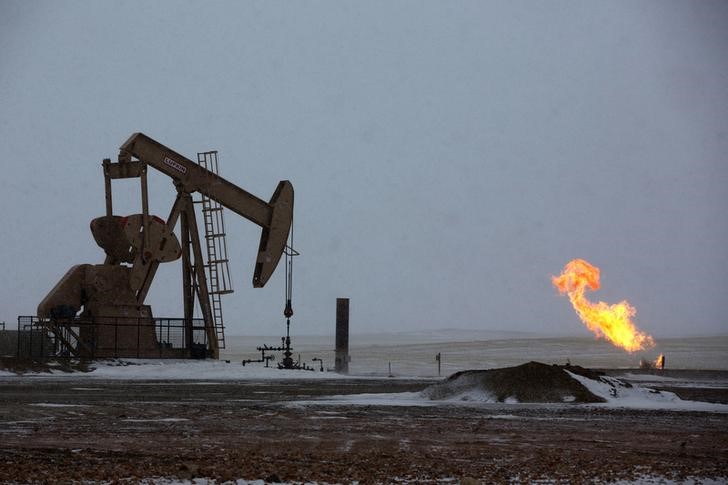
U.S. crude and petroleum exports hit a record 12.9 million barrels per day last week as disruptions around the Strait of Hormuz and Qatar are forcing global buyers to source from the U.S. More than 60 empty crude supertankers are reportedly heading to the U.S. Gulf Coast, roughly triple prewar levels, underscoring near-term demand strength for American energy. However, the article warns that Gulf Coast throughput constraints and Asia’s refinery configuration limit how much of this war-driven demand can become a permanent shift.
The immediate winner is not just U.S. upstream producers; it is the entire Gulf Coast logistics stack. When export flows saturate regional handling capacity, the scarcity rent accrues to firms with bottleneck assets: LNG/export terminal operators, storage, pipeline connectors, rail-to-port optionality, and coastal shipping intermediaries. That creates a second-order spread trade where the commodity itself may already be partially priced, but throughput-constrained infrastructure still has room to re-rate as utilization stays pinned for quarters.
The more important medium-term effect is that the market is underestimating how sticky the bid for U.S. molecules becomes once foreign refiners reconfigure procurement and hedging. Even if geopolitical supply normalizes, buyers that have spent months stress-testing non-Middle East supply will maintain diversification premia, which supports long-dated export contracts and capital spending on Gulf capacity. That’s constructive for names exposed to volume growth and terminal expansion, but it caps upside for pure price beta if the marginal barrel eventually reverts.
The main risk is that the move is being confused with a structural regime shift when it may be a cyclical dislocation. If shipping lanes stabilize or diplomatic pressure restores flows within 1-2 months, the incremental urgency fades faster than the infrastructure buildout can monetize it. Also, if U.S. Gulf bottlenecks prove binding, the market could rotate from ‘more exports’ to ‘higher domestic feedstock prices / lower refining margins,’ which would hurt complex refiners before it benefits the full value chain.
Consensus is likely too focused on the geopolitical headline and not enough on capacity scarcity. The asymmetric setup is in assets that monetize congestion, not in broad energy beta. The best risk/reward is therefore a basket long on infrastructure beneficiaries versus a hedge in downstream margin-sensitive names or broad market sectors exposed to higher input costs.
AI-powered research, real-time alerts, and portfolio analytics for institutional investors.
Request DemoOverall Sentiment
mildly positive
Sentiment Score
0.20
